Cork art reviews: Amna Walayat at MTU Gallery; Pádraig Spillane at CCAE
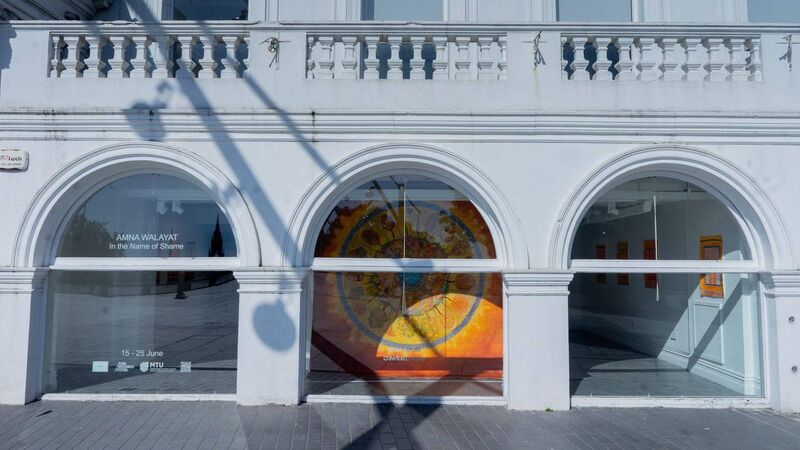
Amna Walayat, In the Name of Shame, MTU Gallery at 46 Grand Parade, Cork.
★★★★☆
Amna Walayat is a Pakistani-born artist, now based in Cork, whose exhibition at MTU Gallery at 46 Grand Parade is announced by a large artwork in the front window. Painted in acrylic on canvas, it incorporates elaborate Celtic knotwork and Islamic motifs, against a vivid orange background with a great yellow circle at its centre that inevitably recalls the burning sun.
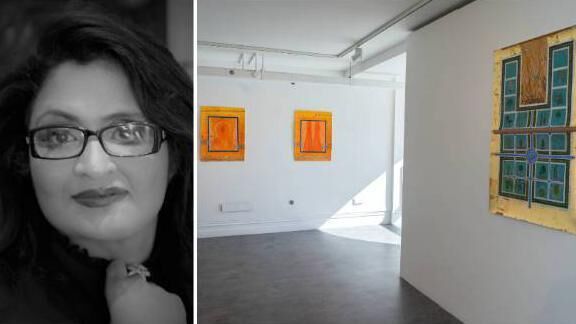
Those who venture inside will encounter a suite of ten brightly coloured paintings on paper, again featuring Celtic knotwork and elegant calligraphy, along with a single image featuring twenty-two miniatures of trees and shrubs, with a border of gold leaf.
So far, so charming, but each of the ten paintings also features part of the female anatomy: the head; breasts; legs; feet. Walayat’s intentions are made explicit in the exhibition’s title, In the Name of Shame, and her artist’s statement, which elaborates on how she has drawn on the Biblical account of the expulsion of Adam and Even from the Garden of Eden to consider how cultures of shame operate in contemporary society.
Islamic tradition holds that when a woman becomes pregnant, a paradise opens at her feet. For many, this is far from the reality, as we are reminded by reports of the barbarity of the mother and baby homes in this country. Walayat’s achievement is to forge a visual language that highlights how pregnant women and mothers all too often come off the worst in patriarchal societies worldwide.
★★★★☆
“Only connect!” EM Forster famously cautioned in his 1910 novel, Howard’s End. Even a writer as prophetic as Forster can hardly have imagined just how relentlessly plugged in we would become in the early 21st century.
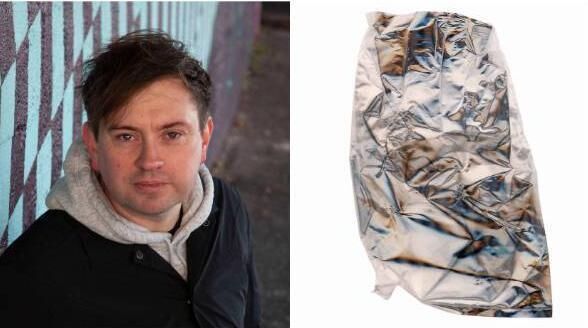
This is the subject explored by local artist and educator Pádraig Spillane in Define Silver Lining (V2.0) at the Cork Centre for Architectural Education. Inspired by “the appearances, sounds, and infrastructures of our everyday networked world,” his exhibition is an appropriately industrious jumble of video screens, metal boxes and hand trolleys, set to a frenetic electronic soundtrack by VEINS (a collaboration between Spillane, Karen O’Doherty, Marc Rensing and Fernando Cimino).
On one of the video monitors, reclining at an angle on a trolley, a doughnut-shaped plastic bag billows and deflates, over and over. On the other, a digitally collaged lifeform of sorts bears witness. The overall effect is unnerving, emphasising how the very technology designed to allow us more time and freedom has only ensnared us all the more. Where will it end? Perhaps at the point at which we reframe Forster’s exhortation: only disconnect.