Book Interview: One man’s journey from inner-city strife to god
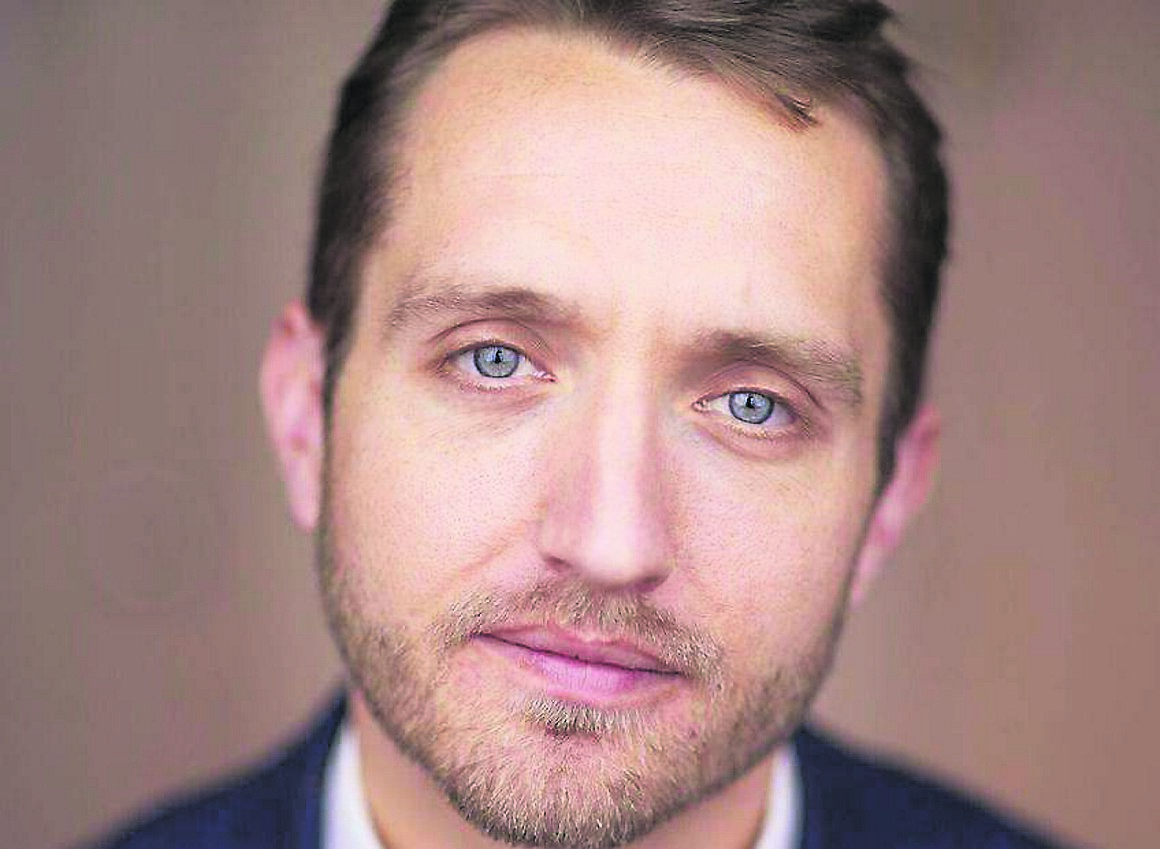
Jacob Phillips grew up in Hackney, one of London’s poorest areas. He was involved in anarchist politics, illegal raves, and environmental politics.
- Obedience is Freedom
- Jacob Phillips
- Polity Press, £45 hb, £14.99
In the early 1980s, Jacob Phillips was a babe in his mother’s arms at the famous Greenham Common Women’s Peace Camp, set up to protest against the presence of Cruise Missiles in concrete silos in the Berkshire countryside. His parents were “hard-left characters, really”. His mother could not bear even to be in the room when Margaret Thatcher appeared on television. His father, when travelling to Ireland, would announce in Dublin airport that he was a thirty-two country Republican.
By the mid-1990s, Jacob was living in Hackney, one of London’s poorest boroughs. He was involved in anarchist politics, the illegal rave scene, and environmental politics, and attended parties at places like the Old Dole House, a squat in Brixton. The fire-eaters and jugglers he saw there, the tightrope walker, the heaving rabble beneath her, are all vividly depicted in his new book, as are the rituals and practices of the record shops that sustained the street-level techno scene, and much else that one might associate with transgression, change, upheaval, rebellion.
Yet the book is called Obedience is Freedom. Chapter by chapter, it makes the case anew for concepts like loyalty, deference, and honour; for discipline, duty and authority. Jacob Phillips, the teenage anarchist, is now a professional theologian. His previous books were technical works about Dietrich Bonhoeffer, the great Lutheran thinker hanged by the Nazis, and the role of the Virgin Mary in evangelization. His next is on the subject of England’s newest saint, Cardinal John Henry Newman. He was the English translator for Pope Benedict XVI’s Last Testament.
Obedience is Freedom bridges these disparate phases of Jacob Phillips’ life. It uses the first part as raw material for complex meditations, befitting his profession now, on what makes individual lives, and whole societies, hold together or come apart. The book is thus both intensely personal (in a kind of slow-release fashion) and highly conceptual.
Phillips calls on an eclectic range of philosophers, poets, and novelists as tutelary spirits; and he extracts unexpected lessons from disparate, real-world events. Greenham Common, he finds, can teach us surprising lessons about permanent, unconditional allegiance. (Phillips was to be his mother’s main carer for nineteen years when she was afflicted by an ultimately fatal neurological disorder.) Those east London record shops can teach about the true nature of respect - and about the traps that attend heightened racial categorizations. Over the course of the book, Jacob also revisits the infamous Disco Demolition Derby, held at Comiskey Park, Chicago, in 1979; and, by way of finale, a pitched battle between travellers and police on the Isle of Dogs in 1992.
“I was only 13 in 1992,” Jacob recalls, “but when I joined those circles after leaving school, around 1995/96, there was this weird postmodern mythology, especially among the very young ones, the “site kids”, who hadn’t been educated formally, and were around the same age as me. These kids had grown up with this mythology as their identity, like some kind of undiscovered Amazonian tribe living around the then largely derelict industrial estates of East London, before the Olympic redevelopment. It’s also interesting because social media and the digital image have perhaps killed the possibilities for these folklores. There was no media among these people, it was all word of mouth then, so stories, like the ones about the battle with the police, naturally developed a kind of mythological, symbolic structure. As a theologian, I was drawn to the idea of using this folklore in writing as it brings the very ancient into play with the very modern.”
Sitting in his office at St Mary’s University in Twickenham, Phillips tells me that writing in this new way, departing from the style required by academic theology, was “fulfilling and quite cathartic”. The element of memoir gives the book a unique savour and so we talk about his unusual journey. Jacob’s eventual disillusionment with the hard-left, anarchist scene at first bled into an interest in what he calls “quite fringe spiritualties”. This included “a phase reading about Arthurian legend and stuff like that. That’s got quite a lot of medieval devotion in it. I got really interested in that and it felt strangely native, I suppose, in a weird way.” He then began reading more “ecclesial, approved theologians”; and in early December one year, he stumbled across a beautiful, incense-filled High Anglican church where he was “incredibly struck by the beauty and the smell, the richness of the colour.” Jacob decided that he would go to Midnight Mass. The road that would lead to a conversion to Catholicism had opened up.
Obedience is Freedom is a book of quietly worded but unmistakable revolt against the most fashionable and commanding assumptions of our day; a revolt against all-conquering identity politics and liberal dogmas, carried out from intriguingly oblique angles. (On his Twitter account, Phillips gives himself the tongue-in-cheek designation of ‘wideboy theologian’.) It is counter-cultural, to say the least, but it does bear a certain kinship with a clutch of recent books: Tim Stanley’s Whatever Happened to Tradition?, for example, and Sohrab Ahmari’s The Unbroken Thread. (Both authors, like Phillips, are Catholic converts.)
The origins of the book stretch back to “about 2013-ish” when Jacob saw changes in social and cultural attitudes that struck him as a hyperactive version of the economic neo-liberalism instigated by Ronald Reagan and Margaret Thatcher. There was “individual choice, consumer choice, freedom from limit, freedom from restraint, freedom from community and obligation and expectation and custom and habit.” It was, he says, “Thatcher writ large on the soul.” “And I wouldn’t have noticed that,” Jacob reflects, “if I wasn’t caught between this very left-wing upbringing and Catholicism. It enabled me to see that this wasn’t really, genuinely left-wing, and to raise questions about it, because the influence I was getting (from Catholicism) around some of the changes going on was that we should be pulling back.”
“It seemed to me that many of those in contemporary discourse wanting to push for the end to all borders, all limits, all boundaries, all binaries, had a very utopian and unrealistic and quite childlike understanding of life, whereby everything could be joy and hope and self-expression and desire - without, you know, pain, bereavement, death, limit, grief, and all those things. So there seemed just to be a very unrealistic one-sidedness driving a lot of the discourse.” What remains of his earlier attachments to the left?
“I still believe in community, localism, collective responsibility. I also think shared ownership of things is generally good, but not necessarily in the hands of the state. That said, I think people felt more belonging and identity when there were nationalised entities like British Rail. I think inequality is unavoidable, but everyone has a responsibility toward each other, and, as a Christian, that means especially those in hardship and poverty.” And where does Jacob Phillips situate himself now?
“I’m not a reactionary in the strict sense, in believing that we, quite literally, need to draw a line after a certain point in development and go back. I think it’s impossible for a start. Big changes in cosmology and knowledge change the way that we relate to the world. You can’t just reprogramme consciousness away from what we know from science and things like that. So I’m definitely not retrograde in that sense.”
“But I think we are living in a time when more and more young people are flirting with, or engaging with, or heavily participating with values that would be deemed conservative, and that was impossible ten years ago or twenty years ago. And I think that they’ve got there as a product of the world we are living in. But they have to arrive at a different place, a new place, a sort of post-modern conservatism. Or something like that.”