Book Review: A bright look at the Dark Ages
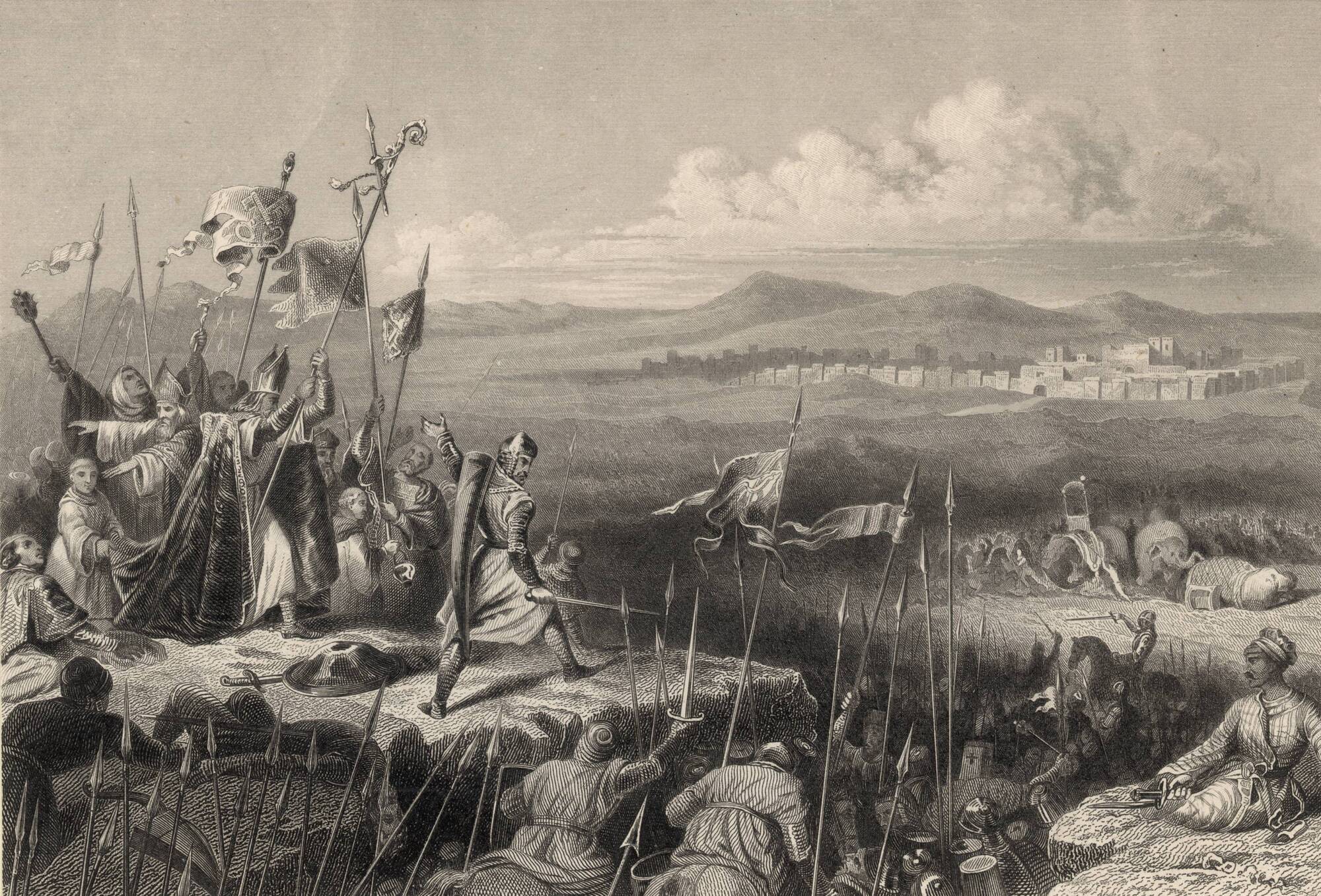
1098, The battle of Antioch taking place outside the walls of the city during the first Crusade. (Photo by Rischgitz/Getty Images)
In February of last year, in the pages of the Irish Examiner, I reviewed a book about the Dark and Middle Ages called, counter-intuitively, The Light Ages. And here I am now reviewing another book about the same period of history with a rhyming title and a similar authorial intent: to get readers to think afresh about the Middle Ages, to see the bright sparks where we’ve been accustomed – and indeed encouraged by writers stretching back to Petrarch and Voltaire – to seeing nothing but the enveloping gloom of ignorance and superstition.
It shouldn’t need much reflection on anyone’s part that the standard denigrations of the Middle Ages must be, at least, in part, false. Nothing, after all, is that simple. But there are a multitude of ways in which historians might go about proving the point. In The Light Ages, Seb Falk homed in on the life and times of an astronomy-obsessed, fourteenth-century English monk called John Westwyk, living in the wake of the “clockwork revolution” and the dawning possibility of “reliable machines that could keep universally agreed time in equal hours”.
The Bright Ages, co-authored by two academics from American universities, is more of a magic carpet ride around all manner of medieval places and moments. While they make no attempt to hide the worst excesses of the Middle Ages in the treatment of, heretics or Jews, for instance), the mission assumed by Matthew Gabriele and David M Perry, is to show that there was beauty and progress too. They attempt to see events such as the First Crusade and the conquest of Jerusalem from inside the medieval mind and within the arc of history as Medievals perceived it. Tellingly, perhaps, one of their last anecdotes concerns a debate that took place in Valladolid in 1550 between Juan Ginés de Sepulvéda, a noted humanist and New World landowner, and a Dominican monk, Bartolomé de las Casas. It was the friar from the religious order “born in the crucible of the Inquisition and crusade” who argued the cause of the indegenous peoples of the Americas, for their right to live peacefully; and the modern secularist who sought “to justify colonization, violence and opression”.
Perry and Gabriele are particularly keen to wrestle the Middle Ages from the clutches of white supremacists and other dangerous forces that yearn for a full return to a simplified version of the period. And so the authors present the doings of clever and durable women, too often overlooked among the churning dynasties of the early Middle Ages: Queen Theodolinda of the Lombards, for instance; or Galla Placida, a Roman queen among the Visigoths; or Radegund of Poitiers who became the powerful abbess of a convent named after a relic of the True Cross given to her by the Byzantian emperor, Justin II. They demonstrate how trade and war and conquest made borders porous, how disparate communities always intermingled in some way. In this regard, and on a slighlty chauvinistic note, it was a shame that the great accomplishments of the likes of Saint Aidan in England, or Saint Columban on continental Europe, did not gain even a mention.
There are great stories to be told: Harald Hardarada, for example, was an eleventh-century Norwegian Viking prince, in exile in Sicily, who fought against the island’s Muslim rulers, in a Byzantine army alongside Norman allies, before returning to Constaninople, kidnapping a Roman princess, fleeing to Kiev, and dying, at the age of 51, trying to conquer England. And Vikings, did you know, rode camels on the shores of the Caspian Sea, raiding and trading with Abbasid Caliphate for silk?
Hardarada demonstrates that one cannot - and should not – try to defang the Middle Ages completely, to rob them of their piercing strangeness, their ability to startle and even scare us. To be fair to Gabriele and Perry, in the end, they avoid this trap and add a fresh volume to what is becoming something of a sub-genre in popular history writing – the defence, or rehabilitation, or revisioning of the Middle Ages.
- The Bright Ages: A New History of the Medieval Europe by Matthew Gabriele and David M Perry
- Harper Collins, €17.30