Book Review: How Mildred Dresselaus forged a path in STEM
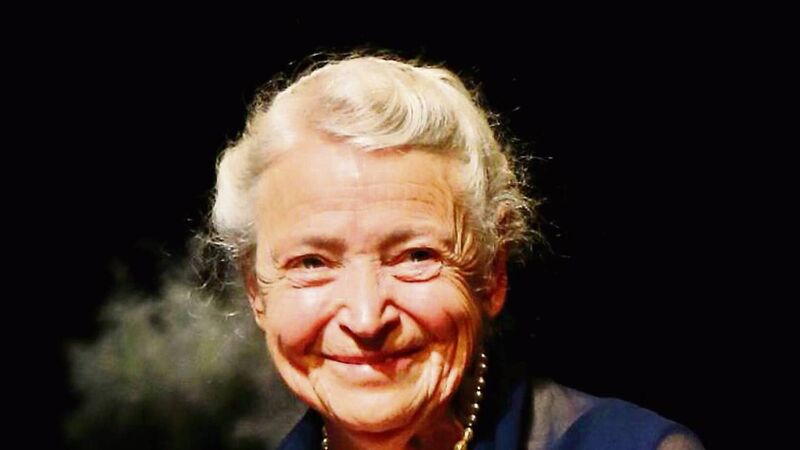
Mildred S. Dresselhaus of the Massachusetts Institute of Technology, USA, stands on stage after receiving the prestigious 2012 Kavli prize for nanoscience, in Oslo, on September 4, 2012.
How do we encourage more girls into careers in Stem? Fifteen of the 20 fastest-growing careers in the world require a background in maths or science. Yet, only 25% of Stem jobs in Ireland are currently held by females, it was reported earlier this year. It’s a perennial issue that is hopefully, albeit extremely slowly, sliding in the right direction. Biographies like that of Mildred Dresselhaus might not lead to a slew of girls reaching for it and changing the course of their lives, but certainly, the trajectory of her early travails in life, science, and education could inspire some to think, ‘why not me?’
Born in Brooklyn to Polish Jewish parents in 1930, Dresselhaus forged a career in nanoscience, making influential discoveries about the properties of carbon, including graphite, buckyballs, nanotubes, and graphene, leading to applications that range from lighter, stronger aircraft to more energy-efficient and flexible electronics. She was also one of the first female professors at the Massachusetts Institute of Technology (MIT), where she taught - and inspired - for decades. “Millie didn’t just create a lab, she created a family. She worked with us to ensure we succeeded,” says one former student. Dresselhaus was the first woman to win a National Medal of Science in engineering and the first solo recipient of the Kavil Prize, a biennial award in the disciplines of astrophysics, nanoscience, and neuroscience. She authored or co-authored 17,700 research articles and eight books, mostly on carbon and its fundamental properties.