Book Review: Horrors of Bessborough highlighted in BBC journalist's remarkable book 
Deirdre Finnerty's book is both fascinating and deeply upsetting
Book Review: Horrors of Bessborough highlighted in BBC journalist's remarkable book 

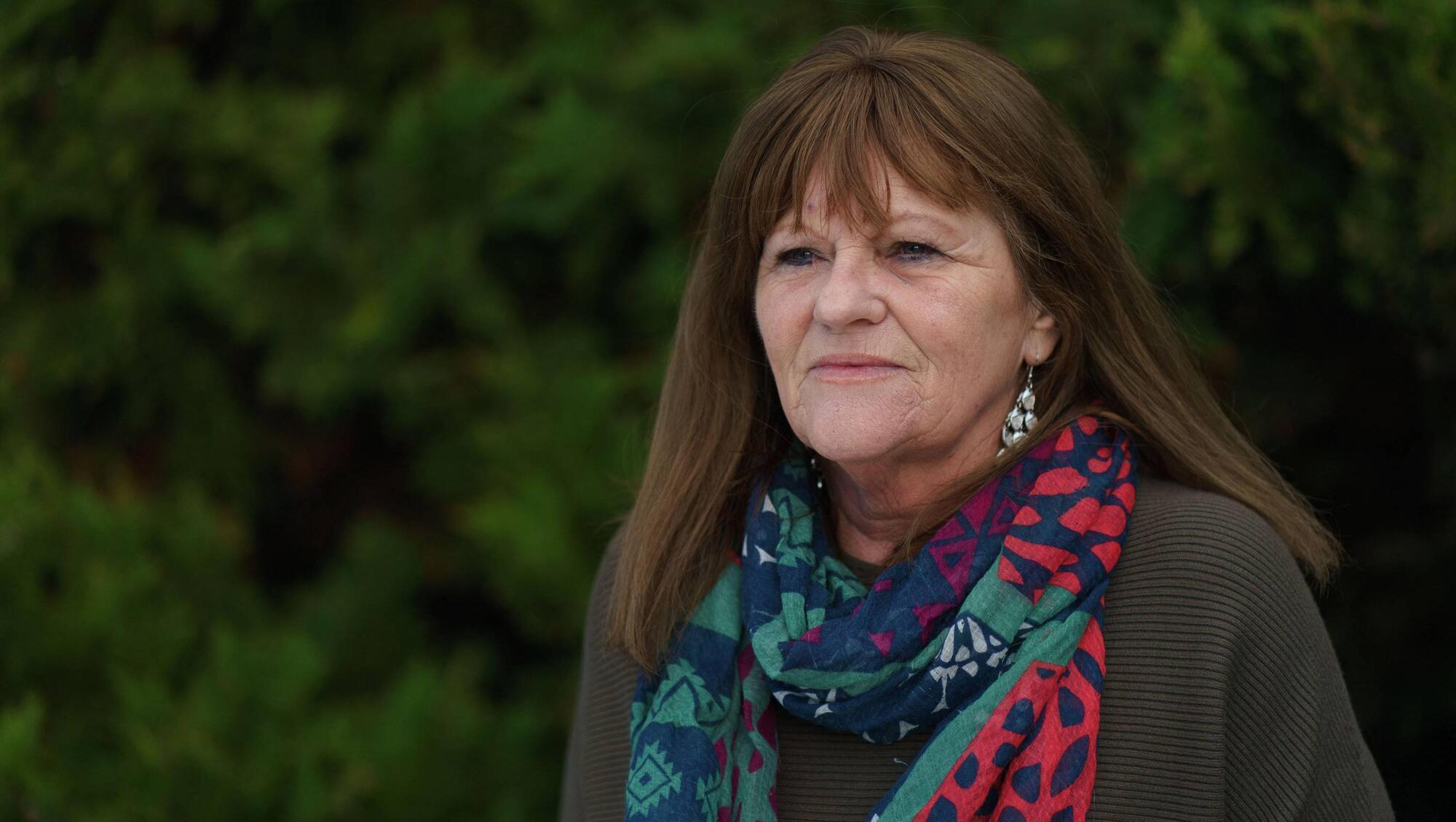
Mother-and-baby home survivor Terri Harrison is one of the three women who tells her story to Deirdre Finnerty Picture: Fran Veale

  • Bessborough: Three Women, Three Decades, Three Stories of Courage
  • Deirdre Finnerty
  • Hachette Ireland, €14.99

For more than 70 years, the former mansion Bessborough House, on the edge of Cork city, was one of Ireland’s biggest mother-and-baby institutions. Girls and women entered it pregnant and left without their babies.

This remarkable book by BBC journalist, Deirdre Finnerty, opens up to scrutiny what went on inside its walls, and what effect their stay there had on those women, as decades later they recount their experiences.

Deirdre Finnerty allows three women — Joan, Terri, and Deirdre — to tell their stories themselves. They had been in Bessborough in the 1960s, ’70s and ’80s respectively. She intersperses accounts of their experiences with her own commentary on the historical facts.

It’s a fascinating and deeply upsetting read. In recent years we have heard some women talk about their time in institutions including Bessborough, but this book is more powerful than media interviews, as it reveals much more, and not only about their pregnancies and giving birth, but also the lasting trauma.

It will bring back memories for thousands of women, as it does for me. I gave birth to my son in Bessborough in 1973 but, unusually, when I left he was with me. Helped by Capuchin priest Fr Roch, we went to live with a childless couple older than me until my parents were reconciled to my decision to keep my son.

What cries out from the pages of this book is the cruelty and the hypocrisy of so many. So called “holy” people treated pregnant unwed females as deserving of harsh treatment as punishment.

Bessborough: Three Women, Three Decades, Three Stories of Courage Deirdre Finnerty

The backgrounds of the three women differ: Joan is from a well-off family, Terri is working in a supermarket, and Deirdre is training to be a teacher when she gets pregnant. Their experiences are, however, very similar.

When Deirdre arrives at Bessborough in 1967 she is given the house name Michelle and told the rules: “Do not reveal your identity to any other girl. You are to have no contact with the outside world. If you run away, you will be brought back by the police.”

When I arrived there, I don’t remember being told any rules and, though the other girls didn’t, I used my own name. I do remember the girls writing letters home which were sent to contacts in the UK who then posted them back to Ireland, so they could keep up the fiction of them working there.

It is interesting how it is their own mothers who are instrumental in the three girls — they were teenagers — being sent to Bessborough. Joan’s mother is cold; indeed Joan describes their family maid as “more of a mother” to her. Her mother even refuses to look at her baby son. When she leaves Bessborough her mother and stepfather drive her to the airport and hand her a ticket to London.

Even when they had a fairly close relationship with their mother, as Terri and Deirdre did, it never fully recovers afterwards. They never discuss what has happened and when the young women cry they aren’t comforted.

The fractured relationships with their mothers aren’t the only ones, all three women went on to marry, but separated or divorced. Perhaps they married the wrong person for them, or the trauma of what they went through in their youth and their searches for their lost children caused a distance to develop between them and their husbands.

When Joan tells her future husband about having had a baby in Bessborough he says: “It’s fine with me as long as my friends and family don’t find out about it.” They never discussed it again.

Remarks made are remembered decades later; Joan’s aunt says she’s “a disgrace”; Deirdre’s mother calls her “a whore, prostitute, sinner”.

The secrecy surrounding having children outside marriage is pervasive. For instance, Deirdre and her mother keep up the fiction that she’s in London, rather than in a mother-and-baby institution, so her father doesn’t find out. When she tries to get her son back, a priest and nuns use her fear of him discovering the truth to coerce her into abandoning her attempt.

I recall once seeing a girl I’d known in Bessborough a couple of years later when shopping with my small son, and the look of horror on her face that I’d acknowledge her as she was in company. I didn’t, of course.

It’s deeply upsetting reading about their loneliness and isolation, not only never receiving letters or visits while in Bessborough, but during the years afterwards.

Two of the three eventually meet their children, with mixed success in developing relationships with them. It’s so sad. One of the children did not have a happy childhood.

One of the most poignant sentences in the book is when Joan has to ask her son if he takes sugar. She knows so well the preferences of her other children.

Terri never signed the documents necessary for adoption to go ahead. When she eventually sees the forms, after a battle with the authorities, she doesn’t recognise the signatures but believes her mother signed one and her aunt the other. She was also forcibly taken from England back to Ireland — a repatriation practice Deirdre Finnerty explains ran from the 1930s and reached its peak in 1967 when abortion services were introduced in England. Her son Niall was born in 1973, the same year as my son.

When they try to look for their children the way they are treated will make your blood boil — one son had been looking for the woman who gave birth to him for nine years before they finally meet. 

It is as though the State has taken over from the religious orders in deciding they are unfit to be mothers.

However, while their experiences were horrendous and have had lasting effects, the three women come across as people who have bravely overcome their pasts to some degree.

They have good relationships with the children they went on to have, they involve themselves in helping others, for instance Joan was a nurse, later a social worker and Terri is involved with the Christine Buckley Centre, an organisation for survivors of institutional abuse.

All three eventually overcome their unjustified sense of shame to start talking about their experiences. Deirdre sees it as “a sort of personal duty … to speak out about her experiences … to encourage other people to empower themselves to speak and to break that silence and secrecy”.

In 2014, Joan is invited by Sinn Féin MEP Martina Anderson to speak at the European Parliament about the mother and baby institutions, reducing many present to tears.

Other details will stay with the reader, such as Joan hearing from another girl in Bessborough that because her son is half Nigerian he won’t be adopted, or how staff in the holding centre where babies were sent before adoption weren’t allowed to cuddle them.

All three are not happy about the Report of the Commission of Investigation into Mother and Baby Homes, published in January last year. Deirdre submitted a letter to the Confidential Committee; Terri and Joan appeared before the Investigative Committee and had to swear an oath before a judge.

Among their criticisms are: that society was blamed, rather than the church and state; that there was no evidence that girls and women were forced into the homes; that they were not believed when they said they had not signed papers.

I hope many read this book, it’s important that we are informed about how females were treated in the past. I commend the women for their courage and honesty and author Deirdre Finnerty for her sensitive and empathetic handling of the subject.

x

More in this section

Scene & Heard

Newsletter

Music, film art, culture, books and more from Munster and beyond.......curated weekly by the Irish Examiner Arts Editor.

Cookie Policy Privacy Policy Brand Safety FAQ Help Contact Us Terms and Conditions

© Examiner Echo Group Limited