Book Review: A fatal 'solution' to the problems of the Troubles-era North
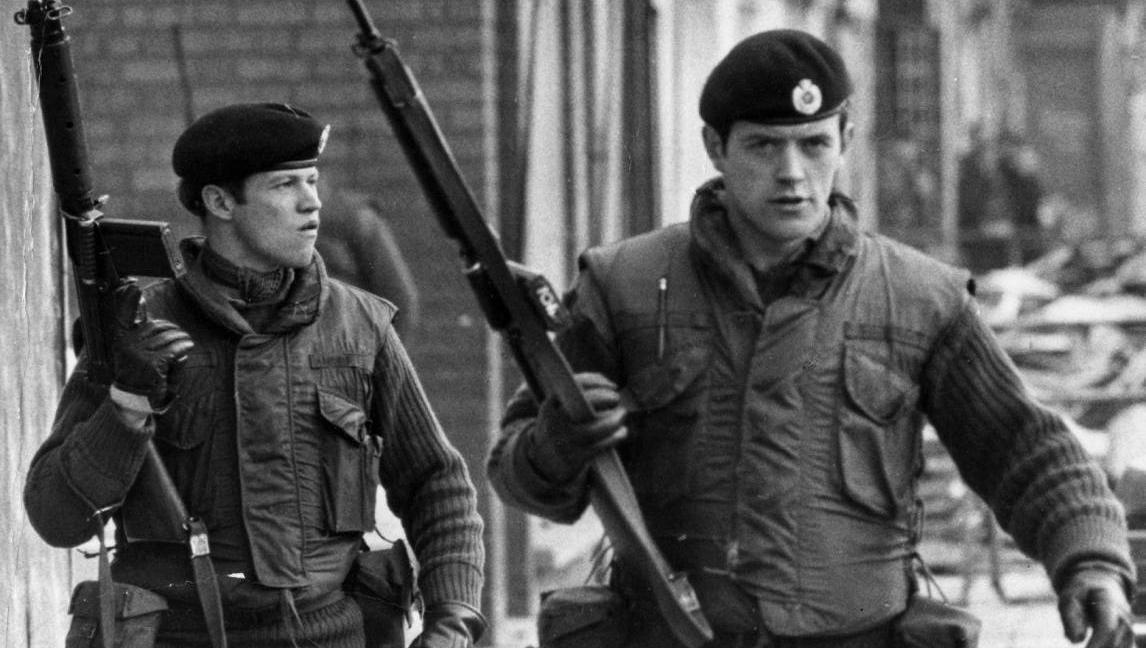
Armed British soldiers on patrol in Lisbon Street, Belfast, during the Official IRA's unconditional ceasefire.
- UDR Declassified
- Micheál Smith
- Merrion Press, €18.95
As can happen in matters relating to the North, a ready football analogy presented itself - and John Hume delivered it as a zinger.
According to the late, great SDLP leader, the Ulster Defence Regiment was “a group of Rangers supporters put in uniforms, supplied with weapons and given the job of policing the area where Celtic supporters live”. One-nil.
It is far from the only criticism thrown the way of the UDR in this densely researched book by Micheál Smith, a Belfast-based former diplomat and an advocacy case worker with the Pat Finucane Centre. UDR Declassified is, as the title suggests, a thickly annotated journey through files and documents from both sides of the Irish Sea, but which ultimately tells the same story: The regiment, from inception to conclusion, was a bad job, and one from which no-one ever appeared to benefit.
In the horrific mire of The Troubles, solutions to a problem often tended to become just another failed or botched attempt at navigating the vicious sectarian currents that lashed the six counties for three decades.
What Smith convincingly argues is that the UDR occupied a unique role in this dreadful period; a regiment that began with high ideals, quickly found itself wound up in the violence it was supposed to be trying to counter. It couldn’t do right for doing wrong.
Indeed, as the narrative lurches from one crisis to another, it’s hard to imagine the Good Friday Agreement ever being secured had the UDR somehow still struggled on into the late 90s. The fact that it was shuttered in 1992, a dozen years after the British had initially — but confidentially — mooted the same idea, was a belated blessing for all concerned.
Smith draws heavily on documents from 10 Downing St, the British Ministry of Defence and the Northern Ireland Office, and it’s apparent the original aims of the UDR were never going to tally with the reality of a regiment that followed directly in the footsteps of the hated Ulster Special Constabulary, the B-Specials, particularly as some members immediately joined the newly-formed UDR when it was established in 1970.
The public proclamations that the UDR was to be non-sectarian, with an appeal to Catholics to join, quickly ran aground as the horrors of the Troubles began to unfold.
Smith provides strong historical background regarding just how the B-Specials had become so hated among the Catholic minority, and once the number of UDR members from a Catholic background dropped, and the number of applicants plummeted even further, the regiment quickly became a bastion of Ulster Protestantism. Worse was to follow.
At this remove, decades on from the Good Friday Agreement and even allowing for outrages which still occur (the third anniversary of the death of journalist Lyra McKee has just passed), it is sobering to read again of the daily litany of brutal killings that marked three decades in the North.
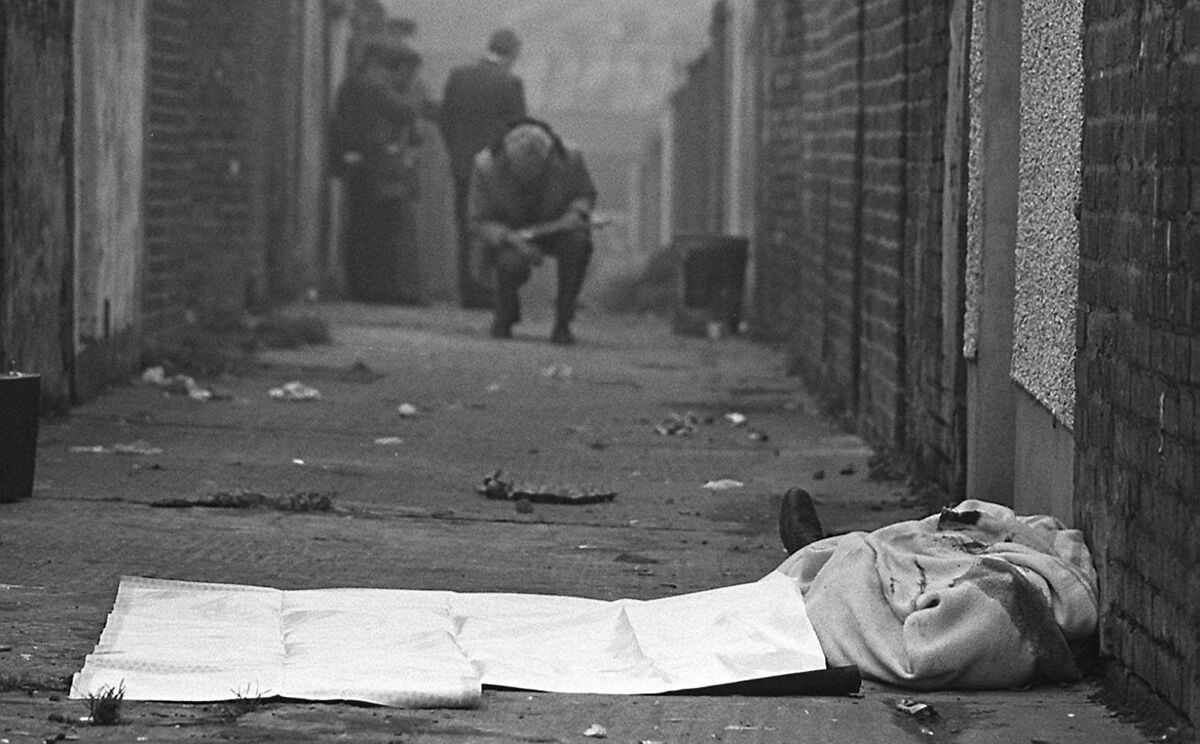
The sheer madness of those years, the string of bad decisions bringing worse consequences, is mind-boggling. Is it really true that the UDA was not made a proscribed organisation until the early 90s? That it simply tagged the murders carried out by its members as being the work of the UFF — the flimsiest cover imaginable? Can it possibly be real that the lethal UVF was actually legal for a time in the mid-70s? And that it was possible, at one stage, for a UDR member to align with the UDA and yet till stay in uniform?
Sadly, yes, all true. In the middle of all this was the UDR, infiltrated to an alarming degree by loyalist paramilitaries. Smith describes how weapons would regularly go missing from UDR stores, or were taken from the homes of UDR members, weapons that tended to end up being used in later paramilitary shootings. When the gathering of intelligence was extended to the UDR yet more people were targeted. Whether by accident or design, the regiment was a leaky sieve. It couldn’t keep its affairs in order.
Nor does it neglect a very real and active overlap as some UDR members also moonlighted as killers for loyalist groups. The catalogue of shootings and bombings, including the work of the Glenanne Gang and the Shankill Butchers, and massacres such as that involving the Miami Showband, are beyond grim, but the wanton efforts to conceal UDR membership is even worse, with members bundled out of the organisation before they reach court, the records fudged as if to wipe their names from the roll.
The UDR was never trusted by senior RUC or British Army personnel, but as Smith explains, even those at the highest levels who had very real misgivings about the UDR felt it was still better to have it around so as to act as a kind of ‘safety valve’ against the risk of people otherwise joining groups such as the UDA. At the same time, despite its huge membership and geographical spread, it was prohibited from performing certain functions. It was a problem child, of flawed pedigree and composition, a lightning rod for criticism and the subject of repeated calls for its disbandment.
Later in the book, Smith wryly observes how a policy wonk working for Prime Minister Margaret Thatcher, in 1979, misread her handwritten notes regarding praise for the Ulster Defence Regiment (“? Is that the name” she wrote) and actually typed it up as “The Prime Minister would also like to see some reference to the valiant work being carried out by the Ulster Volunteer Force”. It pretty much says it all. Yet somehow, the UDR staggered on for more than 20 years.
To Smith’s credit, his evisceration of the UDR turns its focus early and often at the powerbrokers in London who seemed to specialise in bungled decisions. Their failure to properly address the many and deep failings of the UDR, both as a force and a concept, are repeatedly highlighted. Ultimately Smith believes this almost haphazard attitude is borne of colonialism — the idea that it was better to sweep any unpleasantness under the carpet, and keep the public in the dark. The stench of collusion is never far away, alongside the disconnection between the various wings of the security forces.
The signals that people in the NIO and elsewhere knew the UDR was not fit for purpose are there in the handwritten notes of the documents Smith has so diligently researched.
To take just one telling example, a report on the UDR’s sectarian image states: “It is not, however, true that the Regiment acts in a sectarian manner.” Someone has scrawled in pencil in the margin “Come off it!” .
Smith’s writing style is often perfunctory and occasionally pithy, and sometimes you get the sense that he takes two steps forward, two steps back as the narrative chugs along.
But UDR Declassified has real insight into this entire misbegotten enterprise, credits the excellent work of others that have gone before, and details the very real price people across the six counties and beyond paid for it.
A section of the book also looks at the struggles, from financial to mental, of ex-UDR members, and the overriding sense is that the British government all-but-abandoned them too.
In many ways one astonishing incident, recounted here, sums it all up. In what appears to have been a road rage episode, one UDR man overtook a vehicle carrying another member of the regiment. Both men left their cars and promptly began shooting at each other. Both were hit. One drove the other to the hospital.
On reading Smith’s book, the only wonder is that they didn’t crash on the way.