Culture That Made Me: John Cooper Clarke on Poe, Presley and Pam Ayres
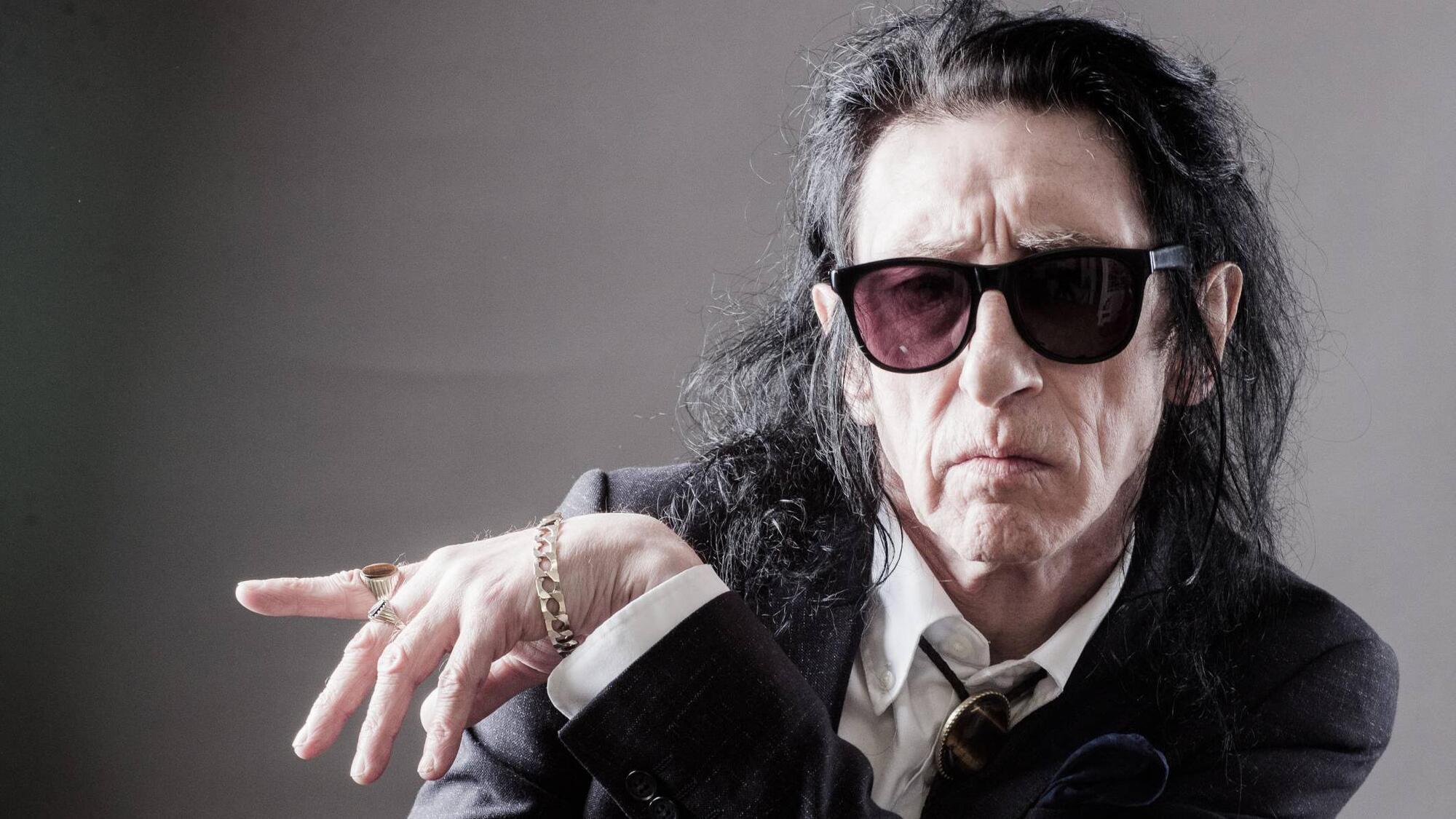
John Cooper Clarke performs in Cork and Dublin.
John Cooper Clarke, 73, grew up in Salford, England. He began his career as a performance poet in working men’s clubs around the UK. He became a prominent player in the punk era, performing on the bill with the likes of the Sex Pistols and the Clash.
In the 1990s, his work was added to the UK’s school syllabus. In 2020, Picador published his autobiography, I Wanna Be Yours. He will perform at Cyprus Avenue in Cork on Thursday, May 5; and the Olympia, Dublin, Monday, May 9
Growing up, I was interested in the work of Edgar Allen Poe – on account of going to see The Fall of The House of Usher at the cinema, featuring the overripe performance of Vincent Price. I went to the library – when they had such things – and got out Tales of Mystery and Imagination. I found the story The Fall of The House of Usher. The language was so compressed that it could tell the whole story in two pages. It was an epiphany.
I found out that Edgar Allen Poe’s oeuvre was translated into French by Charles Baudelaire who became very influential in my image of myself as a citizen poet. Baudelaire seemed like a glamorous person to me, with that historic distance. You look for what is modern in people from the past. The big attraction was that Baudelaire was a pernickety dresser.
Baudelaire adopted the style of George Brummell, style consultant of the Prince Regent, which was very subdued. Before Brummell, men dressed like peacocks, in rich colours, kingfisher blue, crimson, a lot of lace. He was a new broom. A Year Zero guy. His lasting contribution is the tuxedo. A very monochrome colour palette, which for monarchists seemed extreme.
It's the dawn of the mod look, which was a stripped-down, puritanical way of dressing. Attention to detail. In the early days of mod, you tried to look like you’d already got there. Everybody wore suits. You had to look sharper than your boss. You were wearing the same things, but you were inviting comparison, and you were always going to come out on top.
Pam Ayres was an important influence. I never got any encouragement, doing what I do. “Keep it as a hobby.” “Do it in your spare time.” “Get a job.” But I was adamant. Who said “find something you like doing and you’ll never work a day in your life”? That was my objective – make a living from poetry.
It's my only skill, writing poetry plus being on stage reciting it. I wasn’t given any encouragement in this course of action. So when people said, “Name one person who's ever made a living out of poetry in the modern world?” I couldn’t answer until Pam Ayres came around.
I started reading Raymond Chandler’s works, featuring the private eye Philip Marlowe. The stories were less brutal and more considered than, say, Mickey Spillane. He had a hardboiled, existential take on life that was quite poetic. He wrote about LA when it was in its ascendancy. When everything was hot and new. It's a genre that never gets exhausted – the world-weary cop or private eye.
After the Beatles came out, everybody had a copy of The Mersey Sound, a Penguin anthology of modern poets: Adrian Henri, Roger McGough, Brian Patten. That was great for the simple reason that they used brand names. They wouldn't say washing powder. It’d be Daz. They’d give it a name. Before that, I thought that this wasn't allowed. After that, I started using brand names all over my stuff. It made a big impression.

Elvis was the big change in my youth. He used electricity, modern recording methods, echo chambers. Before he alighted on rock ’n’ roll, possibly his biggest influence when it came to his singing style was Dean Martin – that mumble-y way he had of blurring certain words. He was a complete original – the way he looked. His voice. His vocal range. He could have been Pavarotti if he wanted.
Elvis introduced me to new songwriters. People like Jerry Leiber and Mike Stoller. How many hits did they write? Jailhouse Rock. Writing for The Drifters and The Coasters. They weren’t confined to the idea of romantic love and unrequited pining. They introduced things that were happening on street level.
Their songs were about gimmicks that were here today, gone tomorrow. Clothes and hairstyles or a neighbourhood guy who dressed in a certain way. Things that were very important to young people.
Frank Sinatra hated sound effects and gimmicks. He always played it straight. The main thing was the song. He had to understand the subtext of every song. He would kick it around in his head before he gave voice to a line. He was the least mannered of singers.
He had great respect for his songwriters. He would credit them in his live performances. He was self-deprecating about his talent. He referred to himself as a saloon singer. He didn’t see himself as iconoclastic. He saw himself as part of a long tradition. It’s a great strength. You should always try to find out what tradition you come from.
Rio Bravo. 1959. What a picture, with John Wayne, Ricky Nelson, Walter Brennan and the lovely Angie Dickinson. It’s terrific. The minute the opening credits start, you’re into it. There's no introducing this character slowly. Bing. It’s on. It’s an emergency right away. There’s not a spare second wasted. It’s totally enjoyable. It's got light and shade, everything. Can’t recommend it enough.
Angels with Dirty Faces is a marvellous film. Nobody knows the real ending. Even Jimmy Cagney, and he ain’t saying. He plays a guy called William “Rocky” Sullivan from the wrong side of the tracks. The Dead-End Kids are in it, these urchins, punk kids around the New York docks. The plot would apply today.
They’d have someone like 50 Cent playing Rocky Sullivan, who returns to his old neighbourhood in an open-top Duesenberg with this swell dame wearing a mink stole and high-heel shoes. He’s wearing a pale suit with a Fedora hat. Pale colours denoting his idle lifestyle. A dead giveaway. Means he ain’t got a dirty job. The kids look up to him, a gangster. He’s got it all.
Is there a better screen actor than Jimmy Cagney? There isn’t. I’ll tell you who agrees with me: Orson Welles. He was asked: “Who are your three favourite screen actors?” Every other question, he looked at all sides with his answers, looking this way and that. He’s an intellectual. He said that was the first easy question he was asked. Answer: “Jimmy Cagney. Jimmy Cagney. Jimmy Cagney.”