Donovan: Folk legend on his love of Cork, and fun times with David Lynch
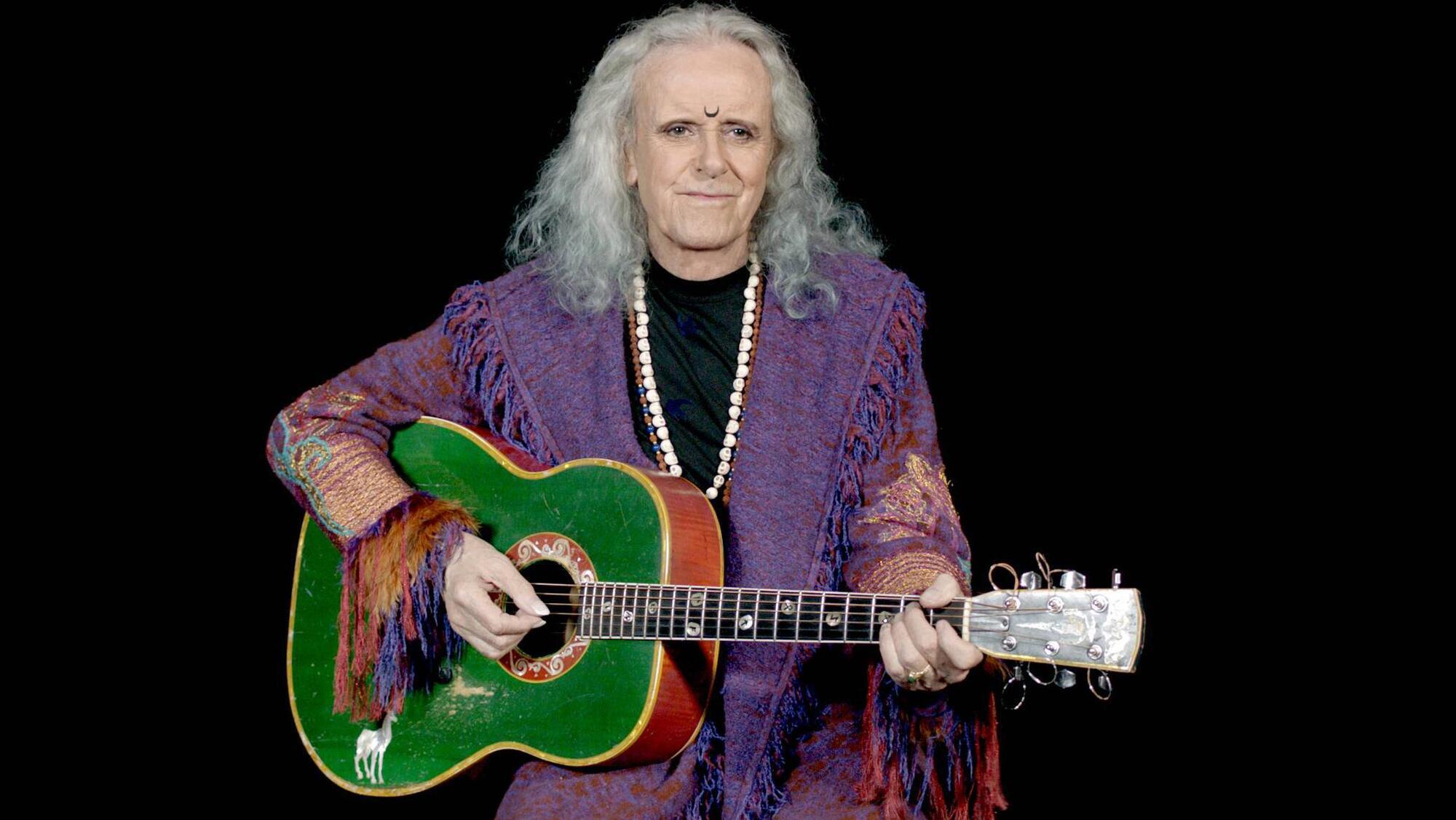
Folk icon Donovan returns to the live arena with gigs at the Sea Church in Ballycotton, and the Everyman in Cork city.
Donovan Leitch is sending hazy cosmic vibes down the phone-line. “I ammmm… the Shamannnn,” croons the troubadour, who achieved fame in the 1960s with darkly delirious hits such as Hurdy Gurdy Man and Season of the Witch.
He is recalling an encounter last year with surrealist filmmaker David Lynch. Sharing a passion for transcendental meditation, they met in spring 2021 at Lynch’s studio in Los Angeles with vague plans collaborate. In the end, it was Lynch who got the ball rolling.
“David Lynch and I became friends. In the studio one day he said, ‘hey Don – can you write a song just like that? If I just gave you a title’. I said yeah, sure. Now Lynch is an Irish name too. We carry that tradition. The shaman poet can write a song immediately if you give him a title. And so I picked up the guitar – and here it comes. I started saying ‘yeah man, I am The Shaman’. The lyrics came automatically. I didn’t write the lyrics at all. It’s magic with David Lynch.”
Hence, Gimme Some A That and I Am The Shaman, two weird, wizardly songs which Donovan recorded on the spot and for which Lynch filmed typically bonkers and unnerving videos. I Am The Shaman, in particular, felt like a sort of mission statement for Donovan, whose brings his esoteric songbook to Cork for his first two shows since lockdown, at Ballycotton Sea Church on Sunday, May 1 and at the city’s Everyman Theatre on May 29. The gigs will double as a celebration for Donovan, and his wife Linda, who were presented with “Honorary Cork Person” awards in March, having lived near Mallow since the early 1990s.
“Especially solo acoustic musicians that I know – they really couldn’t wait to come back,” says Donovan, who turns 76 in May. “It’s taken so long. When I was feeling locked down like everybody, I was wondering when I was going come back. And when I came back – that’s when an honour came from County Cork. Linda and I are honorary Corkonians: we’re joining David Puttnam, Jeremy Irons, Michael Flatley. And I thought, ‘when I come back, I’m going to play Cork’.”
Donovan’s passion for Cork goes back to the late 1980s, when he and Linda, whom he married in 1970, bought his house near Mallow – an old Protestant rectory on 10 acres, which they saved from dereliction. This was regarded as off the beaten track – not least by Dubliners of his acquaintance, who professed their astonishment that he would wish to go to Cork of all places.
“In 1989, we started looking for a house. A friend of mine found us a rectory in North Cork. Pals of mine said, ‘what are you going to be doing down there?’ Gaybo [Gay Byrne] on TV, when we were up there in Dublin, said ‘you’ll stick around I hope? You won’t be going down [to Cork] and leave us on our own up here?’ People say to me – ‘why don’t you live in Wicklow or Kinsale or some of these trendy areas?’ I can be trendy anywhere. I love the Blackwater Valley. And nothing is too far away. We go down to the sea a lot.”
Donovan was born in Glasgow but largely grew up in England, to where his family moved when he was seven. His parents both worked in factories and were hugely artistic. He recalls, in particular, his father’s devotion to the great Scottish poet Robert Burns (composer of Auld Lang Syne). Inducted into the Rock ’n Roll Hall of Fame in 2012, Donovan went out of his way to acknowledge his family heritage by saying his thank yous in Scottish Gaelic.
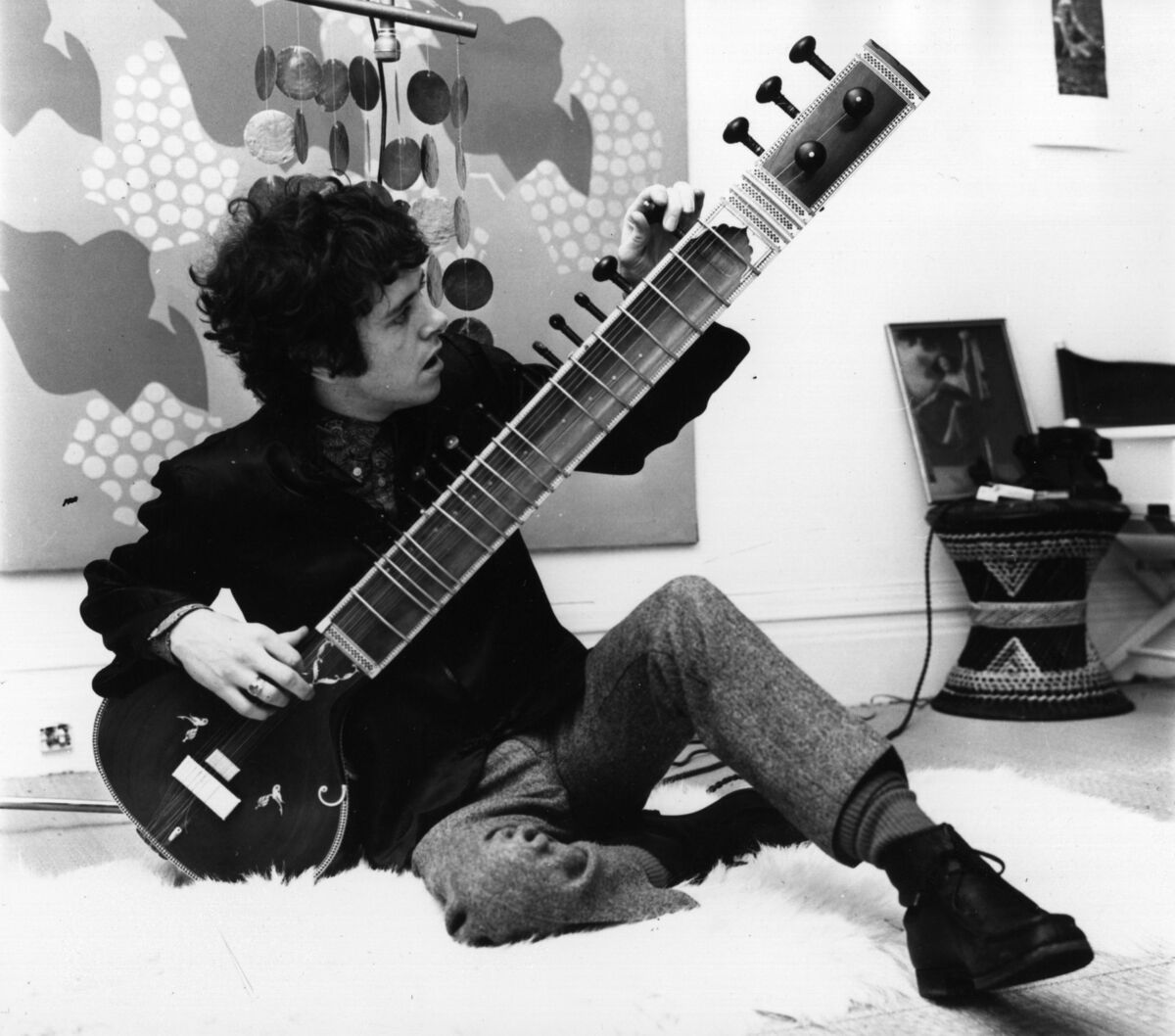
His music career started in the early 1960s, when he played folk clubs around greater London. There was something in the air at that time – as with Dylan thousands of miles away in America, he was influenced by folk artists such as Woody Guthrie. and Ramblin’ Jack Elliot. But unlike the crotchety and mercurial Dylan, he played well with others and had soon developed friendship with Brian Jones of The Rolling Stones and with George Harrison of The Beatles.
He was particularly close to Harrison. In a way they were soul-mates. Both came from Celtic stock (Harrison’s family on his mother's side were from Dublin). And both were fascinated with the concept of expanded consciousness – which in 1968 led Donovan, Harrison and the other Beatles bandmates to go to Rishikesh, India, to study with Maharishi Mahesh Yogi. Donovan paid tribute to Harrison in 2020, writing the preface to a photo-book about the Beatle, entitled Be Here Now.
“Me and George were about the same age. The other Beatles, the Stones… were all about four or five years older. George was a great artist. What he didn’t have was a lot of songwriting tricks, which you can find, if you’re looking. So I became George’s mentor for a while and showed him a few tricks. We sadly miss George. His music is here. And that will never go away. What he was putting in his music was what I was putting into my music from the beginning. Which is that, to wake up to what is going on, you have to make time.
“And in those days – 1964 or 1965 – millions of young people – the only thing they were reading was the back of cereal boxes. There was this great gap – millions of young people who needed to know what was going on. You can see this is old videos. Audiences with their mouths opening as I’m singing. And what I’m singing about was something they would have to do: open up their eyes, embrace new ideas. And so that’s the 1960s. George and I shared that. And we worked towards that in our songs.”
Donovan’s music is too deeply woven into the 1960s to have ever fallen out of fashion. But he’s certainly come roaring back in the past decade or so. Strangely, this revival has been fuelled by darker songs such as the Hurdy Gurdy Man, which has brought its creepy vibes to the soundtrack to David Lynch’s Zodiac, Jez Butterworth’s Britannia, and Season of the Witch, as covered by Lana Del Rey for Guillermo Del Toro’s Scary Stories To Tell In The Dark.
“It is extraordinary. In the beginning, it was Mellow Yellow. Over the years, Season of the Witch became this classic song of mine, which touches all generations. Was I surprised? At first I was. There is a darkness in the world. There’s a spook going on in the world and it’s touching people. Too many people have it inside. You’ve got to figure out who you are. It’s like an angst. It’s like psychotherapy, that song.”
- Donovan plays Sea Church, Ballycotton, on Sunday, May 1 and Everyman Cork, May 29