Philip Watson: How I created my biography of jazz great Bill Frisell
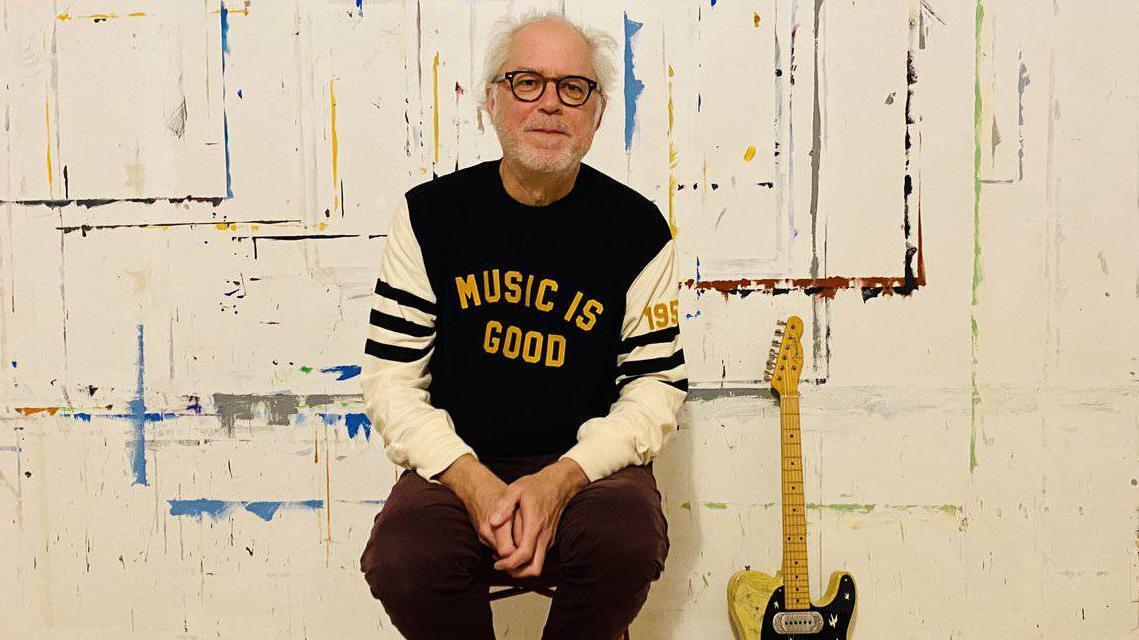
Bill Frisell. Picture: Carole D'Inverno
During the research for my biography of the American guitarist Bill Frisell I put in a request for an interview with Paul Simon, who was coming to Dublin to play a concert. Frisell and Simon had a loose connection – the guitarist had guested on a track on the legendary singer-songwriter’s 2006 album Surprise, and I had heard Simon was a great admirer of Frisell’s work.
The Sony Music press officer in Dublin told me, however, that there was absolutely no way Paul Simon was going to talk to me: he didn’t have an album to promote; the absolute worst time to approach him was during a long and arduous global arena tour; and in all the previous times he had been in the country, Simon had never, ever granted an interview via his record company in Ireland.
I tried to explain that my request was a little different, that I wanted to play Paul Simon some of Bill Frisell’s music, and the PR person did at least promise to pass on my email to Simon’s management in the US. A few days later he called me back. “Well, I cannot quite believe it,” he began, “because he’s actually said ‘yes’. Now tell me again – just who is this guy Bill Frisell?”
It’s a fair enough question. Though the answer is not always so straightforward – not least because, over a period of 45 years, 41 albums as leader, appearances on more than 300 recordings, and innumerable tours and live performances – Frisell is back in Ireland at the end of this month playing the Bray Jazz Festival – the guitarist has established himself as one of the most diverse and panoramic musicians at work today.
On one level, 71-year-old Frisell is a consummate and celebrated jazz player, composer and improviser. He has been called “the musing poet of the jazz guitar” and lauded in the New York Times as “the most significant and widely imitated guitarist to emerge in jazz since the beginning of the 1980s”. Frisell has topped jazz charts and polls, and worked with many jazz greats.
“I’m fine with being described as a ‘jazz guitarist’, and I respect that, and there’s certainly plenty to do within that form,” Frisell told me. “It’s just that when I think about some of the people who’ve inspired me – Thelonious Monk and Sonny Rollins and Miles Davis – for me, jazz is not so much a style as a way of thinking, a process of transforming what’s around you. What bothers me is when the word is used to describe some music that excludes something else; it’s like there are these rules that keep people apart. I’m just trying not to shut anything out.”
On another level, therefore, he is so much more than a jazz elder or master, and his open and adventurous approach to music is a major part of his wider appeal. Frisell’s reach and dedicated following stretch far beyond the freeform yet sometimes introspective borders of jazz into a musical world shaped and inspired by a vast range of forms – from bluegrass to pop, Americana to avant-garde, blues to West African, folk to film music, ambient to alt-rock, country to classical.
By bringing in and blending all these styles into his playing and seamlessly synthesising them into one highly individual sound, modest, mild-mannered Frisell has become the most unlikely of guitar heroes, a gentle agent of change who has inspired others to expand their view of what jazz and music can be.
Add a spare yet evocative technique that values space, shape and structure; a very musical approach to the infinite opportunities afforded by an array of guitar pedals and effects; and Frisell’s enthusiasm for exploring the interplay between music and the visual arts (on stage at the Cork Opera House, for example, for a gala screening of Bill Morrison’s film The Great Flood at the 2012 Cork Film Festival) – and the layers of meaning and potential in Frisell’s music become even greater. “For me, music has always been this world where anything is possible,” he once said.
It was largely for this reason that I decided to write a book on Bill Frisell, to tell his personal and creative story for the first time. After we initially discussed the idea, however, at the Kilkenny Arts Festival in 2014, where he was playing a series of concerts as one of its “artists-in-residence”, Frisell said “no”. He was cautious and reluctant, maybe understandably, and he couldn’t imagine what I would write about or that I would have enough material.
The following year though – after we had agreed on such matters as the amount of access I was looking for ( ) and that the book was to be entirely independent of him editorially and financially – Frisell finally said “yes”.
The research and writing took a good amount of time. Frisell has been described as “the favourite guitarist of many people who agree on little else in music”, a much sought-after player who has worked with a great many musicians, both in his own groups and on more than 300 recordings.
My list of interviewees, both in Europe and the US, was vast and various – as well as Paul Simon, it included Elvis Costello, Lucinda Williams and Marianne Faithfull, and such jazz luminaries as Pat Metheny, Jan Garbarek and Jason Moran.

Early on in the process I also hit upon the idea of an unusual three-fold structure: the book alternates between chapters that are narrative, thematic and “Counterpoints” – listening sessions in which I play tracks from various Frisell albums to, as well as Paul Simon, contributors such as Gus Van Sant, Rhiannon Giddens, Gavin Bryars, Sam Amidon and Justin Vernon/Bon Iver. I conducted one such session with fiddler Martin Hayes and guitarist Dennis Cahill in the living room of my house in Cork.
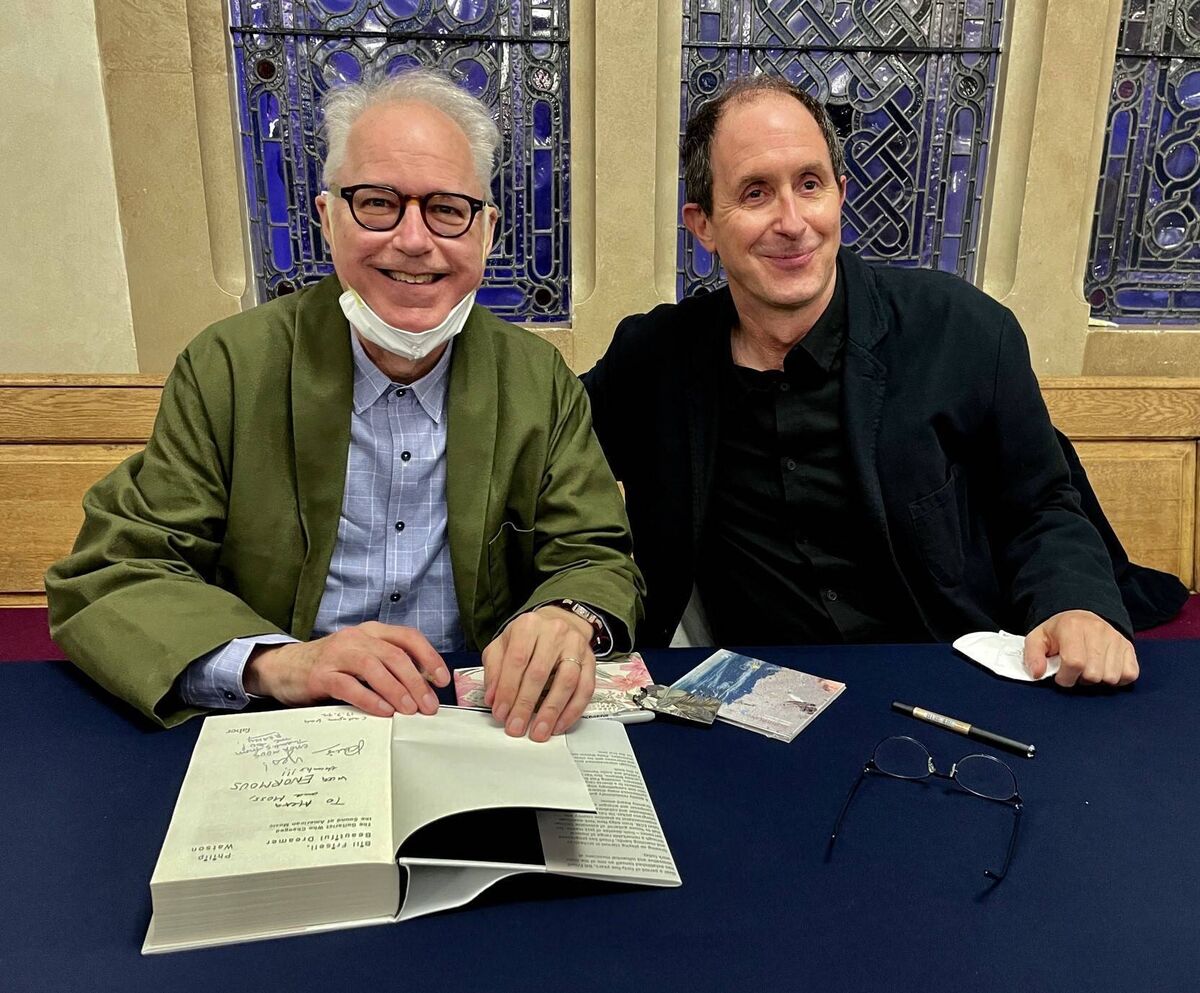
It turned out Frisell was wrong about the lack of things to write about in his deep and prolific career – 451 pages wrong. Because seven years later, in March of this year, Bill Frisell, Beautiful Dreamer: The Guitarist Who Changed the Sound of American Music was published in fine style by Faber. Frisell even flew in from New York to mark the occasion by playing a special solo concert in London.
Yes, years – although, admittedly, I wasn’t working on the book full-time and the pandemic put back publication by twelve months. Seven years is also a modest amount of time compared to, say, American critic and biographer Stanley Crouch, who spent longer on his two-volume life of Charlie Parker than the 34 years Bird actually lived – and died before he could complete it.
Even though there were times when I became disheartened and overwhelmed, it was worth every one of those more than 2,500 days.
It stretched me infinitely more as a writer than anything I had worked on before, and I learned an enormous amount about such things as patience and perseverance, honesty and good humour. I also learned something about story-telling, about playing and appreciating the long game – about the journey being the thing.
“What music has shown me is that it’s not about a goal or anything,” Frisell told me, in response to a question about the most important lesson that life has taught him. “You have to feel good about being in the process rather than… expecting some ultimate reward. Just to be in it, and enjoy being in it, and doing the best you can: that’s the whole idea.”
- Philip Watson will discuss his biography of Bill Frisell with guitarist Johnny Scott at Triskel, Cork on Thursday, April 21, at 7pm (triskelartscentre.ie), as part of the Cork World Book Fest, which runs April 19-24. Admission is free; to register go to corkworldbookfest.com
- Bill Frisell plays the Bray Jazz Festival on April 29 (brayjazz.com)
Frisell’s musical equivalent of the Great American Novel, an absorbing adventure that spans 125 years and embraces such singular if disparate spirits as Bob Dylan, Aaron Copland, Muddy Waters, John Hiatt, Sonny Rollins and Madonna.
A revelatory album that is 30 per cent jazz, 50 per cent Americana/roots/country and 70 per cent Bill Frisell – a deceptively simple and quietly timeless masterpiece that is bigger than maths, categories or genre.
The Frisell “world music album” I played to Paul Simon. Something like a contemporary quilt: multilayered, collaborative, rooted in various historical traditions and sewn together into one artistic and harmonious whole.
A thrilling double live album of Frisell exploring and expanding the art of the guitar trio, via a fascinating collection of originals, standards, traditional tunes and popular songs. Frisell at his most expressive, joyous, inventive and unpredictable.
Pure, unadulterated Frisell in a studio, solo, with a bunch of great-sounding guitars and a selection of his own wonderfully elusive compositions. A model of Frisell’s advanced art and appeal – melodic beauty, harmonic depth, sensitivity of touch and the suggestion of myriad musical selves.