Book Review: how four women formed a theory on human life in WW2
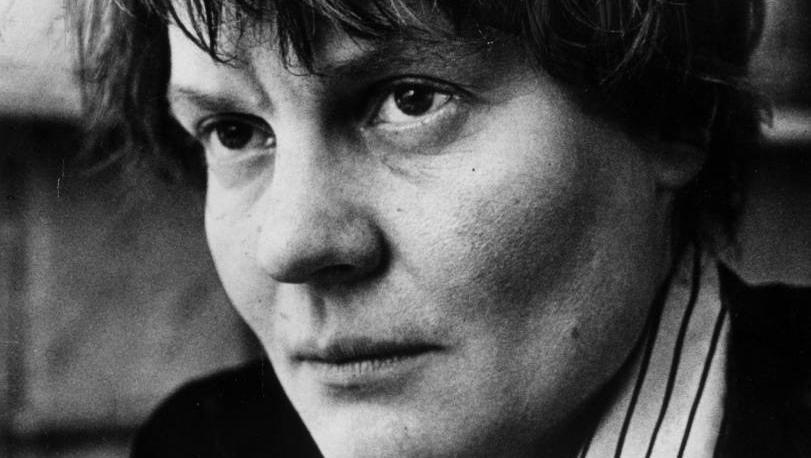
Known for her novels on good and evil and morality, Iris Murdoch is one of four women at the centre of this book.
- Metaphysical Animals: How Four Women Brought Philosophy Back to Life
- Clare Mac Cumhaill and Rachael Wiseman
- Chatto and Windus, €16.99 pb

IN Metaphysical Animals Clare Mac Cumhaill and Rachel Wiseman attempt something that has never been done before. They write a book about philosophy which is constructed as the story of four young women, teenagers when the Second World War broke out and 30- somethings when the narrative arc is complete.
These women were Elizabeth Anscombe, Iris Murdoch, Mary Midgley and Philippa Foot and they were studying philosophy at the University of Oxford. With the outbreak of war many of their classmates left to fight, as did their teachers. The women who remained found that some restraints were removed and that they were able to think and speak more freely than theretofore.
Clare and Rachel form another group of female philosophers, albeit the smallest type of group: a pair, centred in Newcastle where they both live. Here they encountered, in 2013, Mary Midgley, in her nineties but still cogent and still working from her nursing home. Mary spoke, to the young women, of the chaos of war and of how, when individualism and agency is absent and replaced by restriction and uncertainty, philosophy is necessary.
This book is subtitled How , and it tells how semi-starved women, existing through days of blackout and air-raid sirens, formed, collaboratively, a theory about human life. When the men came back to their roles as lecturers or students, they knew nothing of the work which had been accomplished in their absence and so continued where they had left off with an attempt to ‘kill off philosophy’ and rename the academic discipline ‘logical positivism’.
Now, they stated, ‘only questions that could be answered with empirical methods were to be permitted’. Metaphysical questions would be off the curriculum. Nothing that could not be proved could be admitted to the table. Questions such as ‘what is truth’ and ‘what is beauty’ were rejected, left to poets to consider. Keats, of course, had already decided the answer to those questions, ‘Beauty is truth, truth beauty, that is all ye know on earth, and all ye need to know’.
According to Clare and Rachael, these four women were trying to connect philosophical questions with the urgent and real enquiries that confront people in their daily lives. They did not all come up with the same answers but they remained friends and kept talking drawing strength from interactions with each other. Rachael and Clare argue that rather than men like A.J. Ayer, J.L. Austin, R.M. Hare with their initials and their science, the heroes of 20th-century philosophy were people like Susan Stebbing, Dorothy Emmet, Mary Glover and Lotte Labowsky.
These philosophers’ ideas are described in Metaphysical Animals, as a ‘counter-narrative which connects contemporary philosophy with the great speculative metaphysicians of the 19th and early 20th centuries’. Overarching any academic dispute is, as Rachael and Clare, following Mary’s lead, suggest, is the chaos of war and the horror of the Holocaust, Hiroshima and Nagasaki.
Elizabeth fought the award of an honorary degree to Harry S. Truman on the grounds that he was a ‘mass murderer and merciless killer’. She was bemused when her point was smothered by her male colleagues who feted Truman. Now Clare and Rachael, chumming up with their predecessors, Mary, Elizabeth, Iris and Philippa, present the story of women and philosophy in the war and post-war years, a story located in the cloisters of Oxford but also stretching out into dwelling places with prams in the hall.