Book review: Stalin was a voracious reader with a steady critique in the margins
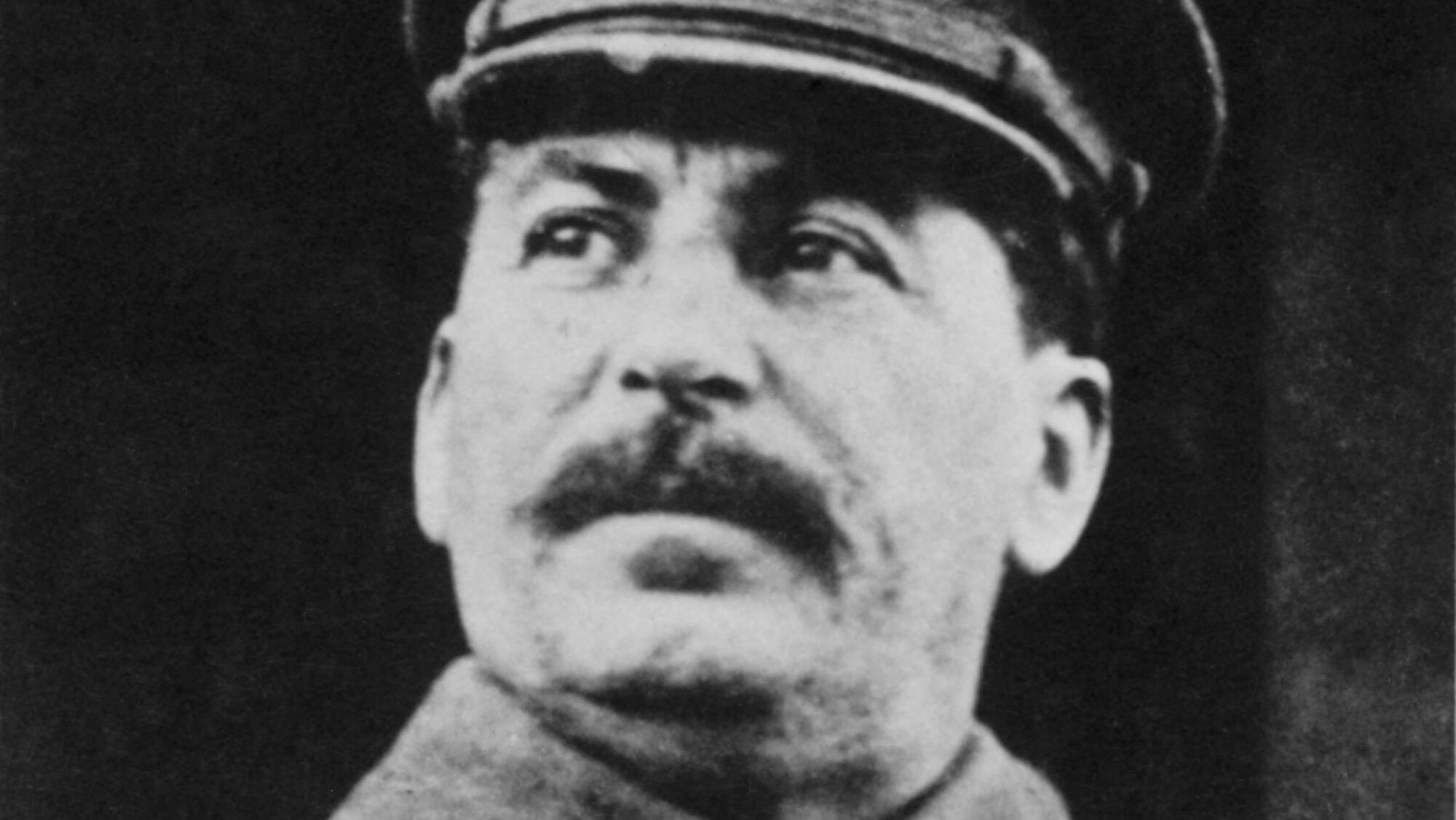
Joseph Stalin, general secretary of the Communist Party of the Soviet Union, circa 1930: He had a huge collection of Russian and international classics: Pushkin, Gogol, Tolstoy, Chekhov, Hugo, and Shakespeare. Picture: Getty
Stalin was a voracious reader, who set himself a daily quota of between 300 and 500 pages.
When he died of a stroke in his library in 1953, the desk and tables that surrounded him were piled high with books, many of them heavily marked with his handwriting in the margins.
As he read, he made notes in red, blue, and green pencils, underlining sections that interested him or numbering points that he felt were important.
Sometimes he was effusive, noting: ‘yes-yes’; ‘agreed’; ‘good’; ‘spot on’; ‘that’s right’. Sometimes he expressed disdain, scribbling: ‘ha ha’; ‘gibberish’; ‘nonsense’; ‘rubbish’; ‘scumbag’; ‘scoundrels’; and ‘piss off”.
He became extremely irritated whenever he came across grammatical or spelling mistakes, and would correct errors with his red pencil.
During his life he amassed a personal library estimated at about 20,000 books, but he also read widely from the collections of friends.
The Soviet poet Demyan Bedny complained that Stalin left greasy fingermarks on the books he borrowed.
After Khrushchev’s denunciation of Stalin in 1956, plans to preserve the library in his dacha were abandoned and his books (which included volumes on child psychology, sport, religion, syphilis, and hypnosis as well as works by Turgenev and Dostoevsky) were dispersed, so it has become challenging to make an exhaustive study of what he enjoyed reading.
Geoffrey Roberts acknowledges that many academics before him have scoured the remnants of his collection, hoping to glimpse Stalin’s true nature or find the “key to the character that made his rule so monstrous”.
Roberts finds no smoking guns, but suggests: “By following the way Stalin read books, we can glimpse the world through his eyes. We may not get to peer into his soul, but we do get to wear his spectacles.”
In the abstract, Stalin admired writers, telling the Soviet writers’ congress in 1934 that while civil engineers were needed to build socialism, the country also required “engineers of the human soul, writer engineers, building the human spirit”.
He insisted that his family and colleagues should be equally well-read. He gave his adopted son a copy of , inscribing it with “the wish that he grows up to be a conscious, steadfast and fearless Bolshevik”.
He gave his daughter a Short Course History of the Communist Party, commanding her to read it. Svetlana said she never bothered because “It bored me so”. (She later defected to the West).
Sergo Beria, the son of Stalin’s security commissar Lavrenty Beria, claimed that when Stalin visited someone from his inner circle he would go into their
library and start opening the books, to check for signs that they had actually been read.
However, he wrote frustratingly little about his views on literature. His huge collection of Russian and international classics — Pushkin, Gogol, Tolstoy, Chekhov, Hugo, Shakespeare — was lost after his death.
So his thoughts on Dostoevsky, for example, can only be surmised from casual comments to friends who remember Stalin concluding he was a bad influence on Soviet youth rather than from incisive notes made during his reading.
From the works that remain, we discover that he was very interested in history, preoccupied with the lessons of tsarist rule in Russia, ominously obsessed by the reigns of Ivan the Terrible and Peter and Catherine the Great.
Most of the surviving annotated works relate to Marxist thought. Perhaps the biggest insight his book collection offers is that he was a diligent, reverential, and genuinely enthusiastic reader of works by Lenin.
Failing that, he settled for books written by his rivals. When Trotsky’s conclusions annoyed him, he wrote ‘fool!’ in the margins.
Stalin kept no diary and wrote no memoirs, so these scribblings in the margins become invested with greater significance than perhaps they deserve.
Roberts warns against reading too much into Stalin’s decision to underline a line attributed to Genghis Khan: ‘The death of the defeated is necessary for the peace of mind of the victors’, or assuming that the doodled word ‘teacher’ on the cover of a play about Ivan the Terrible means that Stalin viewed this tyrant as a role model.
Roberts is startlingly forgiving towards Stalin, noting: “Given the scale of his misdeeds as Soviet ruler, it is natural to imagine him as a monster, to see him in the mind’s eye furiously denouncing opponents.”
Instead, he concludes Stalin was “a dedicated idealist”, “no psychopath but an emotionally intelligent and feeling intellectual”.
According to Vitaly Shentalinsky, in his book , about 1,500 writers perished in Stalin’s Terror. There is surprisingly little focus on their struggle in this book.
Fascinating in parts, its promised insight into Stalin’s true feelings stay elusive.
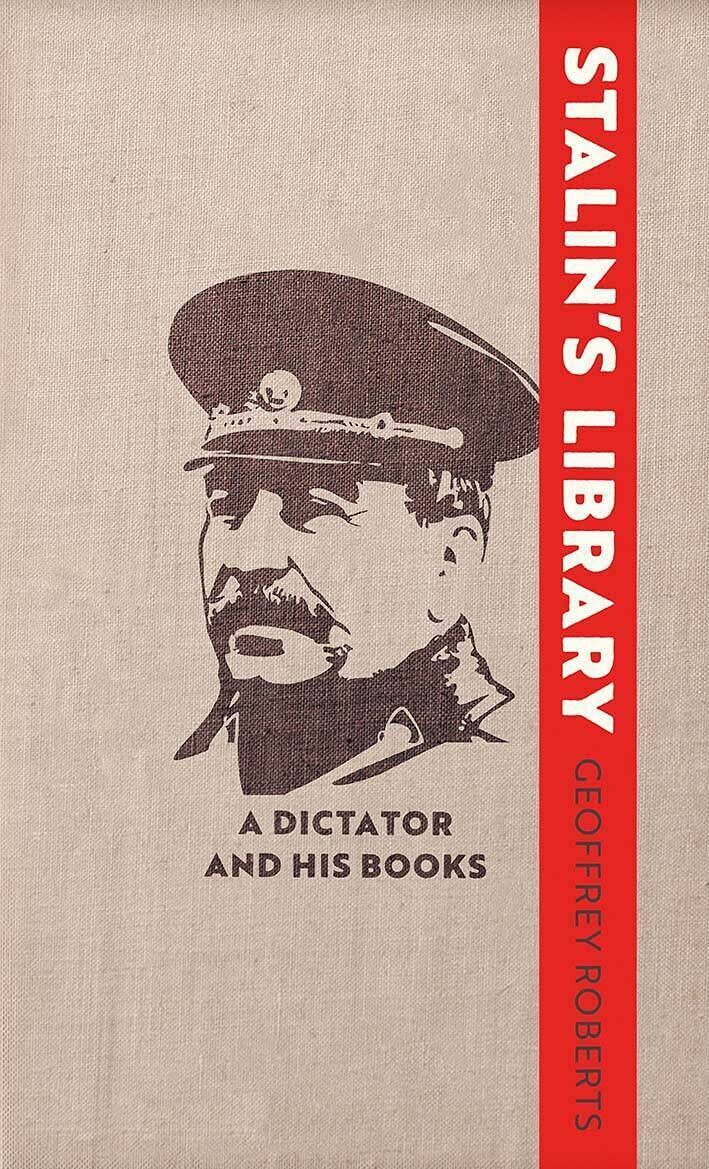
- Stalin’s Library: A Dictator and His Books by Geoffrey Roberts
- Yale, €29.75