Tom Dunne: An era in Irish music when a 'British Invasion' was welcome
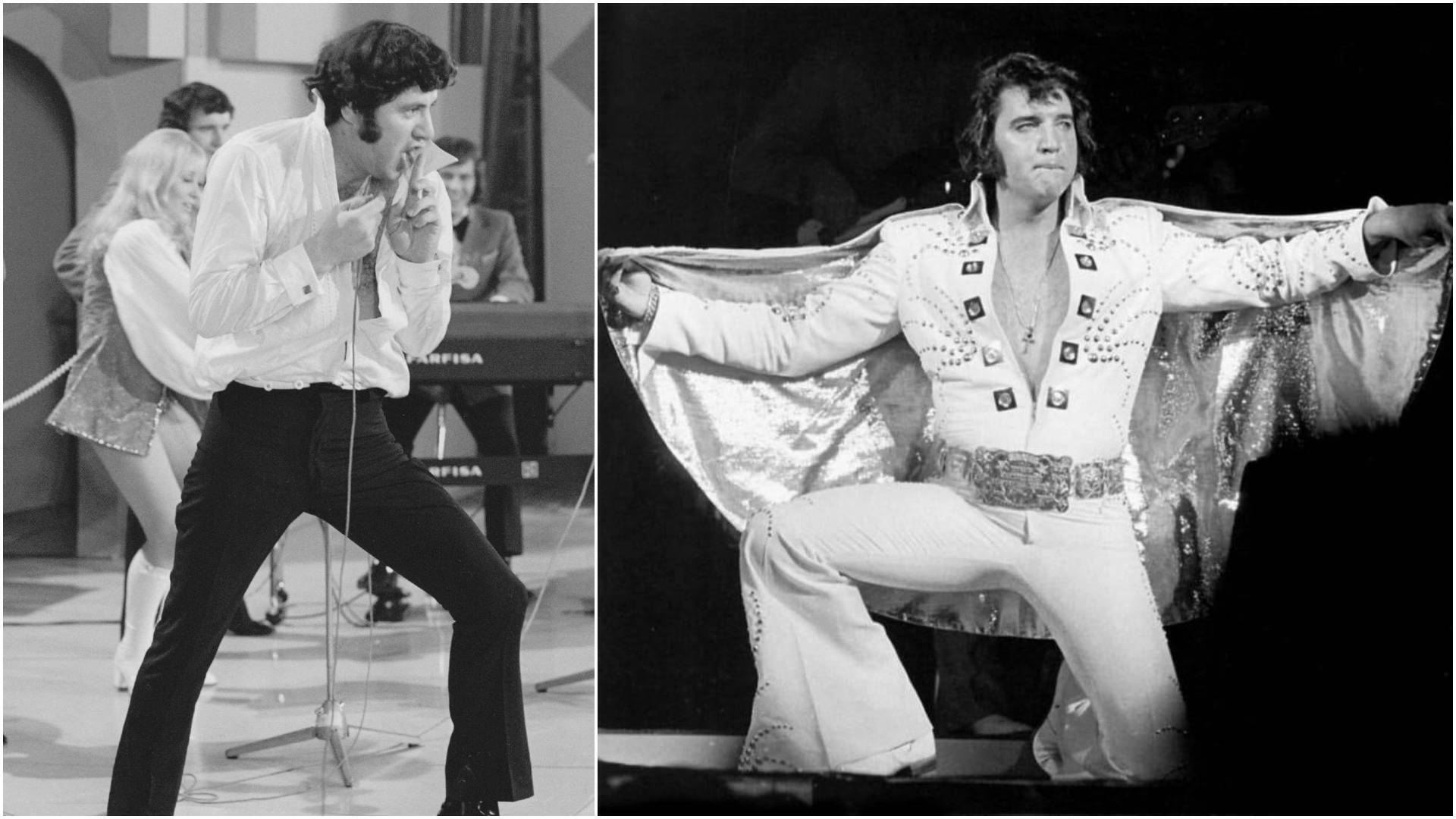
Brendan Bowyer, left, and Elvis Presley, right, were familiar names in Ireland's music charts over the years.

I had always suspected that the minute Ireland heard the opening bars of She Loves You by the Beatles in 1962, skips the country over started to fill with records by crooners, lamenters and folkie naysayers.
I would have thought the crooners themselves would bin their records. “Our number is up,” they’d have said. I would have been wrong.
Perhaps it was the term, “British Invasion,” that caused the problem. That this could mean one thing to a prepubescent American but a completely different thing to an elderly farmer in Leitrim with the mark of the Tans still on his front door becomes very clear if you look at the Irish singles charts for the era. It’s a veritable war ground, Ted.
It did not start well. Although the first ever chart released in Ireland in October 1962 had Elvis’s ‘She’s Not You’, at its head, (we were always happy to be invaded by Yanks), by 1963 it was a different story. Elvis soon gave way to Ned Miller (‘From a Jack to a King’), Jim Reeves and Del Shannon. The crooners in Ireland had not even noticed The Beatles.
In late ’63, at which point The Beatles Please Please Me album was on its way to an unbroken 30 weeks at the top of the USA chart the real battle lines were being drawn in Ireland. Brendan Bowyer’s ‘Hucklebuck’ hit number one for seven weeks.
RTÉ, still brand new, decided to close down at 9pm when Pope John XXIII passed. The times, they were not a changing.
By 1965 Ireland was the land of Butch Moore, Tom Dunphy, Brendan Bowyer, Dickie Rock and others who restricted British Invasion chart successes to the few and far between category. And so to 1966, the year of Blonde on Blonde and Pet Sounds, the year “everything changed”, began here with Larry Cunningham’s ‘Lovely Leitrim’ and didn’t shift much from there.
You could have studied the charts of 1966 in Ireland and not have any suspicion of what was happening in LA studios or in Abbey Road but you'd have known immediately that it was the 50th anniversary of 1916. A song called ‘Black and Tan Gun’ topped the charts as pubs resonated to choruses of, “Thank God we’re surrounded by water”.
If 1966 was the year to celebrate rebel songs, then 1967, when the rest of the world paused to celebrate peace, free love and experimental drug talking, was the year we celebrate our other national obsession: drinking. The Dubliner’s ‘Seven Drunken Nights’ topped the charts followed soon after by ‘Whiskey on a Sunday’.
The Showbands, you suspect, had the upper hand at this point. Johnny Flynn’s Black Velvet Band was knocked off the Number One spot by both Procul Harem’s classic ‘Whiter Shade of Pale’ and The Beatles’ ‘All You need in Love’, but deposed both in short order to regain its crown.
This proved to be a high water mark. By 1968 the British Invasion was well established. Showband hits became very infrequent and did not sit well with the foreign imports. In a year that produced hits like ‘Hey Jude’ and ‘Daydream Believer’, songs like Dickie’s ‘Simon Says’ and Brendan O’Brien’s ‘Little Arrows’ looked almost like novelty hits.
But they were not done yet. As 1969 dawned and the world prepared for the moon landings, Woodstock and The Beatles’ last recorded work, Ireland spent two entire months with Sean Dunphy’s ‘Lonely Woods of Upton’ at the top of its charts. What woods are these I wondered?
It turned out the song was commemorating an IRA attack on a train carrying British Troops at Upton Station in February 1921.
Its release, and success, as Derry witnessed the first of the civil rights marches and Ulster the first of the troubles I presume was not unrelated.
But as a piece of work it reveals all that is suspect in the world of showband chart successes. The song is in fact a ‘reworking’ of a song from the Spanish-American war about the sinking of the Battleship Maine in Havana Harbour. It literally changes the words from sleeping under “Spanish clay,” to “Irish clay.” Showbands were the dearth of original music in Ireland, as a sweep through the charts of the era makes abundantly clear.
But take heart, by the late Sixties one showband escapee was forming a band called Taste whilst another was having an idea for a song suite inspired by his native Belfast. It was not a moment too soon.
- Tom Dunne will be delving into the history of music in Ireland on his Newstalk show on weeknights at 10pm