Book review: How Uyghur Muslims are oppressed in their own land
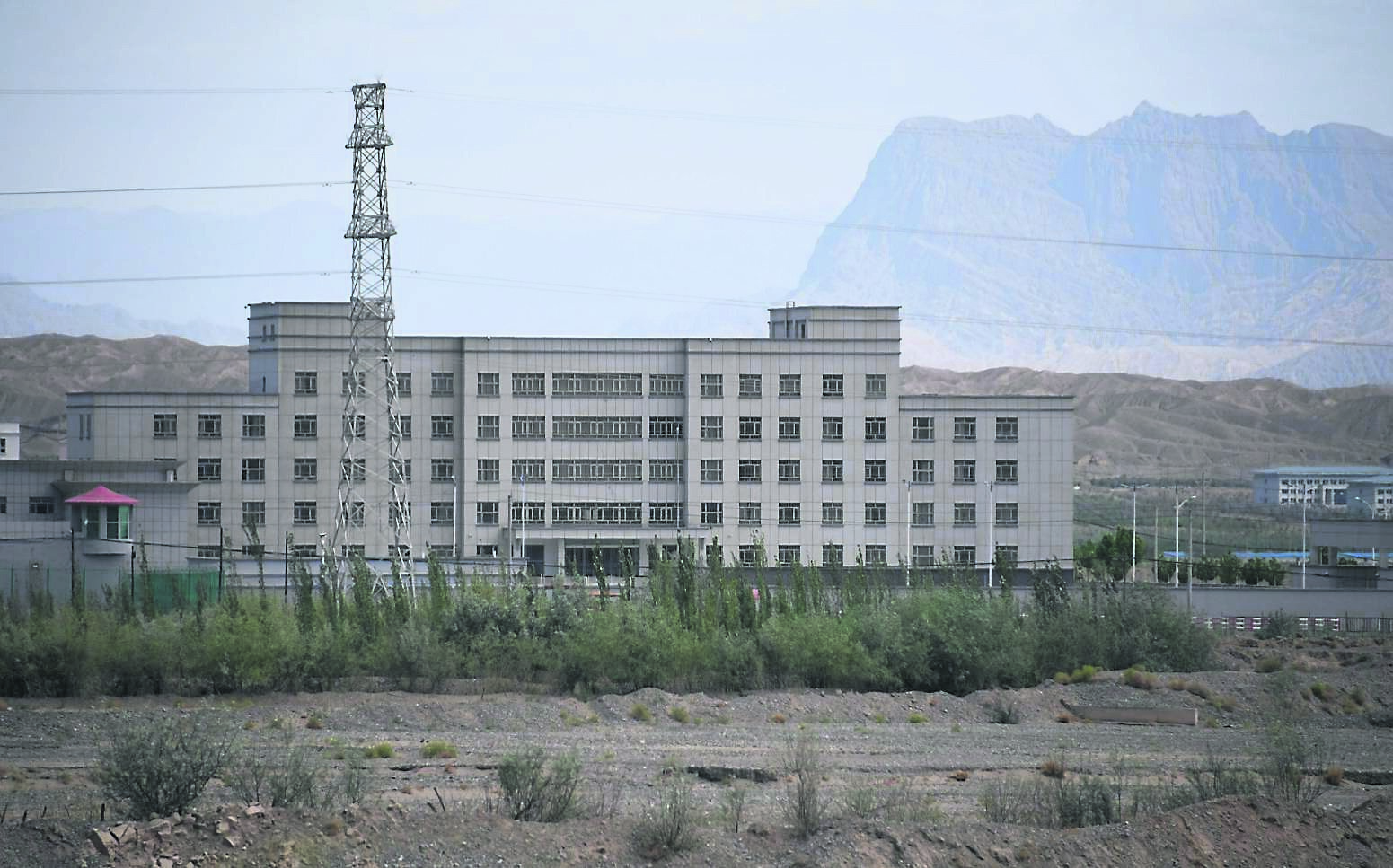
Buildings at the Artux City Vocational Skills Education Training Service Center, believed to be a re-education camp where mostly Muslim ethnic minorities are detained, north of Kashgar in China’s northwestern Xinjiang region. As many as 1m ethnic Uyghurs and other mostly Muslim minorities are believed to be held in a network of internment camps in Xinjiang.
- How I Survived a Chinese ‘Re-education’ Camp: A Uyghur Woman’s Story
- Gulbahar Haitiwaji and Rozenn Morgat
- Canbury €25 hb
THOSE of us who follow Chinese cultural movements will know that there is no authoritarianism anywhere in the world as persistent in its determination to oppress than that of China. It is necessary to understand only the smallest percentage of the history of that country and its people to be aware of extreme totalitarianism.
Mention might be made of the Cultural Revolution, the Tiananmen Square protest and recent political events in Hong Kong. These phenomena are well recognized. But what has occurred in Xinjiang, a province in the northwest of China nearly 20 times the size of Ireland, and what has happened to its population of Uyghurs, is less documented and broadcast.
Rozenn Morgat, a journalist, has persuaded French resident Gulbahar Haitiwaji, to work with her in publicising, through this book, the plight of those who have left and, more importantly, those who have stayed in Xinjiang. It is probably dangerous for Haitiwaji to involve herself with this project because, as well as two daughters and a husband in France, she belongs to a larger family group, many of whom are still living under the Chinese regime in Xinjiang.
Vengeful actions might be taken against her friends and relatives once the book is published. Where they live nobody reports atrocities. The borders of this oil-rich region are kept closed to curious onlookers and thus it is down to refugees or asylum seekers to tell the world.
Xinjiang has been subject, for over half a century, to forms of colonisation ranging from annexation to full blown absorption and now is seemingly undergoing ethnic genocidal methodologies such as forced sterilisation and ‘transformation-through-education’ camps. Everything which is now happening in Xinjiang is the culmination of earlier manifestations which did not seem too threatening when they were first implemented. But that is the skill, one might imagine, of a state which is well-practised in subtle and incremental repression.
In the capital city of Ürümqi, and other urbanisations developed by a conglomeration of oil companies, newbuild was, from the 1970s onward, everywhere. Cities were thrown up so that new citizens could service the oil fields and, without being particularly remarked upon, CCTV cameras were placed at every junction. Joining the local Uyghurs, thousands immigrated, from the majority ethnic Chinese group, the Hans. Manual workers arrived alongside recent graduates from institutions such as the Petroleum Engineering School. Everyone had to attend friendly tea parties with the city police and surveillance become ubiquitous and, thus, normal.
By a gradual drip, drip process the Uyghurs became the underclass. Their Christmas bonus shrunk; the sum now being considerably less than their Han colleagues received. They were told to move into inferior offices on site and were passed over for promotion. Haitiwaji’s husband, Kerim, saw which way the wind was blowing and left the country. He travelled for a number of years, homeless and unemployed before entering France in 2002 as an asylum seeker. When his wife and two daughters joined him in 2006, the girls also gave up their original nationality and became refugees.
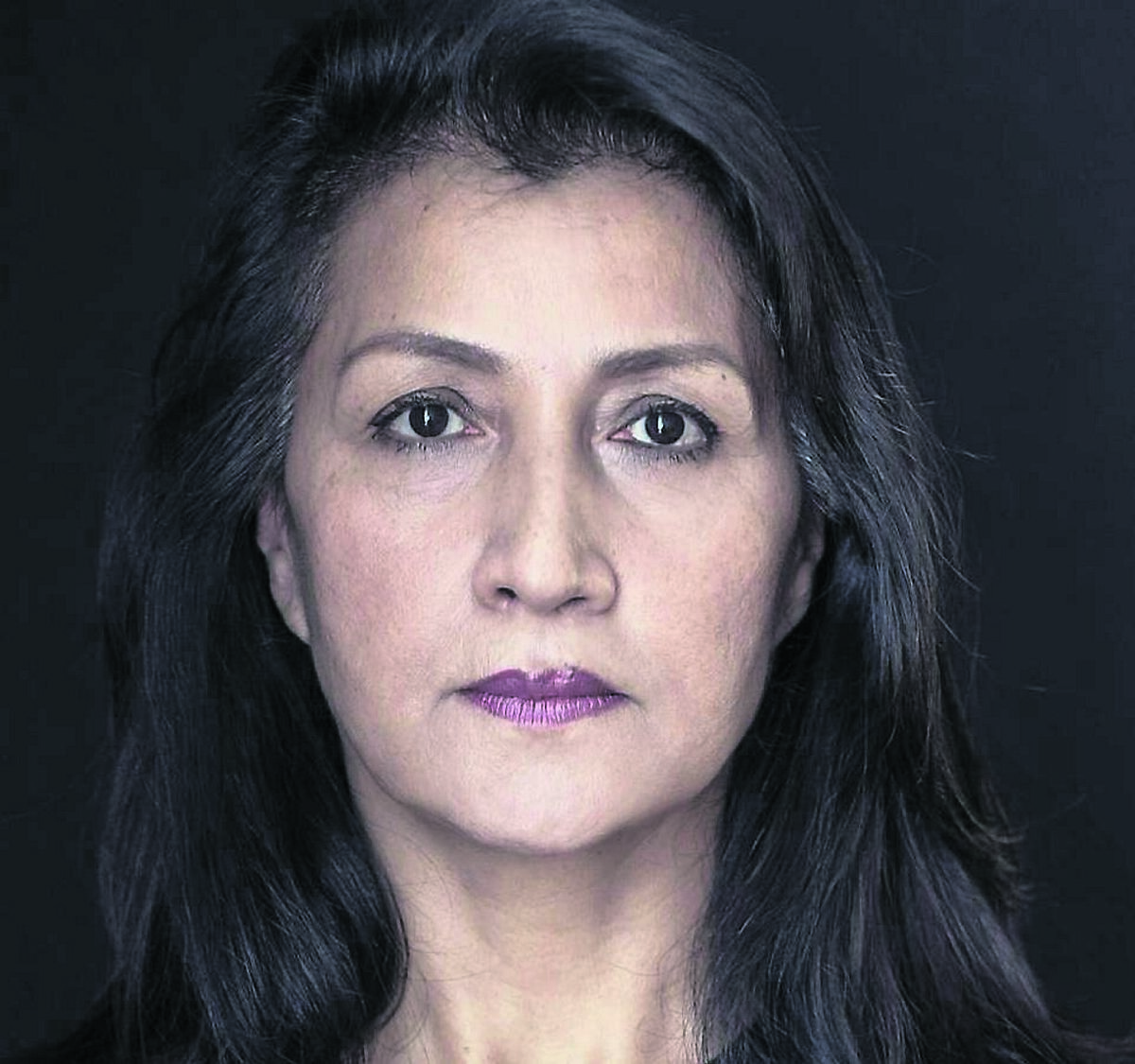
Haitiwaji, travelling with them, could not face exiling herself entirely. She would, she felt, need to go back to her home country, the so-called Xinjiang Uyghur Autonomous Region. It was the home place of so many beloved relations whom she would need to visit in the future. Haitiwaji decided to apply for residential status in France so that she could return for weddings, funerals and other family occasions.
Haitiwaji did, indeed, return to her homeland in 2009 to see her in-laws at a time when, she says, ‘an innocent person who set foot outside their home could be arrested at the drop of a hat’. Although this was not unknown, she felt that the ‘despotism had become more pronounced’. In 2012 Haitiwaji visited her friends and family again. On this occasion she was stopped every 30 miles at roadblocks. The checks were thorough with everyone ordered from the vehicle whilst it was scoured for incriminating evidence.
The tentacles of the Chinese state reach around the world and in 2016 Haitiwaji received an international phone call inviting her back to claim her employment pension. This transaction could, it appeared, only be done in person. In spite of mental alarm bells, she booked flights and arranged accommodation with an old friend, Aynur.
When the two women went to the office, so that Haitiwaji could sign the papers, three men interrupted the administrative task. Anyur’s face turned green as she immediately realised that these were policemen. Haitiwaji was placed in handcuffs and driven to the police station.
From this moment she lost any agency. Her Chinese passport was confiscated and she was under investigation. No one in Xinjiang would be able to help Haitiwaji without putting themselves in danger of arrest. It was perilous for them just to know her or her husband and children. Interrogations were, ironically, her only hope. If she could convince her interlocutors that she was not a terrorist and knew no terrorists, they might let her return to France.
Incarcerated in a cell along with other Uyghur women she trod a knife edge between refusal to incriminate herself or anyone else, and dumb insolence. Shown dozens of photographs of people accused of terrorism against China, some of whom she recognised from Uyghur demonstrations in France, she pleaded ignorance. Her stubborn repetition of the same nebulous answers led to her jailors losing their patience and shackling her to a bed. The skin on her ankles became impregnated with brown rust, looking, Haitiwaji states wryly, like the henna women use to decorate their feet for a wedding.
The centrepiece of the accusation against Haitiwaji was a photograph of one of her daughters, Gulhumar, holding the flag of the separatist movement at a protest in Paris. The Uyghurs take their genetic and cultural heritage from Turkic Sunni-Muslims. What was their ‘country’ is bordered not only by China but also Kyrgystan, Kazakhstan, Tajikistan Afghanistan, Pakistan, India, Tibet and Mongolia. Gulhumar waved the blue flag of East Turkestan, and her mother became tainted by her offspring’s ‘terrorism’.
But Haitiwaji would not admit to any knowledge of why her daughter was present in that group. Frustrated interrogators dismissed her from the jail and sent her to a ‘re-education’ camp. There are human rights’ organisations think, nearly 400 such camps in the region. When the ‘dissidents’ in these ‘schools’ are added to those in prison, the total is believed to be about one million: a twelfth of all Uyghurs.
Of those in the diaspora, Gulhumar was most active in publicising her mother’s detention. Others helped to create a vocal and insistent media campaign. Whilst Kerim’s friends in China tried to help they were soon threatened and silenced by the authorities. Even in France, many who could have spoken out remained mute, self-censoring for fear of repercussions reaching them all the way across the world.
When Haitiwaji was finally returned to Boulogne, she found that many of her compatriots kept their distance. Daily life could never return to normal anyway because ‘re-education’ had destroyed parts of her physical, mental and emotional wellbeing. Haitiwaji was not the same woman.
The appearance in bookshops of How I Survived a Chinese ‘Re-education’ Camp should raise some awareness of the Uyghur’s struggle. Its February 2022 publication date was synchronised with the ‘genocide Olympics’, as last month's winter games in Beijing were branded. But whilst the United States and some other western nations formed a diplomatic boycott of these games on the grounds of human rights’ abuses, no majority-Muslim country joined their ranks.