Marian Keyes on rehab, menopause and the joy of revisiting one of her sexiest characters
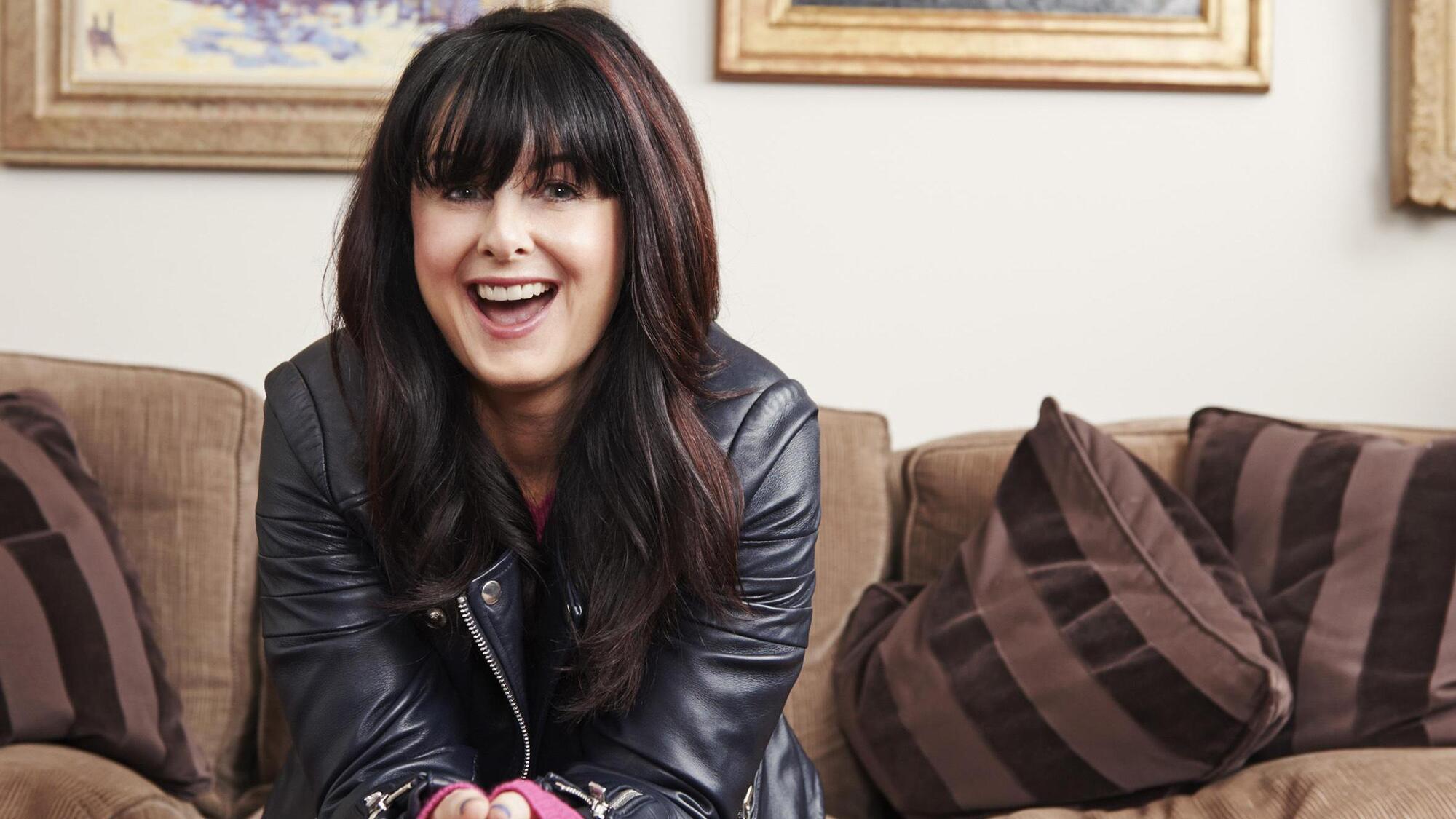
Marian Keyes. is about to publish a new book, Again Rachel. Picture: PA Photo/Dean Chalkley
Marian Keyes is in bed. It’s two o’clock in the afternoon, but she has just got back from a funeral and was feeling chilly. “It was a beautiful send-off,” she says as reassurance that she’s OK to talk. She is wearing a lilac hoodie and flashes a pastel pink manicure as she rearranges the pillows to get comfy. Within a few minutes it feels as if we are both having tea and biscuits under the duvet at her Dún Laoghaire home, as she gives me a virtual tour of her bedroom.
So far, so Marian Keyes. Loved by readers for her chatty style and satisfying storylines, she was for many years dubbed the queen of chick-lit, a phrase now as passé as Daniel Cleaver’s chat-up lines in . In fact, her novels have tackled hefty issues such as addiction ( ), bereavement ( ), domestic violence ( ) and depression ( ), always with her trademark lightness of touch. Yet despite selling more than 35m copies over the years, she is too often dismissed as a popular writer of books with pink covers (both of which are fine by her, thanks for asking).
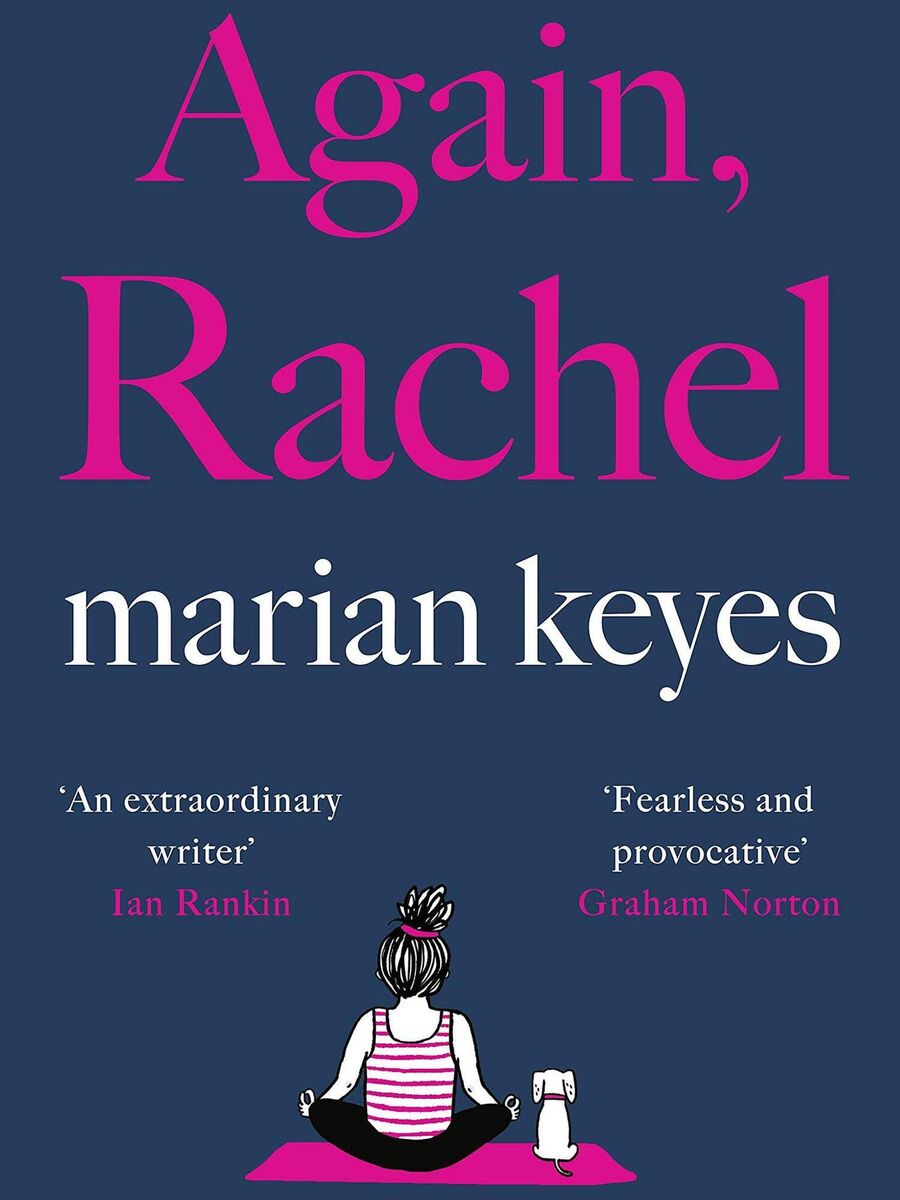
This month her 15th novel, , will be published. It’s a sequel to , the novel that helped to make her name back in 1997. The 25th-anniversary edition has gone straight into the bestseller charts: its fuchsia cover featuring flip-flops screaming hedonist '90s, in contrast to the new novel’s grown-up navy jacket with a cartoon of a yoga mat and puppy.
We meet Rachel again as a fortysomething back at the Cloisters clinic where she was treated for cocaine addiction in the first novel, and where she is now head counsellor; her only addiction is snazzy trainers. She has a dog, a boyfriend called Quin who knows all the smartest restaurants, and a loving family. “This was my life now and it was a good one,” Rachel reflects.
So the stage is set for the return of her ex, Luke Costello (he of the too-tight leather trousers), which will send a flutter through the hearts of readers of a certain age. “OK, I did it for myself as much as for anyone else,” Keyes admits. “It was lovely writing him again. He was very, very sexy in .” It isn’t giving anything away to say that Rachel’s life isn’t just internet shopping and gardening.
“As a menopausal woman, I like banging the drum for the idea that we don’t all wither when we are 37,” Keyes says. “I write about women being sexual past the watershed of 40, when we are supposed to shut up shop.”
Keyes had always resisted the idea of writing a sequel because it felt like “selling people short”, and thought she was finally done with the Walshes. But she found herself drawn back to Rachel.
“I think it must have been that connection with her as an addict,” Keyes says. After a suicide attempt when the writer was 30, her parents checked her into a clinic in Ireland for alcoholism. “She’s an addict, I’m an addict.”
Like Rachel, Keyes, who is now 58, has been sober ever since, but the new novel “recognises the vulnerability that an addict lives with every day. Every single day there is a possibility that your life could kind of slip off, slip out of being normal and fall through the cracks again,” she explains, before brightening. “I’m making it sound very grim and it’s not.”
She loved writing the group therapy sessions in both novels. “Having gone through rehab myself, it was one of the happiest times of my life in a bizarre way. The bonds that you form with the people in your group, the other walking wounded … we were all trying to help each other. It was actually very beautiful. I wanted to bring that same camaraderie and humanity to the new book.”
Keyes divides her life into before and after recovery. “Once I did go through rehab and admit the game was up, things were possible for me: healthy relationships, a career, honest, authentic friendships.”
In what reads like the outline of a Keyes novel, four months before she gave up drinking she wrote a short story and sent it to a publisher on a whim; the year after she left rehab her first novel, , was published, and she got married at 32. (Her husband Tony Baines — “He’s lovely!” — looks after everything that comes with being an internationally bestselling author.)
One of the sadnesses of her “after” life is that they never had children, a grief that is movingly expressed in .
“As somebody who wanted children and who didn’t get them, you are stalked by the ghosts of the children you didn’t have. I don’t mean it to sound spooky; it’s the opposite of spooky, you think of all that joy and fun and pride and love.”
She decided against IVF “because I was afraid that I wanted too much. I was about six or seven years into recovery, I suddenly had a career, I really loved Tony,” she explains. “That old Catholic thing. I felt I was being told ‘Stop! You’ve been given plenty, don’t ask for more.’”
In her mid 40s, Keyes was overcome by a depression that lasted four years. Although she had been troubled by anxiety since she was a child, it was unlike anything she had experienced before. “I can’t eat, I can’t sleep, I can’t write, I can’t read, I can’t talk to people,” she posted on her blog in 2010. And yet she managed to complete , about Helen Walsh, the youngest of the sisters, whose suicide attempt mirrored Keyes’s own.
Despite making severe depression terrifyingly real, the book never loses its comic edge and is now her favourite of her novels. Even after she had come through “the worst black bits”, for a while she would feel “a pang of envy” when she heard someone had died. “I’m really not proud of that,” she says. “It took a long time for that kind of re-embracing of life to happen, but it did happen.”
Since emerging from those “war years” in 2015, she feels mostly “better than normal”. It has made her “far more capable of a kind of pure joy”, she says, “more able to love”. She feels it’s important to acknowledge that “horrible things damage you. They don’t make you better, or wiser and stronger. Most of the time they hobble you a bit.”
The eldest of five, Keyes attributes her gift for telling a story, and making it funny, to growing up in a big noisy household, rather like the Walshes. “Being a good raconteur was a thing in my family,” she says. “I think there was a blueprint given to me very early on. You laugh at your misfortune. It’s an immensely Irish thing.”
Anything a man writes is automatically given more weight, that’s the long and the short of it. What frustrates her more than lack of critical acclaim is the “low-level misogyny” behind the snobbery. “There are so many women who are kind of ashamed of reading my books because they’ve been told to be,” she says. “On behalf of all female writers, women who write about life and relationships and family dynamics, I feel I have a duty to say: ‘We are just as good, you know. You needn’t be ashamed of reading us.’ We are not ‘guilty pleasures’ — we are simply pleasures.”
Keyes is delighted at the success of fellow Irish novelist Sally Rooney. “The utter thrill that there were people queueing outside bookshops around the world for the third novel from a young, female, Marxist, feminist Irish writer. Who would have thought?”
Above all, she is thrilled at the changes that made her ascendency possible: “A writer who came from this repressive f**king country where women were not allowed to have opinions, where sticking your head above the parapet brought this incredible weight of judgment down on top of you,” she says. “It makes me proud of Ireland.”
She rattles off a list of names — Naoise Dolan, Louise O’Neill, Nicole Flattery, Jan Carson, Lucy Caldwell — who have gained acclaim in Rooney’s wake. “She has changed the landscape for young Irish women writers.”
Of her own writing, Keyes sees (2020) as a turning point, not least because it was reviewed seriously. “People have stuck with me and a kind of a gradual accretion of affection or mild respect has built up,” she says. “I think something happened with that book, people thought: “OK, grand! She did this, we are all right. We can like her.” Twenty-five years after she first appeared on the scene, Rachel Walsh is finally respectable.
- is published on February 17
- Helpline: Samaritans 116 123