Book Review: Alexander Graham Bell's troubling legacy to the deaf
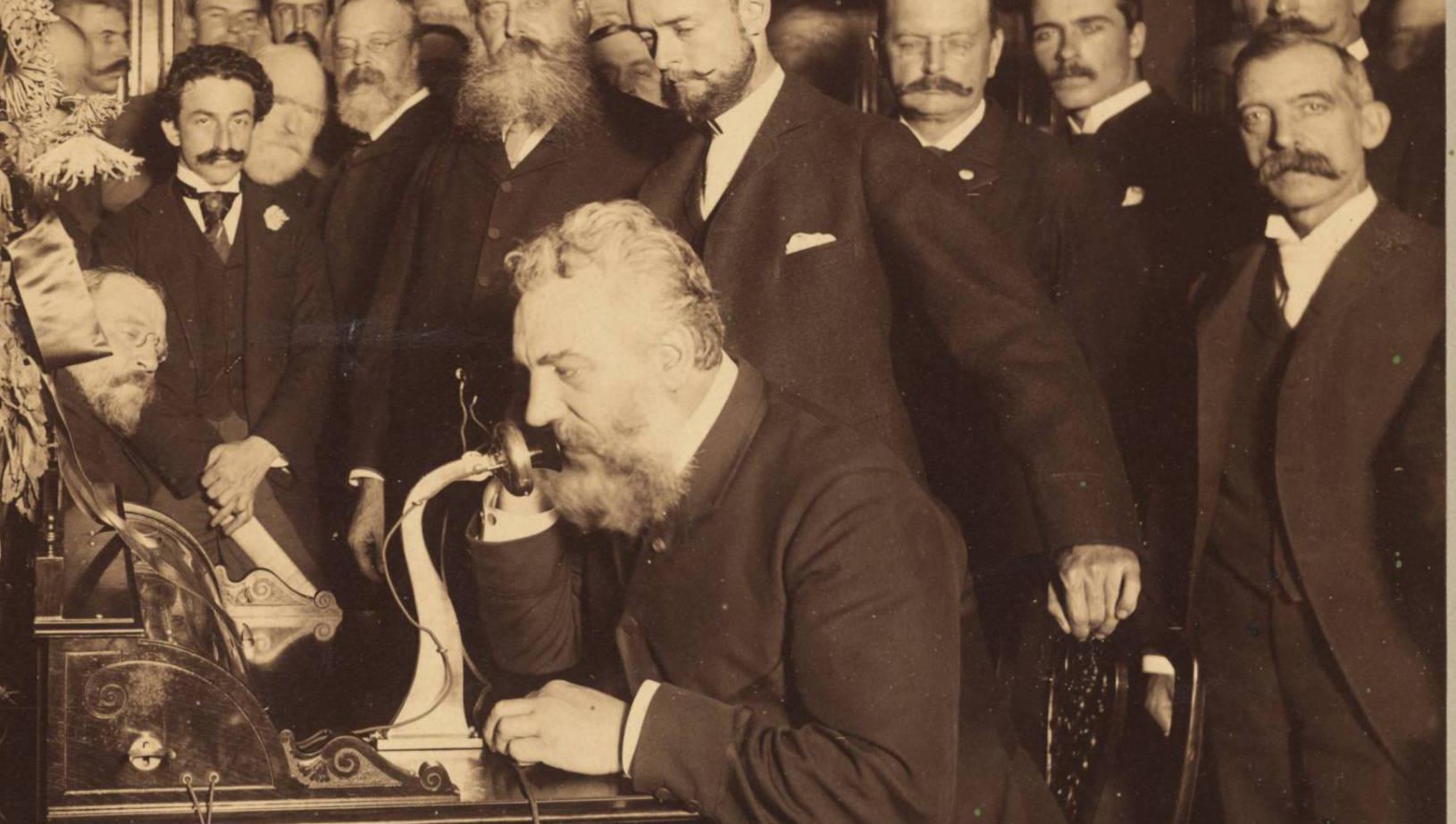
Inventor and educator Alexander Graham Bell sparked a communications revolution when he patented the telephone in 1876 - but his legacy of involvement with the deaf is debated
- The Invention of Miracles: Language, Power, and Alexander Graham Bell’s Quest to End Deafness
- Katie Booth
- Scribe UK, £25
The slogan in an early advertisement for the newly-invented telephone captures the sense of anticipation that the instrument inspired: “Time and distance overcome”.
Alexander Graham Bell’s 1876 invention revolutionised communication and transformed society.
Famously, however, Bell refused to have a telephone in his study because he worried that it would distract him from his work as a scientist.
It’s easily forgotten that Bell regarded inventing the telephone as a distraction from his main mission in life.
Bell’s overriding vocation was teaching the deaf to speak.
In a letter to his wife, Mabel, in 1876, Bell wrote that “whatever success I may meet with in life…your husband will always be known as a ‘teacher of deaf-mutes’”.
Bell’s wife and his mother, Eliza, were deaf.
Significantly, Bell’s telephone invention originated as a machine designed to read speech for the deaf.
But if the invention that Bell is synonymous with connected people across oceans and countries, Bell is regarded as a hugely divisive figure by the deaf community.
In its searing, often scathing critique of Bell, Katie Booth’s The Invention of Miracles provides a complex portrait of the world-renowned figure.
While the book charts the humane pioneer who is celebrated as harnessing miracles out of voice and striving to improve the lives of the deaf, this revisionist biography emphasises that Bell’s single-minded determination to integrate the deaf into the hearing world means that we should remember him as the eugenicist who declared a war against the deaf.
“After devoting a lifetime to liberating deaf people,” Booth writes, “Alexander Graham Bell went down in deaf history as the culture’s great enemy”.

A preoccupation with voice was inculcated in Bell by his family. Bell’s father, Melville, was a professor of speech elocution at the University of Edinburgh. Melville, his brother, and his father were famous elocutionists who helped actors and preachers to exploit the power of their voice.
Such was the family’s repute that they inspired the character of Henry Higgins in George Bernard Shaw’s play Pygmalion, later adapted as the musical My Fair Lady.
But tragedy spurred Bell’s family to move from their native Scotland to Canada.
Bell’s two brothers, his only siblings, died of tuberculosis in quick succession.
In 1870, the 23-year-old Bell was also diagnosed with the disease and was given six months to live.
When Bell emigrated with his family to Ontario that year, he didn’t believe he’d recover from his diagnosis – he expected that he was going to Canada to die.
Despite the changes the telephone inaugurated, initially no one – including Bell – appreciated its importance.
Thanks to the speed and efficiency provided by Morse code, the telegraph was viewed as the superior invention.
It was only when the power of connecting people directly, rather than connecting central offices of Morse code experts, was recognised that the potential of the telephone became clear.
In 1877, two days before he married Mabel, Bell was among the founders of the Bell Telephone Company, which later became the telecommunications behemoth AT&T.
For more than 20 years after Bell received the US patent for the telephone, however, he was the subject of legal challenges by other scientists who asserted that they created telephone prototypes before Bell received the exclusive rights to the technology.
The deaf community’s abhorrence of Bell is founded on two positions that Bell adopted towards them. The first is the education method Bell favoured for deaf students. In the late 19th century, there were two competing, bitterly-divided approaches to deaf education. Oralism refers to teaching deaf students to speak through lip reading.
In contrast, manualism means teaching the deaf to communicate through sign language. Bell was a vocal proponent of oralism.
A defining shift in the debate occurred at an international congress on deaf education in Milan in 1880, where the vast majority of delegates supported oralism.
The conference prohibited sign language and passed a resolution that “considering the incontestable superiority of speech over signs” deaf students should be taught exclusively through oralism.
The consequences were profound.
In 1867, all deaf students in the US were educated using sign language.
By 1918, however, roughly 80% of deaf students there were educated orally.
Frequently, parents who used only sign language couldn’t communicate with their children who were taught only to lip read.
“Oralism hobbled the early intellectual development of generations of deaf children,” Booth writes, “and led to massive under-education and alienation of deaf children from deaf communities.” The second, and most damning, reason that Bell is reviled by the deaf community relates to his insistence on eliminating deafness.
Typically, sign language was taught at residential schools.
Because deaf students often met their future partners at these schools, Bell believed that the way to prevent deaf intermarriage was to remove sign language from the classroom.
Booth contends that Bell’s opposition to sign language was, fundamentally, a determination to control births.
Bell wanted deaf people to assimilate with and marry hearing people so that fewer children would be born to deaf parents.
Bell’s ideas fuelled his interest in eugenics.
In response to Bell’s involvement with the leading US organisation dedicated to the study of eugenics, the American Breeders' Association, the president of the National Association of the Deaf denounced Bell as the most dangerous “enemy of the American deaf, past or present”.
Booth claims that Bell’s most notorious words to the deaf were: “We should try ourselves to forget that they are deaf. We should try to teach them to forget that they are deaf.” For her, Bell’s most pernicious effect was the way his resistance to sign language and deaf intermarriage contributed to deaf people internalising their oppression.
Tellingly, the essential flaws in Bell’s thinking were articulated in a letter to him from his wife: “You are very tender and gentle to the deaf children, but their interest to you lies in their being deaf not in their humanity”.
The Invention of Miracles is the first book by Booth, an American writer, ghost-writer, and editor.
Based on 15 years of research, Booth harvests Bell’s letters, Mabel’s diaries, Library of Congress archives, and 19th century deaf newspaper records to prosecute her arguments.
Shifting seamlessly between Bell’s professional and personal life, The Invention of Miracles is infused with a marked intimacy due to Booth’s novelistic eye and the way she fine-tunes her antenna to the minutiae of Bell’s life.
But Booth’s ambition to underscore the damage Bell did to the deaf community threatens to derail her scholarly commitment to present a balanced biography.
Bell believed that deaf people shouldn’t marry each other, for example, but he expressly opposed legislation designed to criminalise deaf intermarriage.
Likewise, Bell endorsed the role of eugenics in eradicating disease and disabilities, but he withdrew from the movement before it began to advocate for sterilisation.
Booth concedes these points, but they tend to be overshadowed by the force of her resolve to indict Bell.
Booth’s thesis is skilfully constructed and elegantly expressed, but her objectivity seems compromised by her own perspective.
Booth grew up learning English and sign language.
Two of her grandparents were deaf and she writes affectingly about how they were made to feel marginalised in a hearing world that showed contempt towards sign language – a legacy that Booth directly attributes to Bell.
Ultimately, Booth starkly insists that if Bell’s beliefs on deaf intermarriage and procreation were implemented, she wouldn’t be alive.
“[I]f Bell had had his way,” Booth writes, “my great-aunt and great-uncles wouldn’t be here, my grandmother wouldn’t be here – and by extension, my mother wouldn’t be here, and I wouldn’t be here”.