Portrait of the artist on Leeside: Eight ways James Joyce is connected to Cork
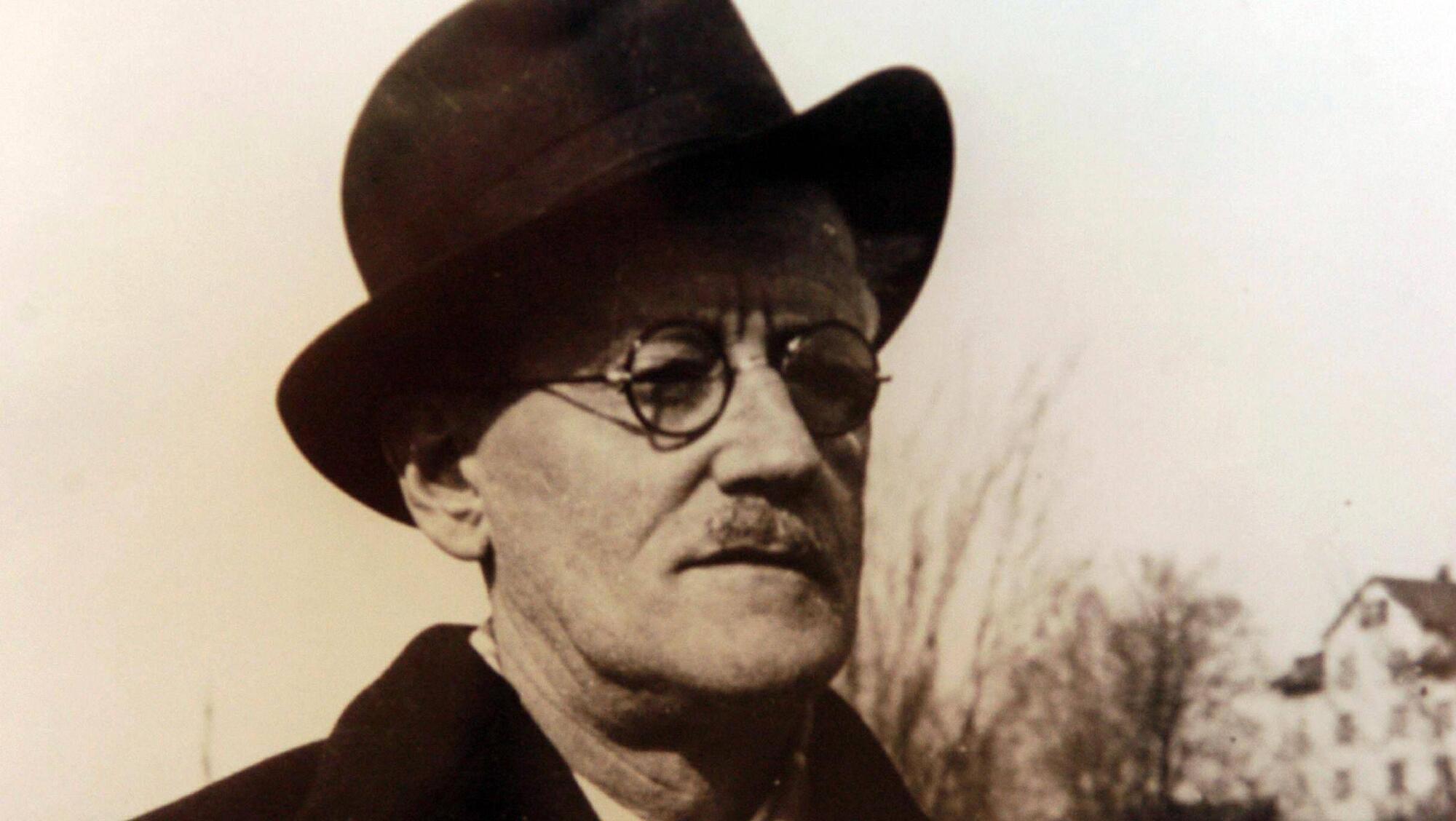
His nan is buried in Ballyphehane, and the southern city regularly crops up in Joyce's work
Portrait of the artist on Leeside: Eight ways James Joyce is connected to Cork

James Joyce had many links to Cork. 

1. Stephen Dedalus in Cork

In Joyce’s coming of age novel Portrait of the Artist as a Young Man published in 1916, his semi-autobiographical protagonist Stephen Dedalus recounts his real life experience of travelling to Cork in 1894 with his father in order to sell the family properties in the South Parish. 

Joyce’s family were salt merchants and owned properties located between Douglas Street, Dunbar Street, White Street and South Terrace. Hence the naming of Joyce’s Court on White Street today.

2. Ballyphehane burial 

Joyce was related to Daniel O’Connell, of Liberator fame, through his father’s mother, Ellen O’Connell (1816 – 1881). Ellen’s parents owned a drapery business in Washington Street and her brother William resided in Castle Street. Ellen and her sister Alicia were educated at the South Presentation Convent (now Nano Nagle Place). 

Ellen married John Augustine Joyce (1827 – 1866) at SS Peter and Paul Church in Paul Street in 1847. She is interred in St Joseph’s cemetery, Ballyphehane.

3. Anglesea Street home

Ellen and John Augustine had only one child, John Stanislaus, the father of James Joyce. He was baptised in St Finbarr’s South Chapel on 6th July 1849 and reared in Anglesea Street and Sunday’s Well. The often overlooked plaque on the footpath on Anglesea Street is in the wrong place!

Local historians Ronnie Herlihy and Patrick O’Donovan place the "double fronted house with large front garden" closer to the corner of Copley Street and Cotters Lane.

4. A visit to UCC

John junior was educated at St Colman’s in Fermoy and Queen’s College Cork (now UCC). In Portrait of the Artist Stephen and his father walk along the Mardyke and enter the University at the main gates which would have been where the Gaol Cross is now. They visited the Anatomy building, later the Windle and now the new Student Hub, where Joyce’s father had studied for a degree in medicine in 1867.

John Stanislaus did not do well at his studies but excelled at sports, singing and theatricals. He often performed with the Queen’s College Dramatic Society at the Theatre Royal (now the GPO) and in May 1869 the Cork Examiner wrote that his performance was ‘far above the rendering of the ordinary amateur’ and on another occasion that ‘Mr Joyce’s really admirable singing was applauded as it merited’.

5. Cobh connection

In the summers John Stanislaus spent time at his family’s holiday home at Glenbrook. In Ulysses there are several mentions of Queenstown (Cobh) but most telling is when the sailor D B Murphy asks Stephen if he knows where Carrigaloe is, and he replies “Yes, Queenstown”. “That’s right,” says the sailor “Fort Camden and Fort Carlisle”.

James Joyce and his father visited the Youghal and Crosshaven areas sometime during their visit to Cork in 1894. For reasons of health in his youth, John Stanislaus was sent out on the pilot boats that went to meet the transatlantic liners calling into Queenstown.

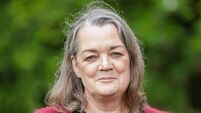
Flicka Small, Joyce expert at UCC. 

6. Selling off the Cork assets 

After John Augustine died, Ellen Joyce was forced to remove her young son to Dublin because she disapproved of his association with a Fenian group in Cork. When he came of age he inherited a considerable amount of property and enjoyed a comfortable life with his young wife May Murray who he had met in Dublin at choir practice.

James Joyce, born in 1882, was their eldest son. John Stanislaus was a sociable raconteur who enjoyed a profligate lifestyle, and soon he had drunk his way through his inheritance. Hence the journey to Cork. 

In December 1893, Scanlon and Sons of 22 South Mall advertised that they had been instructed by John S Joyce Esq, now permanently residing in Dublin, to sell by auction ‘Lot 1: an extensive range of private houses, two first-class licensed houses, corn stores, yards etc. extending from and including No. 6 Anglesea St. and terminating with and including premises in Cotter St.’ 

7. Staying in the Victoria Hotel

James Joyce and his father stayed in the Victoria Hotel on Patrick Street. The hotel dates back to 1810 and famous guests have included Charles Stewart Parnell, John Redmond, Michael Collins, Liam Cosgrave and Winston Churchill. It was also in this hotel that the newly founded Gaelic Athletic Association held its second meeting in 1884. The Citizen in Ulysses is modelled on Michael Cusack.

In Portrait of the Artist having journeyed from Dublin by train and crossed Cork in a ‘jingle’ or horse drawn trap, his father orders that quintessential Cork dish drisheens for his breakfast. The night after the auction they repair to Newcombe’s (sic) Coffee House. Newsom and Sons, Merchant Tea and Coffee Dealers, first opened in 1816, located on the corner of Marlboro Street and Patrick Street, later the site of Woolworths and later again the Permanent TSB and River Island. Their warehouses were in Carey’s Lane, now Dukes CafĂ©. The Cork Sculptor Joseph Higgins (1885 – 1925) worked as a Clerk at Newsom’s.

8. City in the frame 

James Joyce and his family moved to Paris in 1920. When Frank O’Connor (1903 – 1966) the Cork short story writer visited him there he admired a painting that Joyce had hanging on his wall. He asked “What is that?” “Cork,” replied Joyce.

“No, I mean the frame,” said O’Connor. “Oh that’s Cork too,” said Joyce.

Joyce briefly returned to Cork for “5 rainy, dreary hours” in 1909 when he was looking for a suitable venue to open a cinema. He established the Volta, the first commercial cinema in Dublin the same year.

  • Flicka Small works at the School of English, University College Cork. Along with Michael Waldron, she has curated the Odysseys exhibition currently on at the Crawford Art Gallery, tracing Joyce's connections to Cork.
  • Ulysses was published 100 years ago, on February 2, 1922

More in this section

Scene & Heard

Newsletter

Music, film art, culture, books and more from Munster and beyond.......curated weekly by the Irish Examiner Arts Editor.

Cookie Policy Privacy Policy Brand Safety FAQ Help Contact Us Terms and Conditions

© Examiner Echo Group Limited