Movie review: Munich: The Edge of War is a tense dramatisation of a momentous historical event
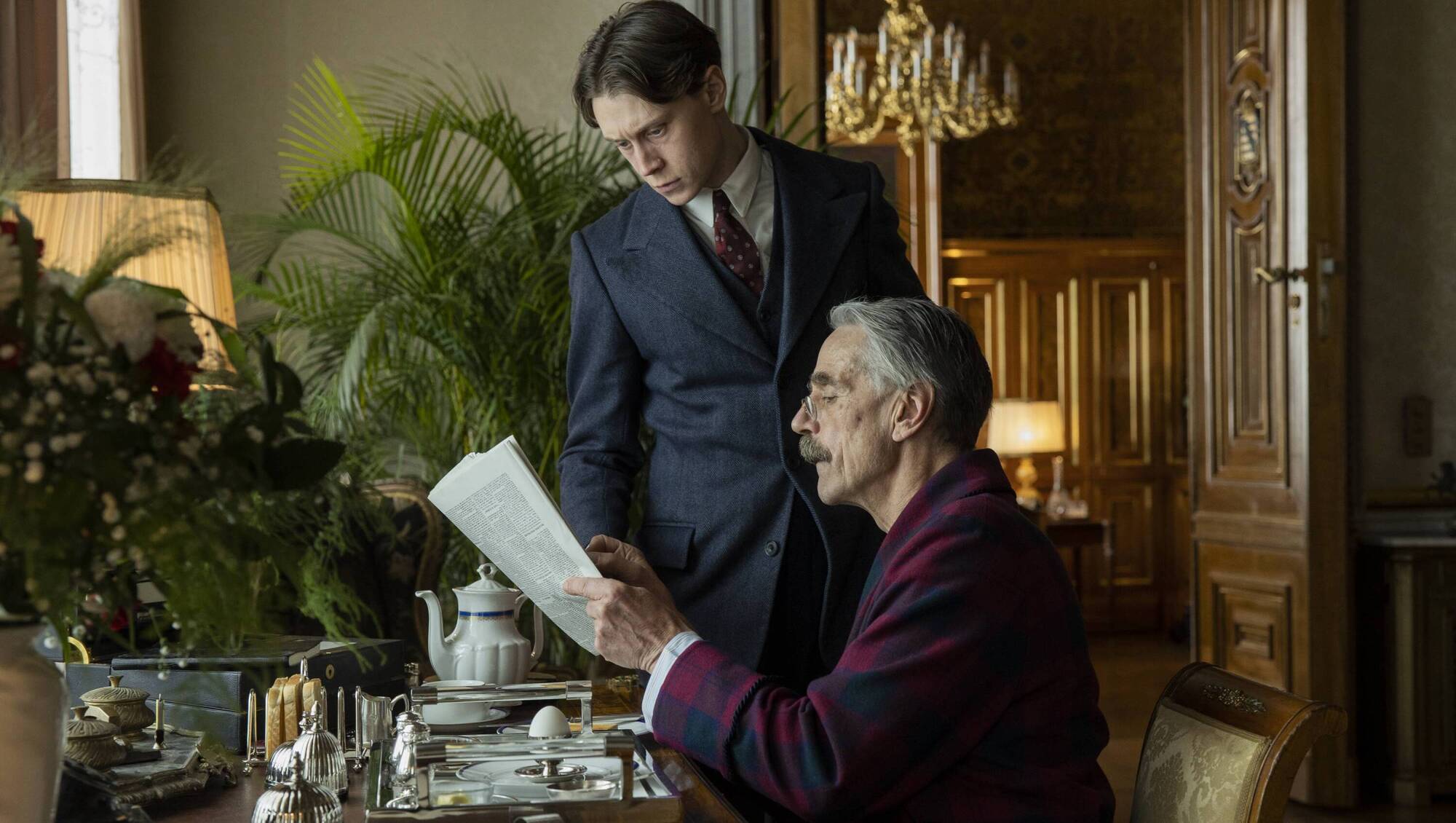
George MacKay as Hugh Legat, Jeremy Irons as Neville Chamberlain, in Munich – Edge of War
★★★★☆
History has not been kind to Neville Chamberlain, the British Prime Minister who returned from a Munich conference with Hitler in 1938 and declared that he had secured a lasting peace with Germany.

Munich: The Edge of War (12A) is rather more sympathetic to Chamberlain (Jeremy Irons), who we see through the eyes of his private secretary, Hugh Legat (George MacKay), whose old Oxford chum Paul von Hartmann (Jannis Niewöher), now a German diplomat, is embroiled in a secret plot to have Hitler (Ulrich Matthes) arrested.
Adapted by Ben Power from Robert Harris’s novel, and directed by Christian Schwochow, Munich: The Edge of War is a surprisingly tense affair given that it’s a dramatisation (and fictionalisation) of one of the 20th century’s most momentous historical events.

The plot is largely driven by Legat and von Hartmann’s efforts to reveal the true scale of Hitler’s ambitions, their wide-eyed idealism and amateurish espionage adding considerably to the tension, with Jannis Niewöher is particularly impressive in the role of a man prepared to betray Germany for its greater good.
The historians in the audience, however, will likely be more interested in Jeremy Irons’ portrayal of Neville Chamberlain, who considers it a ‘sacred’ duty to explore every option that might avoid a war that he believes will be infinitely more destructive than WWI, and multi-award-winning, Cork-based Jeremy Irons gives Chamberlain a robust but poignant reading as the Prime Minister who understands only too well that he has been placed in an impossible position.
(cinema release; Netflix from January 21)