Culture That Made Me: George Hamilton on Billy Joel, Mozart and Terry Wogan
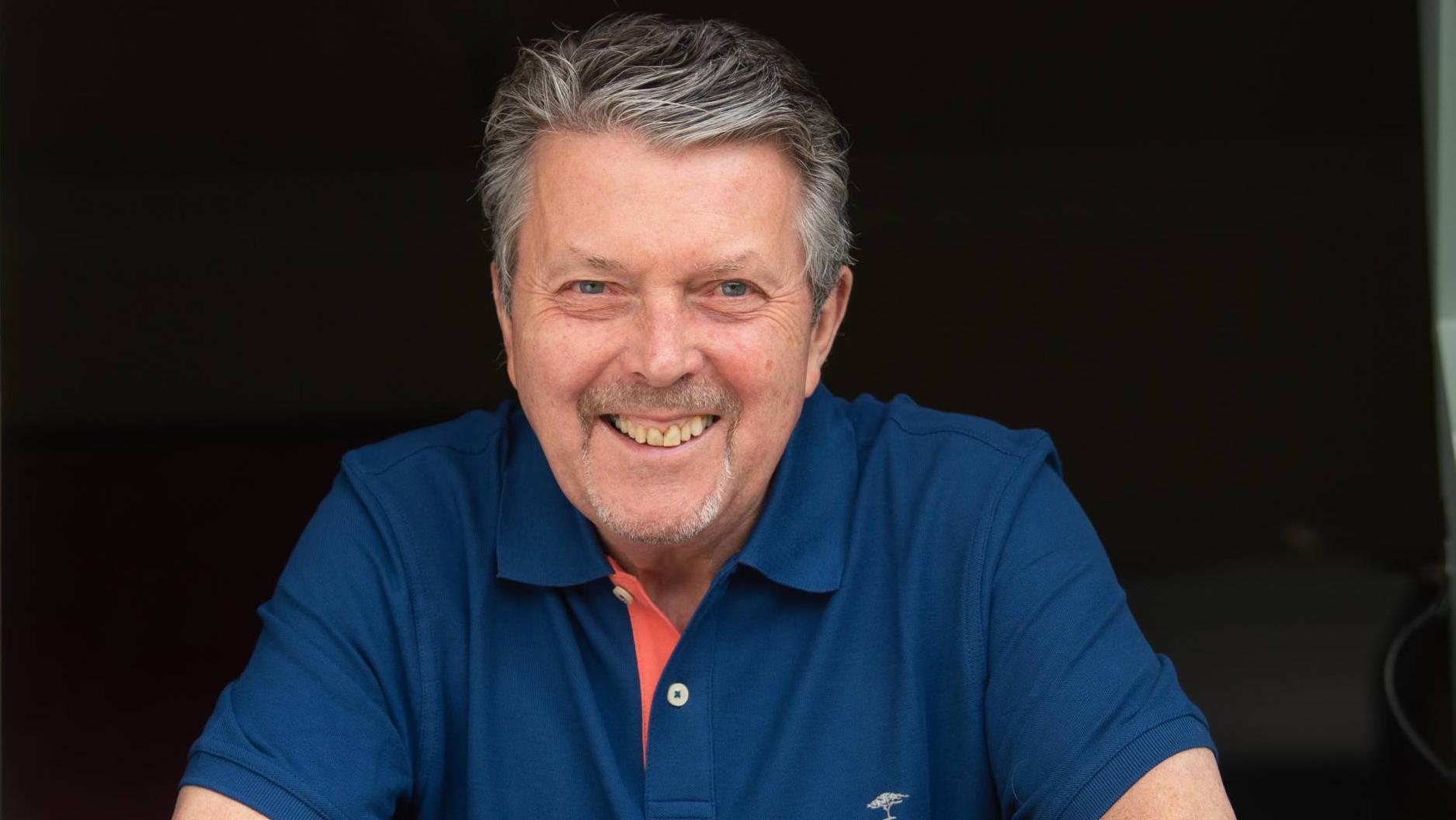
George Hamilton recently published his memoir, The Nation Holds Its Breath.
There's a lot made about being a commentator and an only child, which I am, and commentating for yourself and all that crack. Well, I actually sang for myself. Music took up my time growing up. My challenge was to accurately replicate pop songs I loved on either the piano or guitar. I’ve a memory from my teenage years of a song by Moody Blues called Go Now. I was lost banging it out in the front room, with a piano solo in the middle of it. Only as I reached the final verses, I realised a little crowd had gathered out on the street. I didn't realise I was giving an impromptu concert.
James Taylor is like a leitmotif through my adult life. I'm thrilled to see that he is doing a tour, which includes Dublin, in 2022. Bear in mind, I’m a self-taught guitarist. There was something about the early James Taylor that caught my imagination. Carolina in My Mind was the first one that got me. There's this kind of wistfulness, a longing for something else.
Billy Joel was somebody I discovered when he was starting up in the mid '70s. I have a signature tune – if I'm ever asked to play – and it’s Billy Joel's Piano Man. Over the years, in the good days, when RTÉ Sport had its Christmas party, the sports department would go away for a night. We’d stay over. We would have dinner. Then we’d have a hooley. Roy Willoughby would bring along his guitar. Peter Collins had a guitar. If the venue had a room with a piano, I was in there doing Piano Man.
Mozart is the way into classical music because he has something for everybody. He wrote everything: operas, symphonies, concertos, the whole shooting match. He has so many tricks. There's a fabulous jingle in the jingle bank for The Hamilton Scores. It's based on a Mozart riff. I play it nearly every weekend because it’s so good. It grabs you. It's such a feelgood musical statement. Anybody who says to me, I don't get classical music, but I'd love to be interested, I would say, “Just listen to the overture of The Marriage of Figaro.”
Beethoven's Ninth is the classical symphony to end them all. It includes Ode to Joy, which is the national anthem of the European Union. I saw it in Budapest in 1989 when I was in the city for two sporting events. The concert was on at 7 o’clock and it was March so it was dark. We had to pick our way through this dimly-lit park, with broken pavements, into a concert hall where we emerged into bright lights, chandeliers and the brilliance of this glorious concert hall. The orchestra was conducted by a Japanese man called Kenichiro Kobayashi who holds the world record for the number of times he’s conducted Beethoven’s Ninth. It was such an experience. No interval. Just start to finish Beethoven's Ninth. It was stunning.
I lived in Germany for a year 25 years after end of the Second World War. There were still signs in the trams and buses saying, “Give up this seat for a pregnant lady, elderly person or war-wounded.” You would see on the street men with an arm missing and stuff like that. Germany was divided. There is a terrific book I read called Two Views. It was by a German writer called Uwe Johnson. It has two protagonists, one in West Germany, one in East Germany. The chapters alternate between points of view. It is powerful. I recommend all these books about Germany to people to read, but that’s because Germany fascinates me.
I grew up in Belfast outside the reach of RTÉ television. A commentator like Kenneth Wolstenholme was who I wanted to be. It was a different world 60 years ago, but the fundamentals of television commentary are the same today. It’s catching the phrase that matches the picture on the screen. There is no mystery. You don't write a script and then spew out verbiage that has no relevance to what the picture is actually showing. A lot of present-day commentators deliver statistical reviews and look for points of reference that go back to long-ago matches. All that matters is the picture on the screen. Not statistical nonsense. It annoys me. Kenneth Wolstenholme, for all his [posh] delivery and tone of voice, delivered the words that matched the moment like he did in the 1966 World Cup final.
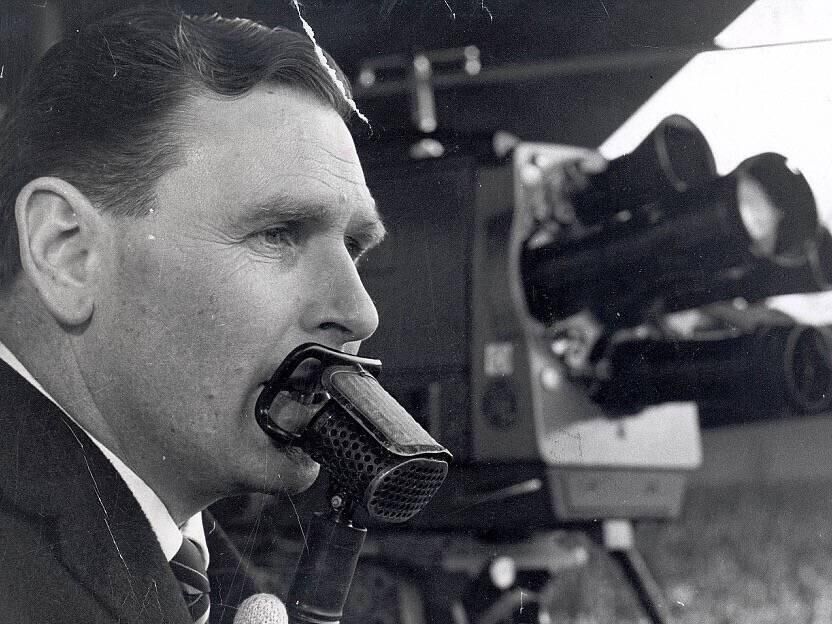
Wolstenholme had “the voice” for his era. John Matson, David Coleman, Brian Moore all had special voices. Jimmy Magee, unmistakable. There has to be something distinctive about the voice that lifts it out of the mundane, but that's not something you can manufacture. You're lucky enough to be born with it. In the same way that a concert pianist is lucky enough to be born with the ability to play his stuff.
Peter Jones was the main [radio sports] commentator on the BBC when I worked there in the early '80s. He's long dead, sadly. He was the master. He had the voice. He was Welsh. He had a wonderful command of English. He'd been a former schoolteacher. The ideal combination is the voice and the words. The words come from the life you've led, your education and the experiences you've had. Peter had it in spades. He was brilliant.
Let's not forget the late, great Terry Wogan, with whom I worked when I was in the BBC. He was a master. Radio is an intimate medium. Wogan understood the medium. It's much more direct. You have to engage with millions on air, but it’s still about engaging with one person, really. He was brilliant at that. He was so clever. His flights of fancy flew off into all sorts of wonderful, fascinating areas. The stamina of the man – for anybody to sustain a career as a breakfast broadcaster for so long has to be admired as well.