Tom Dunne's Music & Me: I was left feeling unsatisfied by Dave Grohl
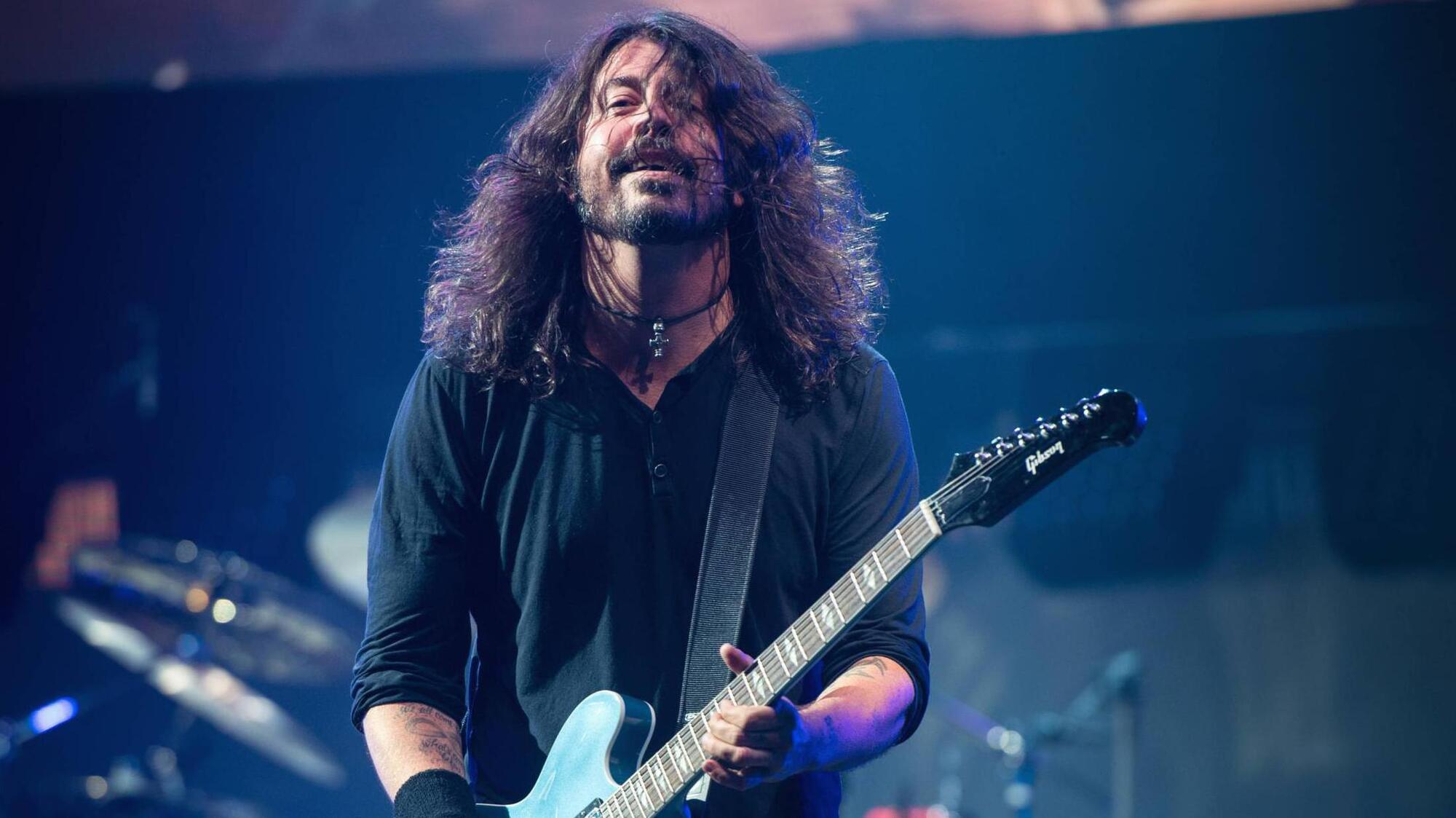
Dave Grohl of Foo Fighters. Picture: Ian Gavan/Getty Images

‘Tis the season to read autobiographies and I seem to be knee deep in them. Bob Mortimer’s And Away, was particularly excellent. Billy Connolly’s Windswept and Interesting was a hard but wonderfully engaging read. So why was David Grohl’s The Storyteller just a little bit flat?
It is an amazing tale. His band The Foo Fighters are one of a tiny crop of bands - Coldplay, Radiohead, U2, McCartney et al – big enough to headline Glastonbury. Raised in a small house just 12 miles south of Washington DC, he has played America’s most famous house, the white one, several times.
But that isn’t even the main story here. Dave was also a member of Nirvana, a band who inhabit an even more rarefied atmosphere. Nirvana, one of that tiny group of bands, who like the Beatles , or the Sex Pistols, can claim to have changed the course of popular music.
Joining Nirvana is life changing for Grohl. It is hard to exaggerate the impact it has on his life, the speed at which it devours his previous existence. It comes about from a chance phone call. One minute he is kicking his heels in LA, the next he is getting into a van to drive to Aberdeen, Washington, to sleep on Kurt Cobain’s floor.
What happens next we all know, but it is still startling to read about it again. He joined Nirvana after they had released the Bleach album. They are on a tiny label and literally starving. But Kurt has just demoed new songs and major labels are knocking on his door.
He describes playing a small club in April of 1991, a few weeks before they go into studio to record Nevermind. Incredibly they are more or less playing to get money for gas so they can drive to LA for the recordings. It’s the first time they play Smells Like Teen Spirit live. The room, naturally, explodes.
At this point it almost becomes The Smells Like Teen Spirit story. On September 24, 1991, as the album is released, they start touring venues with capacities as small as 100. On September 29 the video for Teen Spirit is released. Within days the venues are unsafe, the crowds out of control.
A milestone is reached as early as January 11, 1992. As they prepare for their famous Saturday Night Live performance, news breaks that Nevermind has knocked Michael Jackson from the top of the American charts. All over the world, bands are either forming or changing direction.
Kurt Cobain is centre stage at this point and you get the sense that Grohl has become as much of a bystander, albeit one with a ringside seat, as you or I. The story has moved out of his hands. He’s reading about Kurt in the papers just as much as we did. He is powerless to affect the outcome.
You know what happens next. Incredibly, when Nirvana ends, it is a trip to Ireland that changes everything. He is holidaying in the ring of Kerry and about to give a hitch hiker a lift when he spots that the kid is wearing a Nirvana t-shirt. He conclude that there is no escaping his past and flies home to record some songs.
This was one of the moments where the book lost me a bit. He reveals that he has always been writing songs, that he can ‘see’ music, a condition known as synaesthesia, and has been constructing them in his head - using only his teeth and jaw to keep time- since his early teens.
He has previously entertained himself by recording these songs very roughly using two cassettes decks. He decides to record 15 of these songs professionally over six days. He plays everything on these demoes. The songs include This is a Call, Big Me and Alone and Easy, the basis of the Foo Fighters subsequent debut album.
These were the final revelations that made me sit forward and ask, “what else haven’t you told us Dave?” I’d been a little disconcerted by the sing song style of the book already, the tendency to portray all events as either the greatest or the worst thing ever. But at this point I had to ask, “So Dave, tell me about your da?” His father is glaringly absent from this book. The narrative is very much humble beginnings, a small house and an adoring mum working hard to provide for her family. It is left to you to discover that the man she divorced when Dave was seven was a successful journalist and special assistant to a republican senator. He later appears briefly to advise David on how to invest his new found wealth.
Instead of a father figure Dave concludes that it was Punk that taught him the lessons he needed in life and that the only lesson you need is that there are no lessons and every person has a voice to be heard. Music , he says, educated him, guided him and cared for him.
Yes Dave, but what drove you into its arms?