Jack B Yeats: Celebrated artist, brother of WB, and Ireland's first Olympic medallist

The exhibition in the National Gallery gathers 84 works by Jack B Yeats. Picture: Chancellor, Dublin
In Jack B Yeats’ lifetime, his success as an artist was often eclipsed by the literary triumphs of his older brother, the poet William B Yeats. But his own achievements were many: he won Ireland’s first ever medal in the Olympics; his plays were produced on the Abbey stage; and his artwork was collected by the authors Graham Greene, James Joyce and Samuel Beckett.
To mark the 150th anniversary of his birth, on August 29, 1871, the National Gallery of Ireland in Dublin is hosting Jack B Yeats: Painting & Memory, the most comprehensive exhibition of his paintings there has been in fifty years.
The exhibition is curated by Dónal Maguire and Dr Brendan Rooney, and features 84 of Yeats’ works in oils. Two-thirds of these have been borrowed from private collections, and most have never been shown in public before. One, a painting called Sleep Sound, was owned by the musician David Bowie at the time of his death in 2016.
Remarkably, for one so celebrated as a fine art painter, Yeats trained as a draughtsman and illustrator, and worked at these activities for many years before he ever dabbled in oils. His decision to pursue a career as a commercial artist may well have been inspired by his father John’s experience.
“John Yeats abandoned a successful career as a barrister to become a painter,” says Maguire. “But he struggled with the business side of things. He relied on portrait commissions to support his family, but he would leave paintings unfinished, or he’d fail to collect payments due. The Yeats family were often financially insecure, and that might well be why Jack went straight into working as an illustrator on magazines. He could make a living at that.”
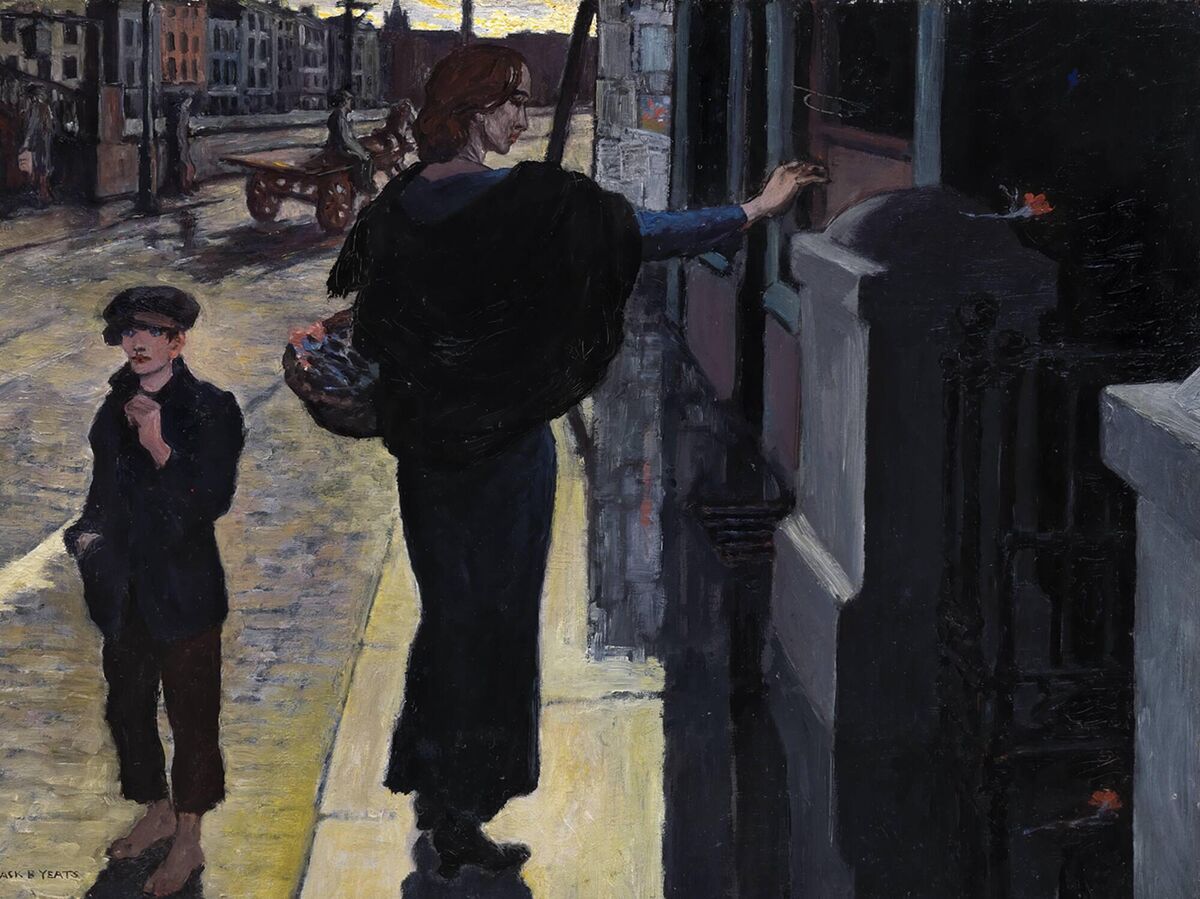
The urge to become a more serious artist was always there, however, and Yeats began experimenting with watercolours in his twenties. “Watercolours were probably more accessible to him as a medium as that point. It was only in his late thirties that he began painting in oils. At that time, they were seen as the more serious medium, and the Royal Hibernian Academy would have expected him to submit works in oils rather than watercolours if he wished to be in their exhibitions.”
Initially, at least, his oil paintings - with their straight lines and flat colours –borrowed greatly from his work in watercolours.
“But his later work, paintings he made in his sixties, seventies and eighties... that was when he became more and more experimental,” says Maguire. “He used palette knives, or even his fingers, to apply the paint, and he’d often work into it with the wooden end of the paintbrush. He was really pushing his materials, and these later paintings are probably his most expressive.”
Yeats, as the exhibition title suggests, liked to paint from memory, and many of his works were inspired by his upbringing in Sligo, where he lived with his grandparents until the age of sixteen. His favourite subjects included scenes of Irish rural life, such as horse races and boxing matches, as well as seamen, travellers, dancers and circus performers. But he also painted mysterious human figures in the landscape. One such painting was A Morning, which caught the eye of a young Samuel Beckett when he visited Yeats’ studio in Fitzwilliam Square.
“Beckett bought A Morning for £30, and paid for it in installments,” says Maguire. “The painting depicts a lone rider standing in an empty village. Yeats travelled with JM Synge throughout the Congested Districts as a young man, so it may have been inspired by something he saw then, a memory of his own life experience. Or it might be a reference to popular culture, that image of the lone rider on horseback.”
Yeats was 52 when, in 1924, he found success at the Summer Olympics in Paris, France.
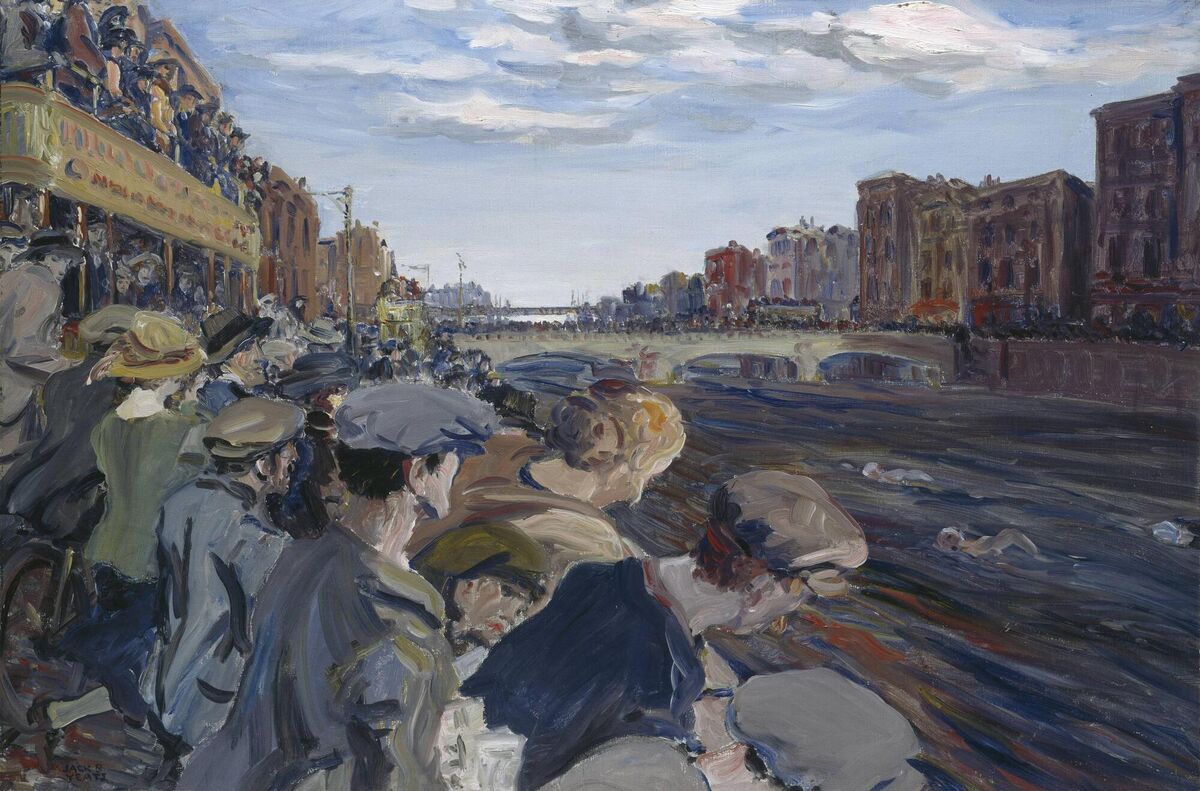
“It was the first time Ireland competed in the Olympics after independence,” says Maguire. “In those days, the games had an arts and culture category, and Yeats won a silver medal for his painting, The Liffey Swim.”
The Liffey Swim commemorates a swimming contest that was held annually in Dublin from 1920, and depicts a crowd cheering on the swimmers as they approach O’Connell Bridge.
If Yeats came late to oil painting, he came even later to competing with his brother William in literature; he was already in his sixties when his plays – including Harlequin’s Positions, In Sand and La La Noo – were staged at the national theatre in Dublin.
“Yeats was a Modernist,” says Maguire. “He tried working in different media. When he began writing, it was children’s plays for the theatre. Then he wrote dramas for the stage, and a number of novels. They were very experimental.”
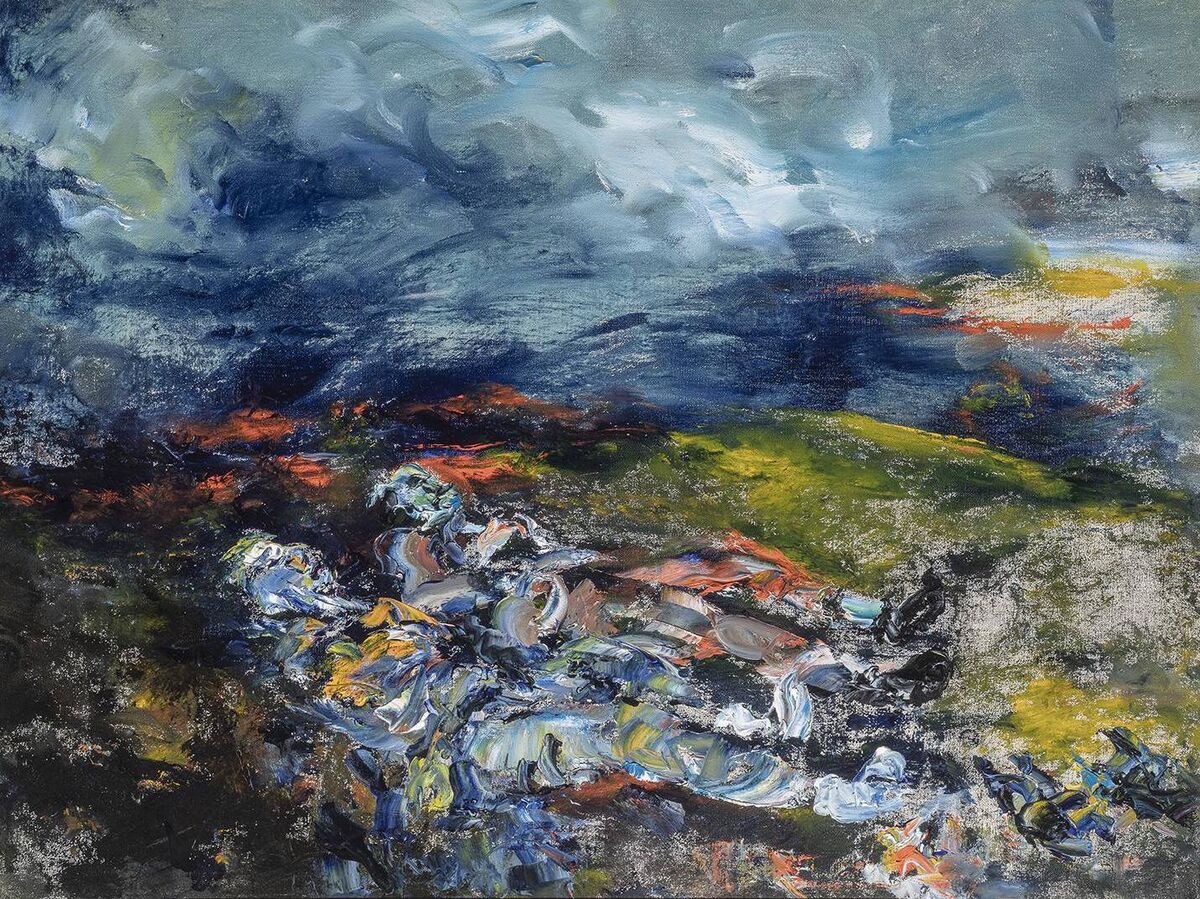
Yeats continued working almost to the end. He completed 1,200 paintings in oils, and more than half of these date to the last ten years of his life. Sleep Sound was among the last three paintings he worked on. “Sleep Sound features two figures asleep in the bog,” says Maguire. “It could be seen as dealing with the loss of life through the metaphor of sleep.”
David Bowie bought Sleep Sound for £45,500 when it came to auction in 1993. In November 2016, it was sold by his estate for £233,000, at the Bowie/Collector Modern and Contemporary Art auction at Sotheby’s London. By Yeats’ standards, this might be considered a bargain; several of his paintings, such as Reverie, Evening in Spring and The Wild Ones, have sold for well over €1 million, a mark of how his reputation has blossomed since his passing in 1957.
“Today, Yeats is one of the most loved and celebrated of Irish artists,” says Maguire. “His work is intrinsically personal, but he explored universal themes, so it’s always open to interpretation, which is just what he wanted.”
- Jack B Yeats: Painting & Memory is at the National Gallery of Ireland, Dublin until February 6, 2022. Further information: nationalgallery.ie
Jack B Yeats was born in London in 1871. He was the youngest of four children, after William, Sarah and Elizabeth, born to John and Susan (née Pollexfen) Yeats. As a child, he was sent to live with his maternal grandparents in Sligo, where the family had a shipping business. On returning to live with his family in London in 1887, he trained as an illustrator at the South Kensington School of Art and the Chiswick School of Art. He found work with magazines such as Boy’s Own Paper, and also wrote for Punch magazine, under the pseudonym W Bird.
In Chiswick, Yeats met Mary ‘Cottie’ Cottenham White, a fellow student. They married in 1894, and settled in Strate, Devon. He began painting watercolours, which he exhibited in London. In 1910, the couple moved to Ireland, living initially in Greystones, Co Wicklow before moving to Donnybrook in 1917, and finally settling at 18 Fitzwilliam Square, Dublin in 1929. They had no children.
The Yeats family belonged to the Protestant Anglo-Irish Ascendancy, but considered themselves Irish nationalists. All four of the Yeats siblings were active in Irish cultural life, particularly in Dublin. William, the eldest, is best known today for his poetry, but he also wrote novels, short stories and plays, and founded the Abbey Theatre with his friend Augusta Gregory. Susan and Elizabeth Yeats, known as Lily and Lolly, worked in the arts and crafts industries in London before moving to Dublin, where they were instrumental in founding the Dun Emer crafts collective and the publishing company Cuala Press.
Jack Yeats’ reputation as a particularly nationalist painter rests partly on his love of Celtic mythology, but also on his practice of painting contemporary scenes such as A Political Meeting (in the West of Ireland) in 1905, and Bachelor’s Walk, in Memory, which commemorated a group of demonstrators shot dead by the King’s Own Scottish Borderers in Dublin city centre in 1914.
A few years after his wife Cottie’s death in 1947, Yeats moved into Portobello Nursing Home, near the Grand Canal. He died there, aged 85, in 1957, and is buried at Mount Jerome Cemetery at Harold’s Cross. His friend Samuel Beckett wrote of him that he was “with the greats of our time… he brings light, as only the great dare to bring light, to the issueless predicament of existence, reduces the dark where there might have been, mathematically at least, a door.”