Culture That Made Me: Seán Ó Sé on Ó Riada, Tom Barry, and Springsteen
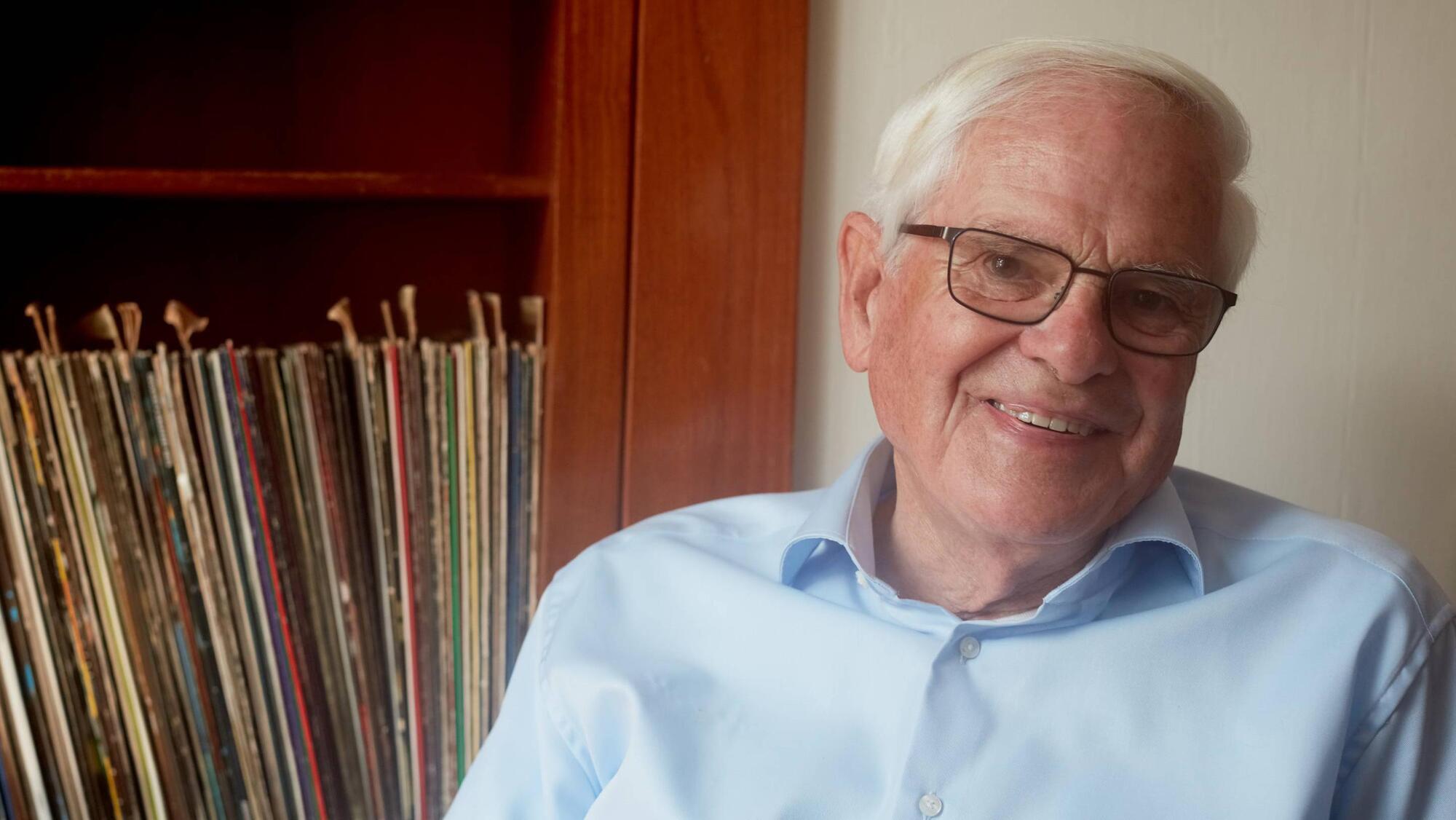
Seán Ó Sé. Picture: Maurice Gunning
Seán Ó Sé, 85, has been awarded a Lifetime Achievement/Gradam Saoil by the annual TG4 Gradam Ceoil. The singer grew up in Ballylickey, Co Cork. He rose to fame singing and recording the popular song An Poc Ar Buile with Seán Ó Riada and Ceoltóirí Chualann in 1962. Since then, his tenor voice has been recognised as one of Ireland’s finest. The award ceremony concert will be broadcast on TG4, 9.30pm, Sunday, October 31. See www.tg4.ie
I grew up during the Second World War. There was no radio to listen to except for an old battery radio which was kept carefully for GAA matches. Every night before I’d go to bed, my father would sit me on his knee and sing a song for me. He’d a huge store of songs. We’d have a different song every night. There’d be a lovely fire lighting. I’d be gazing into the fire imagining some of the subjects of the songs.
One day, he came back with a gramophone player. It was a contraption that played big ’78 records. You had to wind it up. The needle had to be changed after every record. He brought home three records with it, two sides on each record: a famous West of Ireland singer Delia Murphy; an Irish traditional singer Donnacha Mac Choiligh; and Fr Sydney MacEwan singing, “…O Mary, we crown thee with blossoms today...”
My most intense period of looking for songs was with Seán Ó Riada between 1962 and 1969. We were doing a radio programme called Fleadh Cheoil an Radió. We had to provide eight songs a month for it. I would go out to his house in Cúil Aodha, one of the few surviving Gaeltacht areas in Cork. He had a vast library of song books. I’d a fair few myself too from my father. We used that source. Then you’d hear songs in places – you’d be searching for songs everywhere.
I went to teach in 1961-62 in Gurranabraher in the northern part of Cork city. I’d a very good friend John O’Shea – no relation – who was a great character. He was known in Cork as “The Singing Fireman”. He was highly popular. He had a load of north-side Cork City traditional ballads like The Boys of Fair Hill, The Armoured Car and Lloyd George. I got some of them for my repertoire. I did a survey one time and I have a nodding acquaintance with about 600 songs, with a repertoire off by heart of about 150.
Modern groups go in to a studio to record an album with maybe 14 tracks. They take ages even though the facilities are vastly superior to what we had. They are too concerned about tiny details. We would record an album with 14 tracks in probably a weekend. Seán Ó Riada’s policy was to accept there might be a little glitch or two, but if you record it again you might finish up with three glitches. He had this saying: “If the overall feel to what we record is good, it can go out.” What our recordings had over modern ones is they had a wonderful freshness and vitality. You could nearly visualise us having a great time recording it.
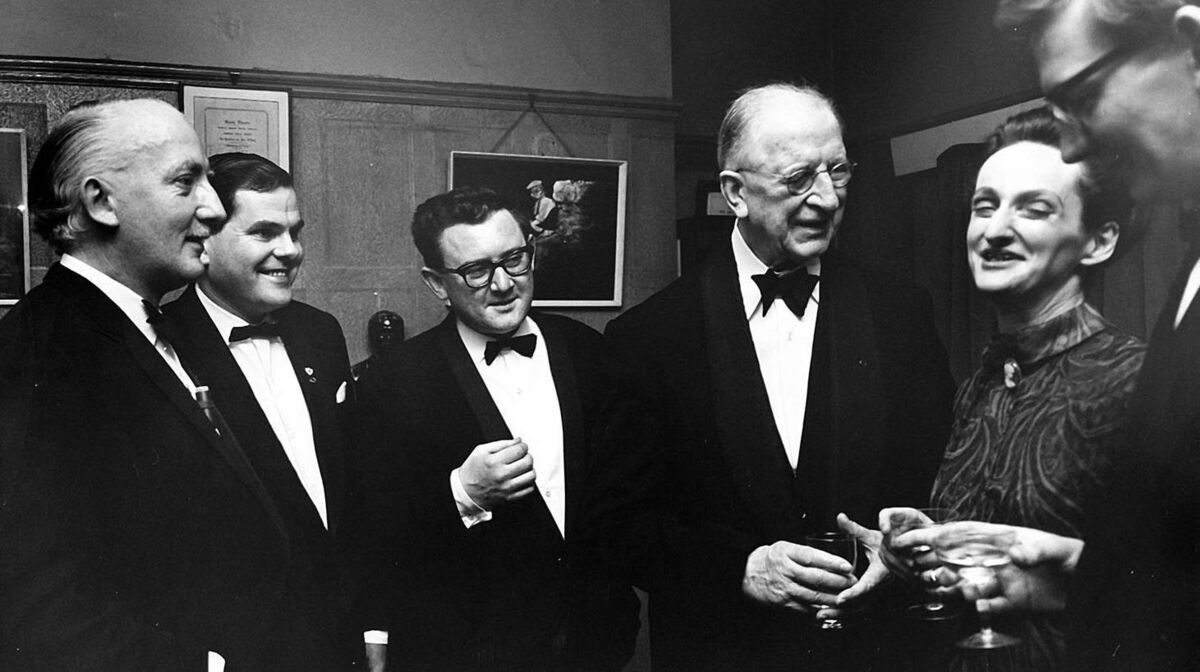
What the Clancy Brothers and Tommy Makem did was simple. They took ballads that were hairy like The Black Velvet Band and The Wild Rover [and made them into classics]. When you’re on stage in a theatre, you have the back wall, the two side walls and the invisible wall or barrier that’s there between you and the audience. You must surmount that invisible wall. The Clancys could do that. I remember going to a concert they had at the Savoy in Cork and the atmosphere was just electric.
I have very Catholic tastes. I’m a great fan of Bruce Springsteen. I came home from Dublin last night late and I was a bit tired so to re-fresh myself before I went to bed I played as loud as I possibly could – not to disturb the rest of the house – the video of Bruce Springsteen and the E Street Band at the New Orleans Jazz Festival singing Pay Me My Money Down, and I went to bed then. He’s coming to Ireland next year and by hook or by crook I’m going to see him.
For the first six years of my life, my mother or father never spoke any English to me. It gave me a marvellous command of Irish. You get a different perspective on the world through Irish. When I’m in a Gaeltacht like Cúil Aodha and I’m talking Irish, I feel better. The older I’m getting – and maybe this goes back to Irish being my mother tongue – a word that I’m thinking of in English would be with me in Irish. If I’m leaving somebody – even if they don’t have any Irish – I always say, “Slán”. I also pray in Irish and I dream in Irish.
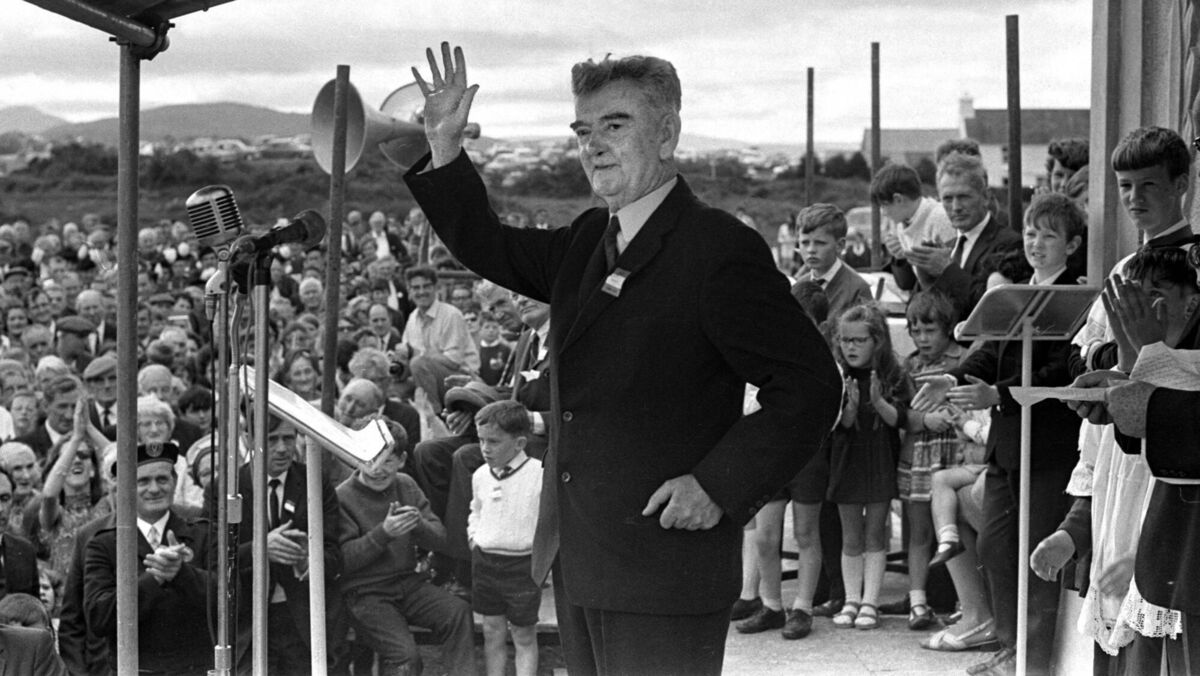
I went back recently and re-read General Tom Barry’s book, Guerrilla Days in Ireland. It’s fascinating. The Civil War was very bitter in Kerry. One night in the 1970s, Tom Barry was invited down to Killarney to give a talk to people from both sides of the political divide. His wife Leslie agreed he could go if a pioneer could drive him. I got the job. People told me, “He’s impossible,” but he never stopped talking the whole way down about Kilmichael [Ambush], Rosscarbery [attack on RIC barracks]. I had the most interesting trip. He was at the top table. He gave a wonderful talk. Then he hopped up on the table. He started singing the republican anthem, Legion of the Rearguard. He got away with it.
I was trying to get him home then. I couldn’t. There were Kerry people pouring drink down him. I finally got him out about three o’clock. He slept most of the way to Cork. He lived where Patrick’s St merges with the Grande Parade. It’s a circular building. He lived in a flat upstairs. When we reached his flat, he was a bit worse for wear. I got him out of the car. I gave a ginger little knock at the door. It was immediately opened at four o’clock in the morning by his wife.
Nothing would do the General but that I had a cup of tea. I decided the quickest way out of it would be to have a cup of tea. There was a big picture of his wedding up on the wall. The picture was very strange: it was Tom Barry, Leslie and in between them was Éamon de Valera, who was President of the Republic at the time. He said to me: “Do you notice anything funny about my wedding photo?” I did alright but I didn’t want to say anything. “Do you see Dev? He came between Tom Barry and Leslie on the day of his wedding. He divided the country. He put me in jail, but, Jesus, I love him.”