The Specials: 'It’s not like we sing about girls and rock’n'roll'
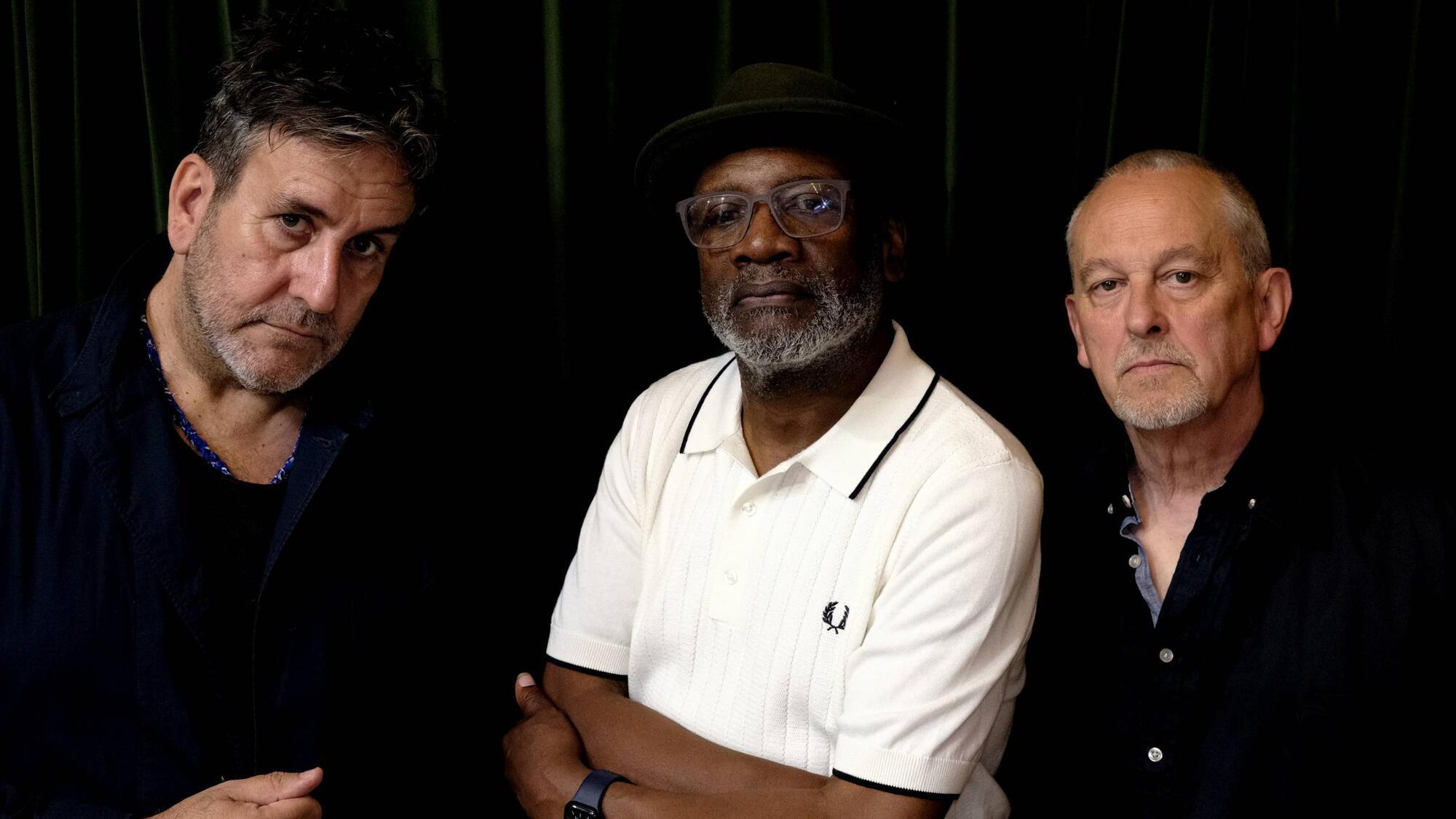
The Specials: Terry Hall, Lynval Golding and Horace Panter.
When the world came together in the summer of 2020 to speak out against the killing of George Floyd and the toxic legacy of racism, The Specials’ Horace Panter, Terry Hall and Lynval Golding knew they were watching history unfold before their eyes.
“It was the year of protests,” says Panter. “We decided we had to do something.”

Ghost Town, The Specials' haunting 1981 number-one single, forms part of the artistic narrative that reached a moment of catharsis last year with the George Floyd demonstrations. Skating atop an ominous ska groove, the track painted a devastating portrait of a Britain laid low by racial strife and industrial decline. “Why must the youth fight against themselves?” The Specials asked. “Government leaving the youth on the shelf”.
Ghost Town remains one of the most searingly political songs ever written (and famously had a cameo in an episode of Father Ted). Now, with anger over George Floyd’s murder spilling on to the streets, The Specials knew the time had come to figuratively storm the battlements once again.
And so they recorded Protest Songs 1924–2012, an unflinching collection of political anthems which spans the 20th century and the long struggle for equal rights. It’s a timely record – and also a fitting companion piece to Ghost Town and equally strident Specials hits such as Rat Race, Too Much Too Young and the Special AKA's [the band's subsequent incarnation] anti-apartheid rallying cry, Nelson Mandela.
“Most of The Specials' material has been protest songs in one form or another,” says Panter from his home in Birmingham. “It’s not like we sing about girls and rock’n'roll.”
The Specials have come to be seen as one of the most important groups of their generation. Emerging in the era of the National Front and race riots, their ranks included both black and white musicians. As figureheads of the 2-Tone movement, their music audaciously blended Jamaican genres such as ska and rock-steady with British pop. With sections of the UK embroiled in hate, they showed there was a better way.
Yet they were wary of being put on a pedestal or being judged for anything other than their songwriting. That remains the case. Panter winces slightly when talk turns to Ghost Town and its cultural impact.
“I’m always very loath to accept the mantel of spokesperson for a generation,” says the 68-year-old. “It was uncomfortable 40 years ago. I’m shying away from that. It’s about the relevance of the music and how it can be a vehicle for expressing yourself.”
The Specials always had the courage of their convictions. In 1981, when Northern Ireland was engulfed in sectarian strife, they embarked on what was perceived as a potentially hazardous trip to Ireland. The tour opened at the Ulster Hall in Belfast, and then moved to the Stardust in Artane, Dublin, where they played to a crowd of 3,000. The curtains came down at the Arcadia, in Cork on January 17.
It was not a tour for the faint-hearted. At the Ulster Hall, two gangs of skinheads introduced themselves to The Specials, thanking the Englishmen for making the journey. Later one of the gangs, standing in the upstairs balcony, urinated on those on the ground floor.
The Stardust gig, meanwhile, ended in a riot and, ominously, the band noticed chains on the exit as they sought refuge. Of course, the venue would burn down a month later, claiming 48 lives. But in Cork the mood had been celebratory.
“I’m very proud of the fact that The Specials along with The Beat played in Ireland,” agrees Panter. “We played in Belfast when nobody else would. The concert was amazing. I like to think they love us for it even though it’s 40 years ago.”
Protest Songs is a worthy addition to The Specials catalogue. It is the second album the group have recorded since reconvening around the core lineup of Panter, Hall and Golding (the well-regarded Encore came out in 2019). Absent is guitarist Neville Staple, who left in 2012 due to health concerns. Original members John Bradbury and Rico Rodriguez both died in 2015. And the group is continuing to soldier on without Jerry Dammers, the maverick keyboard player who formed the band with Panter in Coventry in 1977 but who cried off their reunion in 2009.

With Protest Songs, the original plan, reveals Panter, had been to make a reggae LP. The Specials then all came down with Covid and had to take time off. Having recovered, they decided the next best option would be a covers album that chimed with the anger in the air over the killing of George Floyd.
“The songs were written. We didn’t have to worry about making sure that the words worked. All we had to worry about was performing and arranging them.”
Protest Songs isn’t exactly a whistle-stop tour of the agitprop hit-parade. One or two of the tracks will be familiar to most listeners: Bob Marley’s Get Up, Stand Up, Leonard Cohen’s Everybody Knows. Yet quite a few may be new to the audience. These include Frank Zappa’s Trouble Every Day, written in the aftermath of the 1965 Watts Riots in Los Angeles, and The Staple Sisters’ Freedom Highway, about the 1965 Selma to Montgomery march for equal voting rights.
“We thought, let’s be obscure about it,” says Panter. “It would have been really predictable to do [John Lennon’s] Give Peace a Chance. We made it into a little bit like a PhD. We researched a lot of stuff and came with up with some left-field choices.” The process has proved highly educational for The Specials. His hope is that fans have a similar experience.
“Trouble Every Day by Frank Zappa is the first single I bought. It’s about the Watts Riots in 1965. It could have been written in 2020 about what was happening in Portland or Minneapolis,” he says.
“The Malvina Reynolds tune [I Don’t Mind Failing In This World] is as relevant today as in 1967 when it was first recorded. And, with the Bob Marley track, a French journalist told me it was written after Marley visited Haiti and saw the poverty people there lived in. So it’s a continual learning process. It never stops.”
Racism of course remains an evil in the world. Nevertheless, the sort of causal prejudices commonplace when The Specials came of age are arguably unthinkable today. Back then, racial slurs were for instance ubiquitous in the workplace, the schoolyard and on television. Panter must take heart from the fact that The Specials’ message of peace and tolerance would seem to have caught on, to some extent, across the past four decades?
“I spent quite a few years before 2008 as a school teacher,” he says. “My experience is that racism is hereditary. If dad doesn’t like the foreigners, there’s a fair chance Jason and Annabel won’t either. But I found that, when subsequent generations go to school with children from different cultures, you just get on with it. It’s not an issue. It works itself out.”
- Protest Songs 1924–2012 is released October 1