John Hearne: How I went from getting 'promising' rejections to seeing my book on shelves

John Hearne found publishing success with the third novel he completed and credits research and feedback for seeing his book on shelves.
One of the many things you learn if you spend time trying to become better at genre writing (as opposed to literary writing), is that you must have a viable elevator pitch. It must be possible to state the story in as few words as possible. For example: shark terrorises small tourist town, boy discovers he’s a wizard. I was talking about ideas with a friend who also writes. He thought ‘My sisters are trying to kill me’ was great. That’s what made me run with it.
At this stage in my career I’d written three full-length novels. The first, in my twenties, was hammered out on a genuine, honest-to-God typewriter in a tiny fourth-floor bedsit in Leeson Street in the 1990s. I’m thankful now that it only ever existed in flammable formats, and that there’s no digital version lurking anywhere. It was bad – so bad that even thinking about it now feels like biting into a lemon. If you stick at writing, you’ll discover the law of diminishing wince. The more you do it, the better you get.
I wrote another adult novel in my 30s. This too was awful, but not completely awful. One or two of the rejections used a word I would come to despise: ‘promising’.
I switched tack and tried a young adult novel. A fantasy. I was fed up with the morose, tragedy-stricken young men I somehow felt compelled to write about. This project was much more enjoyable. For the first time, I got a kick out of writing. The problem was that I wrote it, just like the other two, in a kind of arrogant isolation. I figured that I didn’t need to read up on my craft, or know what was going on in the genre, or get feedback. I figured that my natural genius would somehow shine through. I now realise of course that this arrogance was actually concealing a fear that I’d show someone my work and they’d tell me to cop myself on and take up golf or something.
That novel was sent to everyone, and that awful word ‘promising’ surfaced several times in the rejections.
By now I was in my 40s. Older and maybe a little less stupid. So when Brian – my writer friend – said that he thought the evil sisters idea was worth pursuing, I decided, ok, that’s it. I’m going to get this one right. I bought books about plotting and character development, I read articles like the one I’m writing now, and did courses and joined a writer’s group. I read extensively in the genre in which I was writing. Crucially, I got feedback.
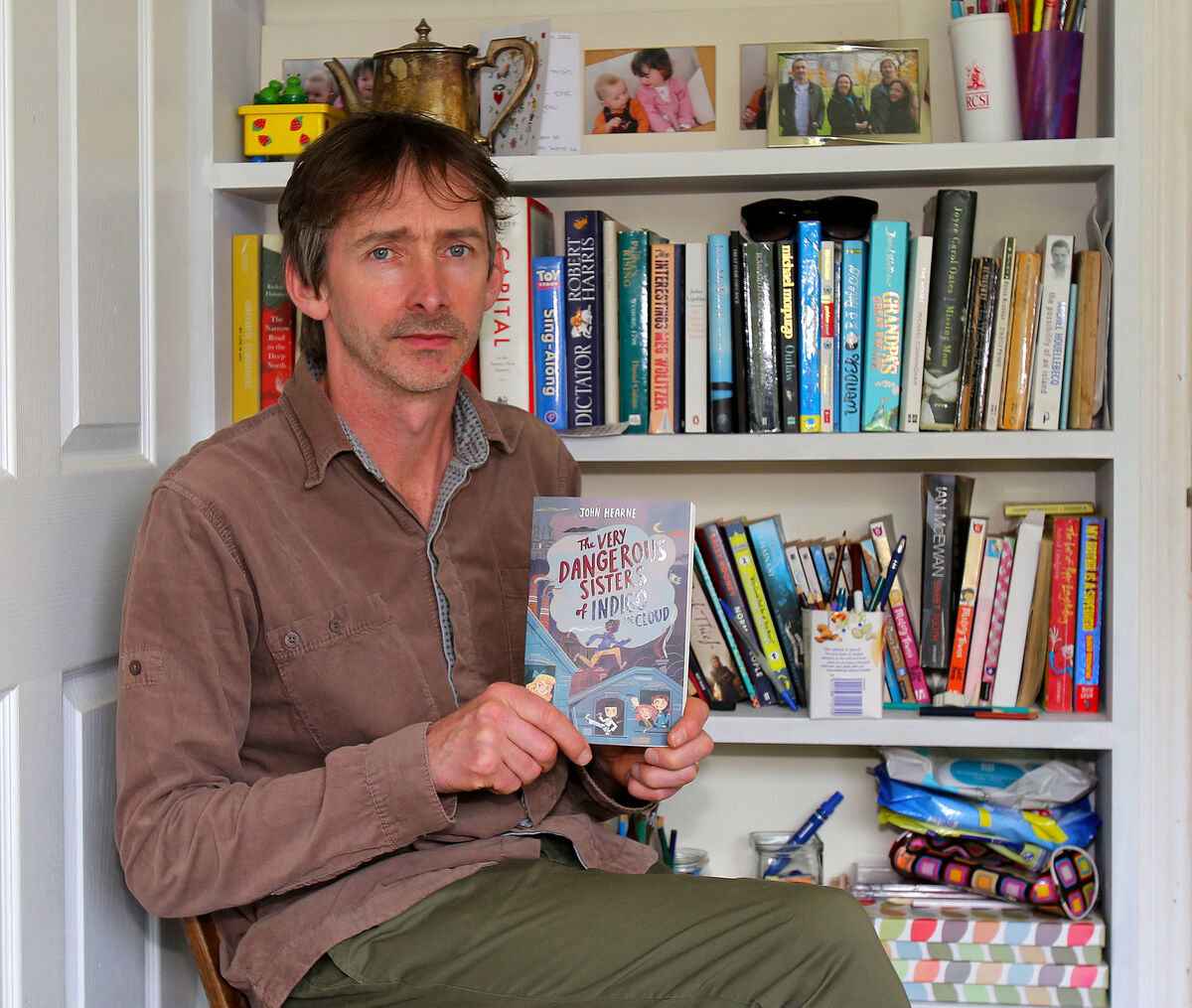
Getting feedback from the people who knew what they were talking about turned out to be liberating. Good feedback locks onto things you actually know on some level. So when someone points out that your middle section drags, or your villain’s actions are inconsistent, you slap your forehead and think ‘Yes, of course!’ Now you see how you can improve things, and you dive back in – not with resentment, but with gusto.
I decided I’d make this new book funny, and wild. I was determined to enjoy writing it. I realised that actually, you can’t have kids attempting to kill other kids in a book like this. Much too dark. Instead, I worked up a plan and began developing a set of characters.
Indigo McCloud is the downtrodden brother, whose secret skill is that he can cross the roofscape of the town unseen by his evil sisters. Peaches McCloud is the criminal mastermind. Blonde tresses, super-sweet to adults, but in reality, every child in town is terrified of her. Plus three other sisters, each with a distinct character and skill.
I began writing it back in 2013, and The Very Dangerous Sisters of Indigo McCloud was finally accepted by Little Island in 2019. I wasn’t writing and re-writing throughout that time of course. I worked at it and got feedback, and worked it up again, then got more feedback, then let it sit a while so I could return to it with fresh eyes. Finally, I decided ‘Right! I can’t make this any better.’ And out it went. And in came the rejections. Another rule I’ve discovered: Being good is not enough. The various publishers and agents are looking for particular kinds of things at particular times. If your manuscript doesn’t meet these needs, it won’t be considered.
Eventually, Siobhan Parkinson, who runs Little Island and is a wonderful writer in her own right, said yes. What she actually said was ‘Welcome ashore’. Boy, but that was one wonderful email.
For the record – there’s no money in it. The only reason you’d do this is either because you feel compelled to, or because you enjoy it. I used to write for the former reason, I now write for the latter.
- The Very Dangerous Sisters of Indigo McCloud by John Hearne is available in bookshops and from Littleisland.ie.