Lest we forget: Irish artist's Famine installation debuts in her family's hometown

Paula Stokes puts the finishing touches to her Famine Memorial installation in the gardens of Strokestown Park & The National Famine Museum, Roscommon, earlier this year. Picture: Brian Farrell
While it's trite for any writer to reach for a reference to potatoes when speaking about Wexford, an upcoming exhibition at the county's Johnstown Castle Estate taps into its role in our history — using art to eulogise those lost in the Great Famine.
'1845: Memento Mori': an installation of 1,845 hand-blown glass potatoes created by Seattle-resident, Irish artist Paula Stokes, opens on Saturday after coming in for critical acclaim in galleries around the world — finally arriving at her paternal family's hometown.
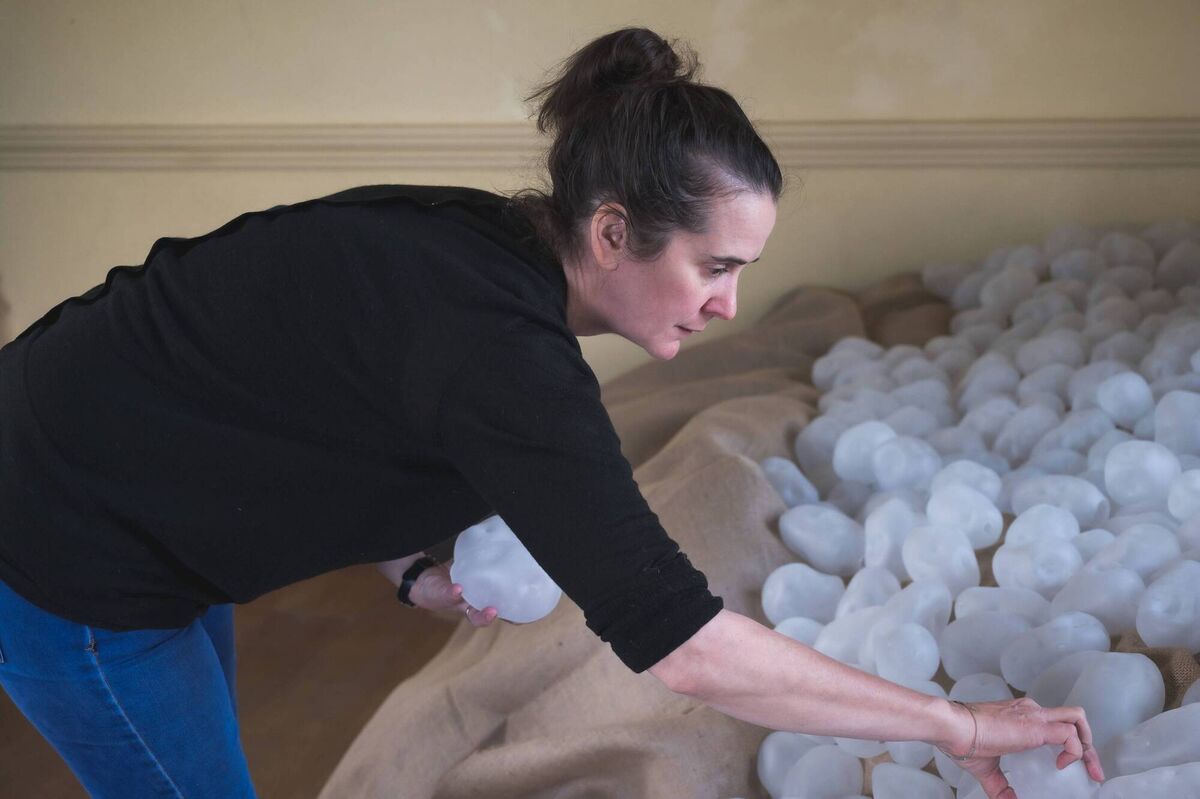
The title is a reference to the year that the potato blight came to Ireland — leading to years of starvation, disease, and emigration. More than 1.5m people passed away, with a further million emigrating to Australia, Canada, and America, contributing in huge part to today's wider Irish diaspora.
"I’m delighted to be showcasing this exhibition in County Wexford," says Stokes.
"My father Kevin Stokes was from Raheenagurran, Gorey. My mother is from Kerry, but she and my father met in Enniscorthy and were married in Gorey."
"It is a real honour to take this exhibition ‘home’ and to share it here in County Wexford.”
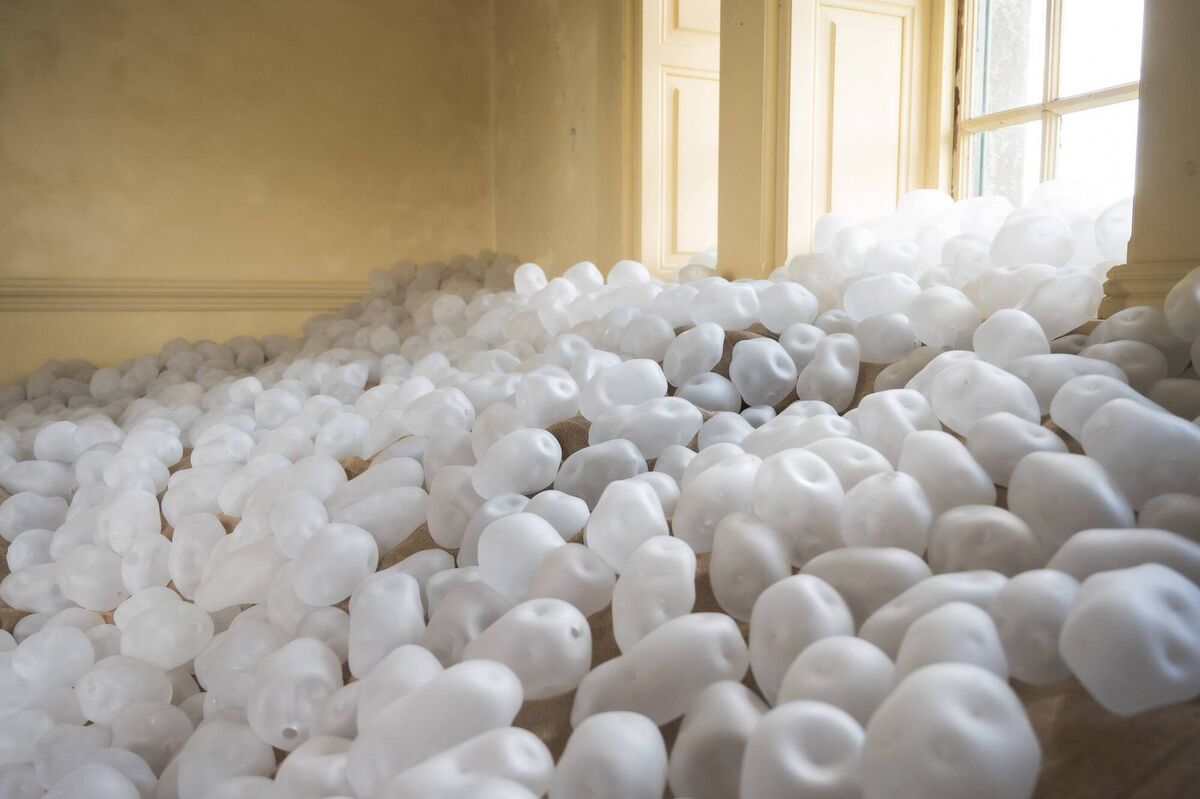
Each glass potato was hand-blown and then sandblasted, creating a white appearance, adding an ethereal, transient quality to each — a commentary on the fragility and resilience that's lingered in the national conscience.
Visitors will be able to view the exhibition from outside, as it sits within one of the fishing towers within the gardens — responding to changes in light as the day passes.