James Vincent McMorrow: 'All of my biggest shows, I was fairly lit, I was pretty jarred'
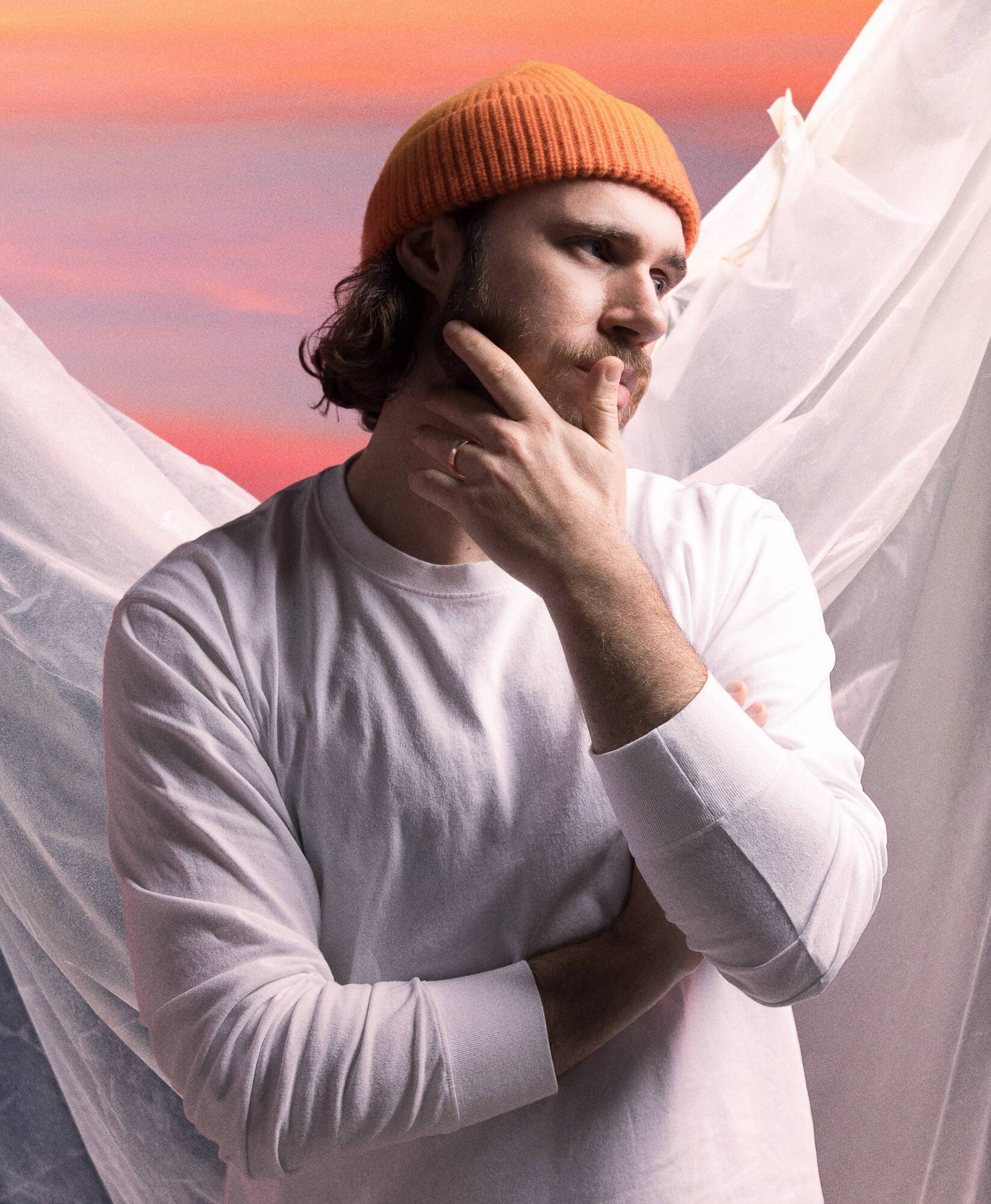
James Vincent McMorrow
When singer-songwriter James Vincent McMorrow thinks back to his early years of success, the memories carry the dark glow of too much merlot and the sinister haze of hangovers that make you question the existence of God and the meaning of life.
“The trappings and the idea of what it is to be a singer-songwriter are often quite tortured and involve a glass of wine when you’re writing,” says the 39-year-old Dubliner. “My first album was very much based on that. As it got bigger and bigger – and to cope with the “bigness” of it all – drink became this thing. I was using it to cover a lot.” McMorrow is speaking from the terraced Dublin home he shares with his artist wife, Emma, and their two year-old daughter, Margot. It’s a week before he is due to perform to a socially-distanced audience of 500 at Dublin’s Iveagh Gardens – a pilot concert that will hopefully mark another stage along the return to normality (he’s predicting tears, from both performer and punters).
The Iveagh Gardens also provides McMorrow with the opportunity to road test material from his upcoming fifth LP. Released on July 16, Grapefruit Season is a succulent smorgasbord of a record. Packed with pop songs, luxuriant r’n b and confessional ballads, it’s one of those rare albums that has the potential to have near universal appeal. Whether a pop, indie or rock fan, there is something here worth exploring.
It is, in addition, the latest milestone in his life after booze. McMorrow gave up alcohol, more or less, in 2012. His first sober tour was of Australia. Every night he would go on stage in front of a crowd of 500 or so, feeling absolutely petrified. Drinking was a crutch. Could he stand straight without it?
“All the greatest moments of my musical life had been associated with alcohol,” he says. “ All of my biggest shows, I was fairly lit. Most of my time writing and making music, I was pretty jarred.” But he has grown to appreciate McMorrow 2.0 – the bright-eyed, sober version of himself. It’s not that he never, ever drinks. He prefers, though, to keep a clear head and feels that his songwriting has benefitted.
He is certainly operating at the peak of his powers on Grapefruit Season. Listening to it is like losing yourself in an irresistible Spotify playlist. One moment McMorrow, who is unconstrained by the genre boundaries that too often shackle Irish artists, is delivering minimalist r’n b. The next he’s filtering Motown through a sci-fi lens, singing in a falsetto that splits the difference between Justin Bieber and Radiohead’s Thom Yorke.
Vincent McMorrow has been on the brink of the big time for the last several years. He’s been nominated for the Choice Music Prize for Best Irish album. Hipster bible The Fader has praised him as a “minimalist r’n b auteur” ; Mojo heralded his 2015 LP, We Move, “warm, slick and modernist”.
Game of Thrones has given its blessing, too. His cover Chris Isaak’s Wicked Game featured on the trailer to the series’s sixth season. That same year he was introduced to pop fans when his vocals were sampled on Drake’s Views (they are mutually acquainted with the same producers).
Yet for those highlights, McMorrow still has the aspect of an unknown quantity. Early on, he zealously guarded his privacy. However, he has since come to worry that this might lead to the impression that he was “detached” from his own songs. An opaque figure, who almost existed outside the emotional landscape of his music.
The truth is that he was shy and unsure of himself (why he drank). A crossroads was 2016’s We Move and the track I Lie Awake Every Night. Produced by Weeknd and Post Malone collaborator Frank Dukes, it pulled back the shutters on a dark time from his adolescence.
“Have you come here to save me?,” he sings. “Have you come here to waste my time again?” Though the subject matter was ambivalent McMorrow was clearly emoting from a place of great pain. In a press release he explained I Lie Awake Every Night was about an eating disorder he’d suffered through while in secondary school. It was a milestone for his career, and also for him as a person.
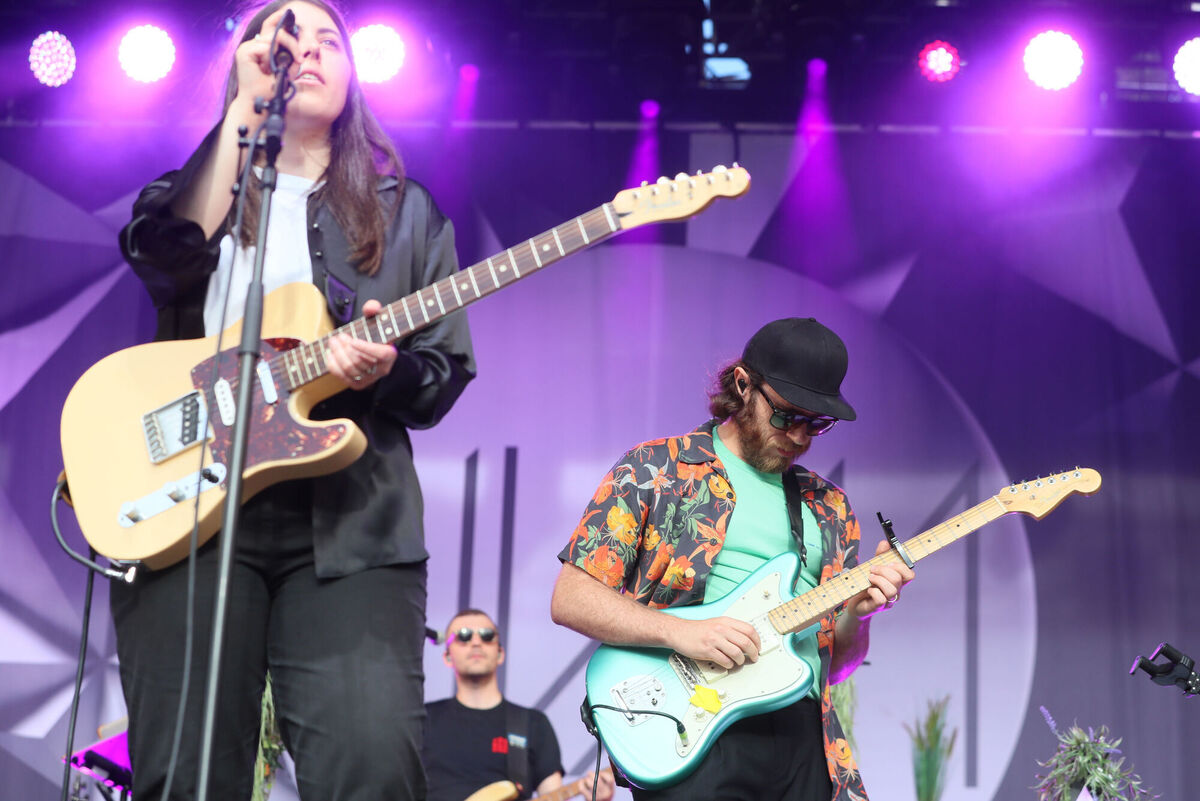
“I was thinking a lot about how sick I was as a kid and how debilitating it was – and how I was in hospital for a long time,” he says. “And then it kind of went away. I went back to school in fifth year, around 2000 or 2001. I found music and found a group of people. And I thought, ‘oh I have this under control’.
“But the word “control” stuck with me. The eating disorder was born out of a desire to control myself when the world isn’t something I feel I can control. And then music became this thing I was really and actively and quiet aggressively controlling.”
Writing I Lie Awake Every Night opened his eyes to the fact that he had an issue with surrendering ownership. The song became a conduit for the unprocessed pain from his adolescence. It was also a mirror in which he caught reflections of himself as a person still working through deep-seated issues.
“If I hadn’t made that song and hadn’t thought about that process…It was a real revelatory moment. A key moment for me as a human being to feel comfortable and to feel accepted.” McMorrow was born in Malahide in north County Dublin. His father, from Dundalk, was a businessman who ran a meat production company. His mother was an accountant from Waterford. She was an evangelical Christian and so, for a time, was McMorrow who attended a Baptist Church in Swords with her.
Grapefruit Season marks another milestone for McMorrow. It’s his first album to be released with a major label (Sony). Until now he has financed and put out his own music – and with good reason.
In his early 20s, McMorrow was invited to audition to Universal Records, the world’s biggest record label and the most powerful of the majors (through its subsidiaries it works with everyone from U2 to Taylor Swift). The rejection crushed him. Never the most confident, he was plunged into a canyon of doubt. But with time he has come to the perspective that it was for the best.
“It would have been a disaster [had he been signed by Universal],” he says. “I’m not suggesting I was clairvoyant or smart enough to realise it. But a little bit of me was like, ‘you are going to absolutely die if you enter this process’.”
As a young man he was, he feels, ill-suited to the music industry. “Debilitating social anxiety meant live shows were a non-starter,” he says. “And also, I had a very fragile ego. I needed to build up a certain amount of life experience and a certain knowledge of song structure and an understanding of being able to go on stage and play a song without collapsing halfway through it.” He has now reached that happy place. And he feels he understands who and what he is as an artist.
“I believe I’m a singer-songwriter,” he says. “But I’m not a nostalgist. For me, being a singer-songwriter doesn’t always come with an acoustic guitar. Sometimes it does. Sometimes it comes with a synthesiser, sometimes a drum kit. It’s not binary. It’s a very nuanced, complicated thing.”
- Grapefruit Season is released July 16.