Book Review: A childhood lost to systematic neglect and institutional abuse
"...a compelling account of how children were treated not that long ago and gives great insight into life in Ireland from the 1930s until the recent past"
Book Review: A childhood lost to systematic neglect and institutional abuse

John Cameron, aka Boy 11963: a story of abuse, institutions and a search for the past

  • Boy 11963
  • John Cameron with Kathryn Rogers 
  • Hachette Ireland €14.99 

This is a powerful account of a boy’s lost childhood and his lifelong search for his origins. Its subtitle is An Irish Industrial School Childhood and an Extraordinary Search for Home. It will make you angry and sad but it is not a depressing read, as ultimately it is about overcoming adversity and triumphing.

The first half of the book details John’s experiences; the second half reads like a mystery story as we learn about his investigation into his origins.

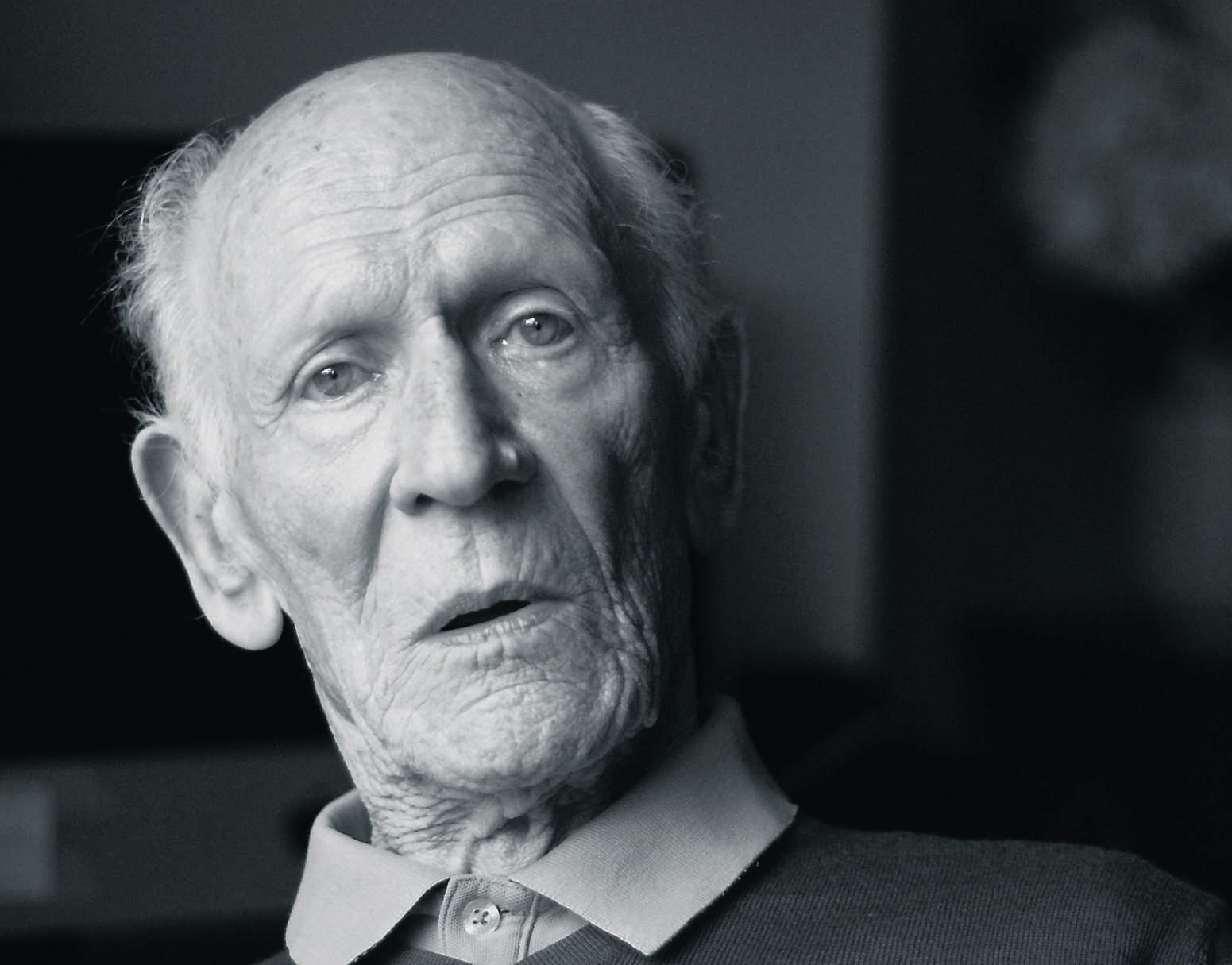
Now 85, John Cameron was abandoned at an orphanage in Dublin when he was only five months old, and fostered out aged three. 

The cruelty of the treatment he received while living with the Mulligan family he was placed with, which was meant to look after him, is heart-breaking to read. He was used as an unpaid servant and farm labourer from age three to eight, sleeping on straw, barely fed. Their animals were treated better.

John had one friend at school, whose family welcomed him into their home occasionally. He would use the excuse of collecting food scraps for the pigs to explain his delay reaching home. Remember, he’s not even eight at this stage.

By chance, he meets a kind lady named Miss Eleanor Digby-French, the 30-year-old daughter of the local Church of Ireland clergyman, who becomes his lifelong supporter.

This is how he describes the first time he visits Miss French’s home: “No adult ever spent so much time talking to him, and no one had spoken as kindly to him before. Johnny thought it must be the best day of his life.” 

At age eight, a car arrives with two men in it, one a priest, to take him to Artane Industrial School, where he was given the number 11963. Nobody tells him what’s happening. Over the following eight years he survives physical assaults, witnesses sexual assaults, the deaths of some children, and undergoes medical and dental treatment without anaesthetic.

“The Brothers used an assortment of implements to torture and beat the boys. They had giant rulers, and wooden blackboard dusters that flew across the classrooms; they used fists, boots and hurling sticks in the parade ground. But their preferred instrument of torture was the leather strap that hung from each Brother’s waistband.” 

John learns that the straps were made to order. “They used a filling of nails, keys, old coins, rusty washers… sandwiched between two lengths of black leather.” His only comfort at Artane are visits by Miss French and her mother. The Christian Brothers running the Industrial School are afraid or in awe of them, so when the Frenchs advocate for John to join the carpentry class, as he wanted and had been refused, he succeeds. 

Occasionally Miss French is allowed to take him and a friend out; she runs the shop at Dublin Zoo, so takes them there.

Decades later he tells us what she meant to him: ““The human spirit has a way of enduring and of surviving on the tiniest sparks of humanity … In my case, Eleanor French provided the spark of warmth and care that I needed to survive, and I shall always be grateful to her.” 

At 16 he’s told he’s leaving Artane – and it’s arranged that he returns to the Mulligan family – where he’d been treated appallingly as a toddler and young child. After he’s thrown out of there, Miss French rescues him. Because of his training in carpentry in the Industrial School, he chooses to continue in that field, before training as a teacher in Gorey, where he met his much-loved wife Treasa. They married in 1963, 58 years ago, and had five children.

“Treasa is the woman who brought my world to life, and I still feel her love and devotion every day.” 

While he was a respected teacher for over 35 years in Dublin, his career was not unaffected by his past: “John had always been ambitious so, after completing his degree, he attended many extra-curricular courses. He applied for promotion after promotion in Ballyfermot, but on each occasion he was turned down. In the early years, he attributed this failure to his lack of experience but, as time progressed, it became evident that he was being passed over for less qualified teachers.” 

When he questions the Principal about this he learns that “prejudice against former industrial-school inmates was alive and well.”

Artane Industrial School: a prison for John Cameron

John’s account of his life is augmented with a few notes at the end of many of the chapters, which gives the reader the historical facts about life in Ireland in the 1930s and 1940s. It’s a horrifying picture of the power of the Church over the State and its citizens. There are numerous examples of how the attitudes of the Church influenced behaviour and attitudes, including anti-Protestant prejudice; spying on and reporting the behaviour of others. It’s a grim picture.

The publication of the Final Report of the Commission of Investigation into Mother and Baby Homes in January magnified calls for adopted children to be given access to their birth records. If anyone ever doubted that they should, they must read Boy 11963 – it’s the most compelling argument for the right for everyone to know where they came from. Imagine if all your life you never saw anyone related to you unless you were fortunate enough to have a child.

Here’s how John expresses his feelings: “His obsession with his past began very early on in Artane. Many of the boys had family outside, and he longed to find someone belonging to him. What started as a nagging need became a burning desire as he grew older. … Like a salmon struggling to return to its spawning grounds, the yearning to find his overwhelmed him at times.” The second half of the book reads like fiction, although it isn’t, and it’s gripping. This part of the book is written in a different style to the first, with encounters and conversations dramatized, which works very well. The reader is drawn in immediately and wants to find out what happened.

From when they first met John was encouraged by his wife Treasa to investigate his origins. For years they didn’t succeed but eventually received the first evidence of who his parents were. Without spoiling it for future readers, the story of John’s parents which emerges is about forbidden love and how it scandalised rural Ireland and made national headlines in the 1930s. It includes the first time a paternity blood test was used in court, back in 1935. It would make a great film or television series.

Boy 11963 is well worth reading. It’s a compelling account of how children were treated not that long ago and gives great insight into life in Ireland from the 1930s until the recent past. It will make you glad to live in today’s Ireland.

While much John’s story is sad and will make the reader angry, in the end it is uplifting, as he has a satisfying career and meets and marries Treasa, now happily together for almost six decades.

The writing of Boy 11963 was a family affair, we learn from his daughter Aileen in the Foreword: “Dad’s early life was one of hardship and adversity. Despite this, he rose like the phoenix from the ashes. He fought hard to become someone, to carve out a decent and honourable life, and to raise a family.”

x

More in this section

Scene & Heard

Newsletter

Music, film art, culture, books and more from Munster and beyond.......curated weekly by the Irish Examiner Arts Editor.

Cookie Policy Privacy Policy Brand Safety FAQ Help Contact Us Terms and Conditions

© Examiner Echo Group Limited