Book interview: Vince Cable's dynamic appraisal of world’s economic thinkers
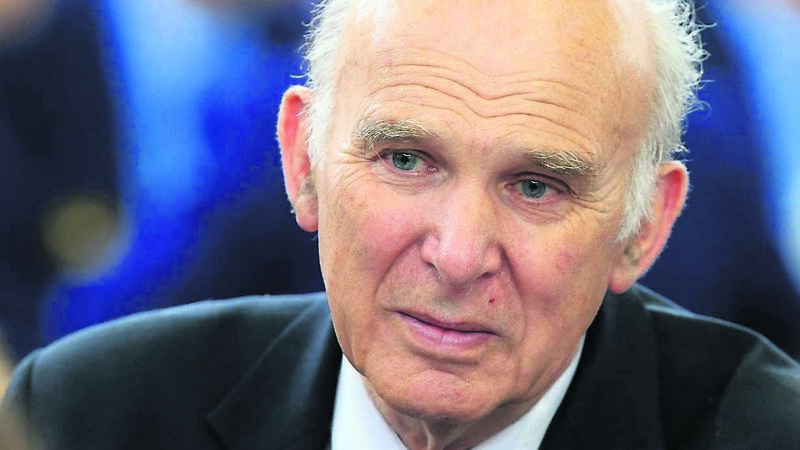
Vince Cable: The intellectual case for free markets and private enterprise wasn’t Thatcher’s starting point. Picture: PA
Vince Cable is talking about Thatcherism: a political philosophy he believes is widely misunderstood. “Margaret Thatcher was primarily driven by moral concerns: now those moral concerns were not shared by [Thatcher's] critics, but they were predominantly moral nevertheless,” the 77-year-old retired politician explains from his home in Twickenham, South West London.
“The intellectual case for free markets and private enterprise wasn't Thatcher's starting point,” says Cable. “[Thatcher] began with the idea that socialists and communists were fundamentally wicked and immoral— and that [as a society] we have to be free.” Nevertheless, the former leader of the Liberal Democrats says the anti-socialist revolution Thatcher's Conservative government begun in Britain pace May 1979 was chiefly inspired by Friedrich von Hayek. The Nobel prize winning Austrian economist was a leading proponent and father figure of neoliberalism: a theory of political economic practices that promotes individual liberty, strong private property rights, free markets, and free trade. Hayek called the modern capitalist system the apotheosis of "the extended order"— and argued that socialist economies could never be fully efficient because “dispersed knowledge” is required for every versatile-modern economy.