Back To Barrytown review: Enjoyable trip down memory lane to The Commitments
The first episode of the new documentary series on the adaptations of Roddy Doyle's trilogy provided behind-the-scenes tales from one of Ireland's favourite films 
Back To Barrytown review: Enjoyable trip down memory lane to The Commitments

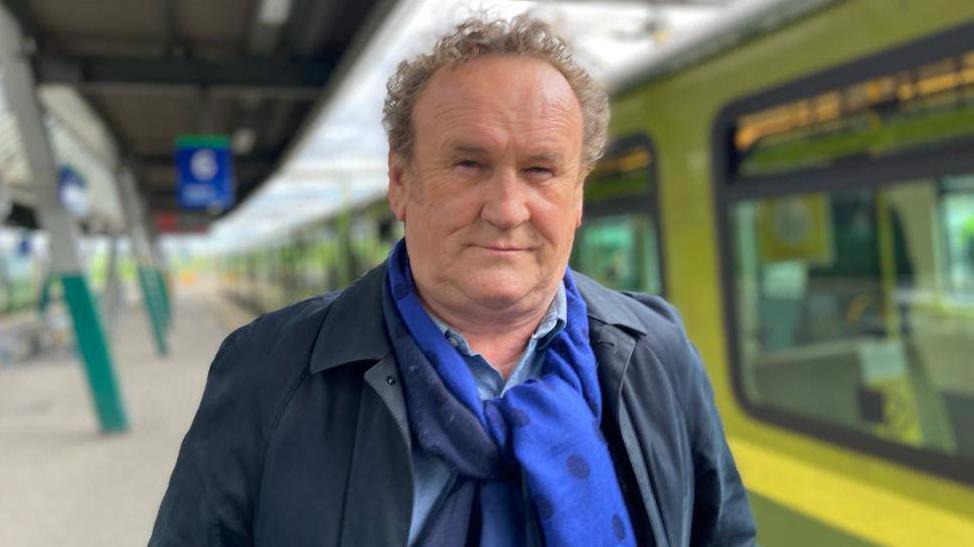
Colm Meaney in Back to Barrytown. 

It is hard to believe that it has been three decades since The Commitments, one of the most beloved films in Irish film history, hit our screens.   Back to Barrytown marks this milestone with a three-part documentary series on Roddy Doyle’s  trilogy, the first of which tells the story of The Commitments. 

Master of ceremonies for this entertaining stroll down memory lane is Colm Meaney who cemented Jimmy Rabbitte (Senior) in the public imagination as one of Ireland’s most memorable screen characters — Meaney refers to his initial role in The Commitments as a “high-impact” cameo.


The film brought Hollywood to inner-city Dublin, giving the area a much-needed lift, and capturing an Ireland that had never really been seen on screen before. Location manager Martin O’Malley was told to find locations that reflected urban decay, which he says wasn’t difficult — it was everywhere. 

There are great anecdotes from residents of Sheriff Street, who were hired as extras and taken in buses to various locations across Dublin. The money was so good that several would hop in the boot if they weren’t chosen and would be included anyway when shooting began. Deposits in the local Credit Union shot up as extras deposited their earnings.

A scene from The Commitments, subject of the first episode of Back to Barrytown. 

Only a handful of actors from the 12-strong main cast appear in the programme, including Robert Arkins (Jimmy Rabbitte), Angeline Ball and Glen Hansard — it would have been nice to hear from Andrew Strong, who was only 15 when he was cast on the back of his amazing voice. T

he soundtrack was also a phenomenon — was there a house in Ireland that didn’t have a copy — and there are enlightening contributions on this front from the likes of Paul Bushnell, the busker turned musical consultant on the film who went on to build a career in LA as a highly sought after session musician and sound engineer.

It’s not all rose-tinted. Doyle is refreshingly honest about the difficulties that arose when English comedy writers Dick Clement and Ian La Frenais (Porridge, Lovejoy, Auf Wiedersehen Pet) were brought in to work on the script.

 The late director Alan Parker appears in archived interviews, and his role in the film’s huge success is obvious — according to one contributor, “Every piece of music, every face, every extra was hand-picked by Parker”. However, one also gets the sense that working with him wasn’t exactly a bed of roses.

The documentary also conveys the mixed fortunes of the cast when the attention subsided — according to Arkins, it was “tricky and weird” when the opportunities stopped rolling in. 

“We were making a little film,” says Ball, but one that, it is clear, still holds a big place in our heart.

x

More in this section

Scene & Heard

Newsletter

From music and film to books and visual art, explore the best of culture in Munster and beyond. Selected by our Arts Editor and delivered weekly.

Cookie Policy Privacy Policy Brand Safety FAQ Help Contact Us Terms and Conditions

© Examiner Echo Group Limited