'My favourite nature book': Eight tips for great reads on animals and the environment
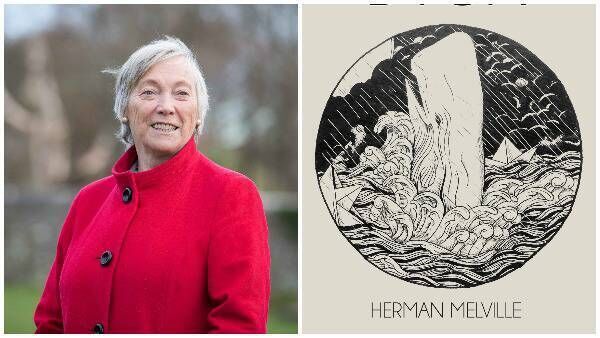
Reading the abridged version of Herman Melville’s Moby-Dick (1851) as a child, it was an exciting tale of a great white sperm whale and the captain of the Pequod who set out across the oceans to hunt and kill him. Reading the full version 20 years ago was an entirely different experience. Melville spent a year aboard a whaler and knew an enormous amount about whales.
He describes an enormous pod of breeding whales encountered between Java and Sumatra. “Suspended in those watery vaults, floated the forms of the nursing mothers of the whales ... One of the little infants that seemed hardly a day old, measured some fourteen feet in length and six feet in girth,” The whole scene is one of serenity and peace. He describes a watery world full of whales of all different species, a world now only encountered in books of fiction.
One of my favourite books is the book I won in a little art competition when I was nine, The Wildlife of Britain and Ireland. I hadn’t even known I had entered, so I got a mighty surprise when I won!
I had sent my aunt a card when she was in hospital, and I had drawn a little cartoon robin singing outside a hospital, while my aunt looked out the window with a thermometer in her mouth. My aunt loved the card, and she entered it in the competition without telling me.
That book proved a great source of inspiration to me over the years, as I spent all of my time copying the pictures of the animals and birds, and I learned so much about nature, even as I was learning to draw.
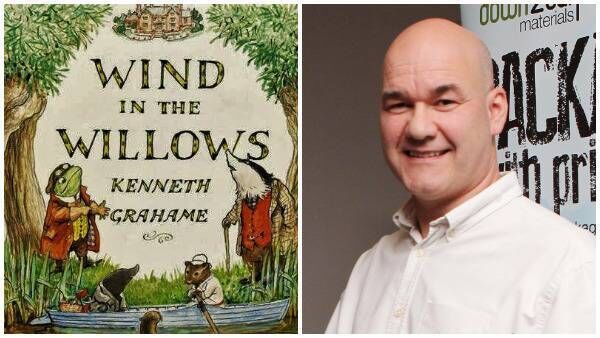
I first read Kenneth Grahame’s The Wind in the Willows when I was about ten. I picked it up again recently and started reading it to my daughter.
Mole asks Rat: “‘And you really live by the river? What a jolly life!’ “‘By it and with it and on it and in it,’ said the Rat. ‘It’s brother and sister to me, and aunts, and company and food and drink, and (naturally) washing. It’s my world, and I don’t want any other. What it hasn’t got is not worth having, and what it doesn’t know is not worth knowing.’” I have spent the last few years fighting for my own untidy little stretch of river, so in some ways, I now understand where Rat is coming from.
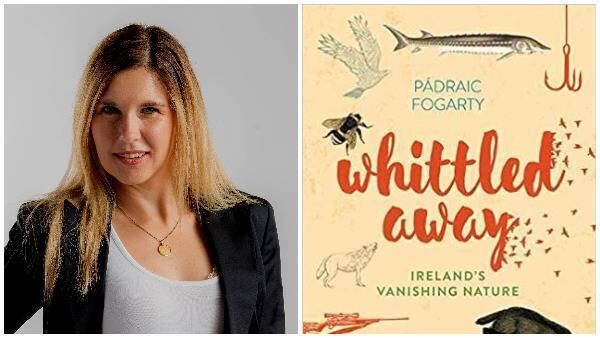
Whittled Away by Pádraic Fogarty is my travel guide for the Irish landscape, describing what Ireland used to look like before human interference and what it could become if we saw conservation as an opportunity rather than a threat. While the topic of vanishing nature and species extinction is not typically inspirational reading, Fogarty presents a variety of arguments and solutions to rectify the devastation we have inflicted on our island.
He affirms the Irish people’s love of nature and describes Ireland’s environment as a “paradise waiting to happen”. No constituency escapes mention, which is why I have given copies of this book to many friends and politicians over the last few years. Whittled Away should be required reading for all Irish politicians to understand why and how we can protect the nature we are so dependent on.
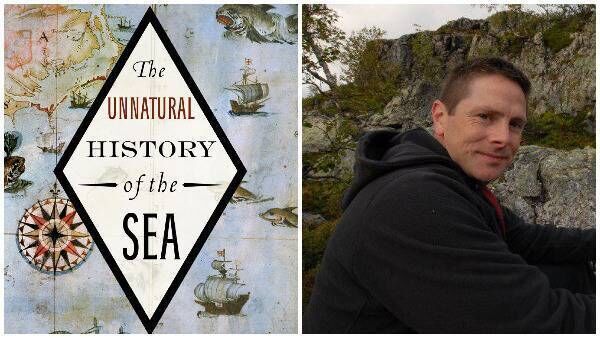
Until reading The Unnatural History of the Sea (2007) by Callum Roberts, I had imagined the ocean to be a vast unspoiled wilderness. This book showed me how wrong I was. Roberts went to the records of pirate ships in the Caribbean or historic accounts of fishing around the shores of Europe to tell a story of fantastic abundance that has today been whittled down to a fraction of its former wealth. It made me think about Ireland and how the abundance in nature has all but vanished, but yet we see our shiny green fields and grey sea as completely normal. It’s a phenomenon known as “shifting baselines”. Knowing what we’ve lost has made me work harder to see that abundance return to our island.
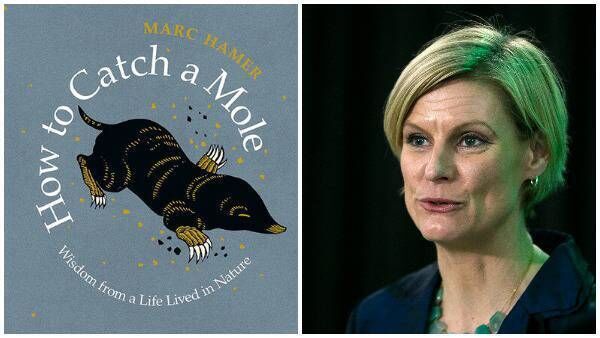
How to Catch a Mole by Marc Hamer is an intriguing book, with a rather deceptive title for a book all about nature. Hamer is a gardener who used to make a living out of catching moles – the plague of many farms and gardens in the UK, but he eventually decides not to do it anymore. He reflects that so much in gardening and farming is all about killing – weeds, predators and other pests.
To catch a mole, one needs a wholesome understanding of the environment in which they live, and Hamer’s respect of nature comes through strongly in the book. Written from a practical, honest and informed perspective, it delivers on its tag-line, “And Find Yourself in Nature”.
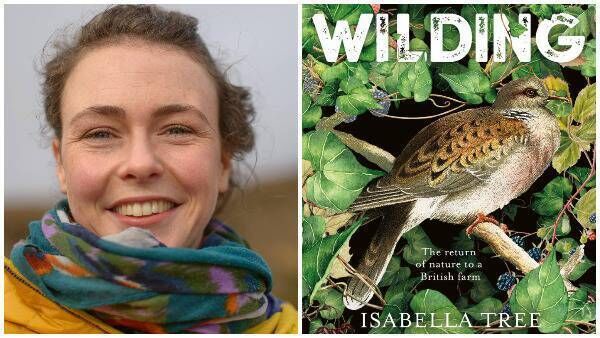
One of my favourite nature-themed books is Wilding by Isabella Tree. It’s an uplifting and reassuring book that tracks the recovery of nature on land that was used as an industrial tillage and dairy farm for years.
It really drives home the point that nature does want to recover and if we allow natural processes to guide us in that process of recovery there will be lots of unforeseen benefits.
I first read it a few years ago and it helped me look at my own unquestioned notion around tidiness, neglect, wasteland, and land management. I recommend to everybody who is interested in land and our relationship with it as it positions natural processes as a dynamic partner in restoration rather than an enemy that needs management and rigid control.
Wilding makes me feel like we have a chance at a wonderful future!
The book that inspires me most about the potential for Ireland’s biodiversity is Green Fields, a Journal of Irish Country Life by Stephen Rynne (1938).
Rynne gives a humorous and charming account of rural life at a time when farming entailed keeping pigs, hens, ducks, lamps, cattle and goats, while also growing an extensive variety of vegetables and grains.
The book is pure, romantic escapism, but I find it heartening to read of a thorough sustainable model of farming that in theory we could return to. Rynne’s nonchalant description of the myriad wild flowers in every inch of his farm makes for poignant reading in light of today’s industrialised agricultural dead-zones. Rynne could never have imagined that within a lifetime all this would be gone from many parts of Ireland.