Film Reviews: Oxygen delves deep into our fear of being buried alive
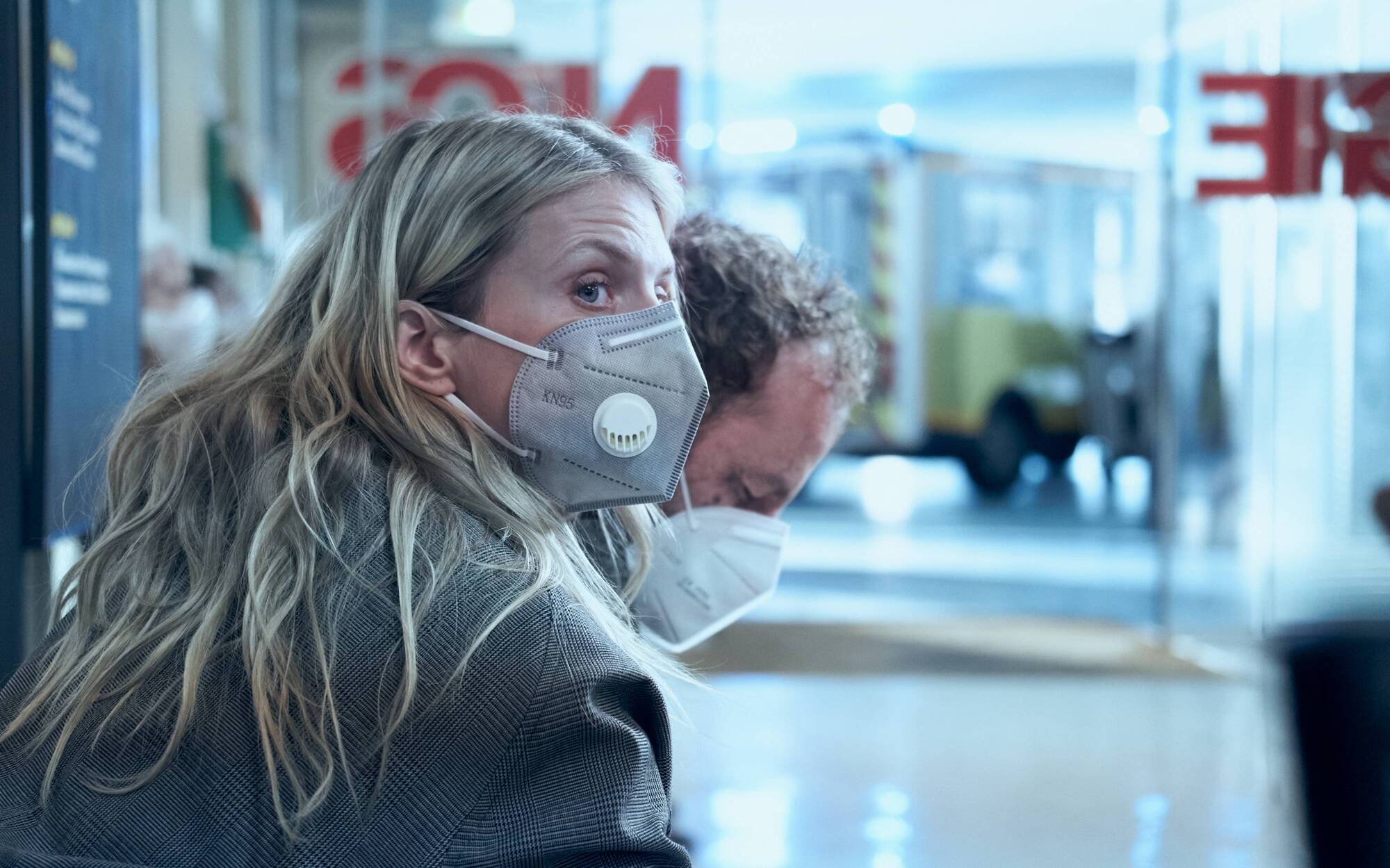
Mélanie Laurent in Oxygen
It may have all the high-tech trappings of a sci-fi thriller, but (12A) is a movie that delves deep into one our most primitive fears, that of being buried alive. The film opens with Liz Hansen (Mélanie Laurent) waking to find herself in a coffin-sized cryogenic chamber and hooked up to a computer-controlled life-support system, one aspect of which has failed. With her oxygen levels already depleted to 35%, the disorientated Liz has very little time in which to escape, a process made considerably more difficult by the fact that Liz has no idea of where, or indeed who, she is …
Written by Christie LeBlanc and directed by Alexandre Aja, Oxygen bears a strong resemblance to the 2010 movie Buried, in which Ryan Reynolds spent the entire film struggling to escape from an underground coffin. That said, Oxygen deserves to be appreciated entirely on its own merits. The main plot, of course, concerns itself with Liz’s increasingly frantic attempts to survive, and to persuade the computer, M.I.L.O. (voiced by Mathieu Amalric), to help her communicate with an outside world that seems strangely difficult to reach, but much of the story is engaged with the amnesiac Liz’s existential journey towards discovering who she is, and what it might mean to live an entire life in the roughly 90 minutes she has left once she wakes.
Liz’s husband, Leo (Malik Zidi), drifts into focus whenever her unreliable memory manages to conjure him up, but otherwise this is a tour-de-force turn from Mélanie Laurent, who not only delivers a compelling one-woman show but, due to the confines of the cryogenic chamber, spends most of the film in harrowing close-up. A compelling and plausible blend of sci-fi and the most ancient kind of psychological horror, Oxygen is a gripping thriller. (Netflix)
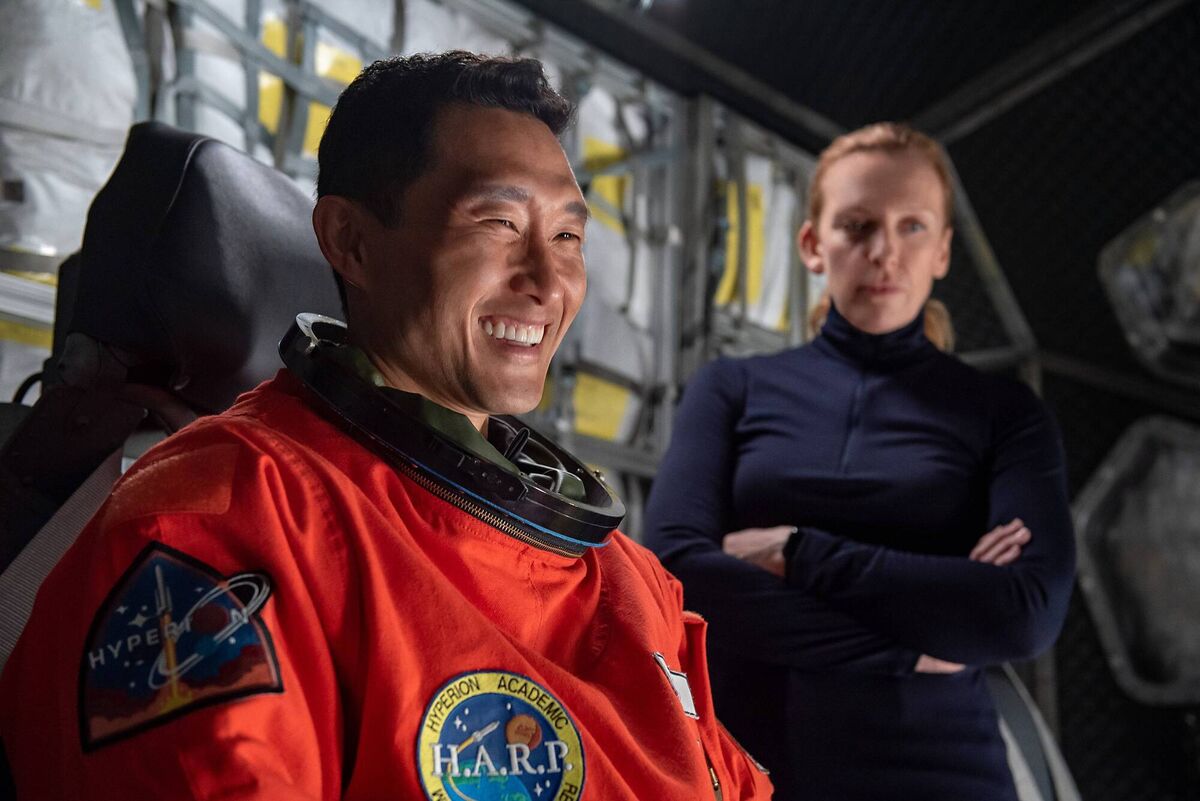
A lack of oxygen is also crucial to (12A), which opens with a mission to Mars blasting off into space. Shortly afterwards, the crew of Zoe (Anna Kendrick), David (Daniel Dae Kim) and their commander Marina (Toni Collette) are horrified to discover that launch support engineer Michael (Shamier Anderson) was knocked unconscious during pre-flight checks, and has inadvertently become the stowaway of the title, and not least because the mission only has enough resources – specifically, oxygen – to support three people on the two-year trip.
As is the case with Oxygen, Stowaway is a sci-fi thriller with its roots deep in our primitive experience of survival: the logical solution is that Michael should be eliminated from the equation, but logic is not compatible with the human instinct to recoil from cold-blooded murder. Written by Joe Penna and Ryan Morrison, with Penna directing, Stowaway becomes a parable that explores the limits of humanity’s civilising virtues – and especially compassion and empathy – in the confined context of a tin can hurtling out into the great black void. It is simultaneously a taut thriller and a ghoulishly fascinating conundrum, in which Michael is acutely aware that he is entirely at the mercy of his crewmates, and one, moreover, that features one of the most inventive and terrifying space-walks ever committed to celluloid.
The always reliable Toni Collette is impressive in heading up a strong ensemble cast, with Anna Kendrick also in terrific form as a scientist bedevilled by such non-scientific concepts as conscience and morality, and the result is a nerve-shredding sci-fi that asks very interesting questions – some of them unanswerable – of its audience. (Netflix)
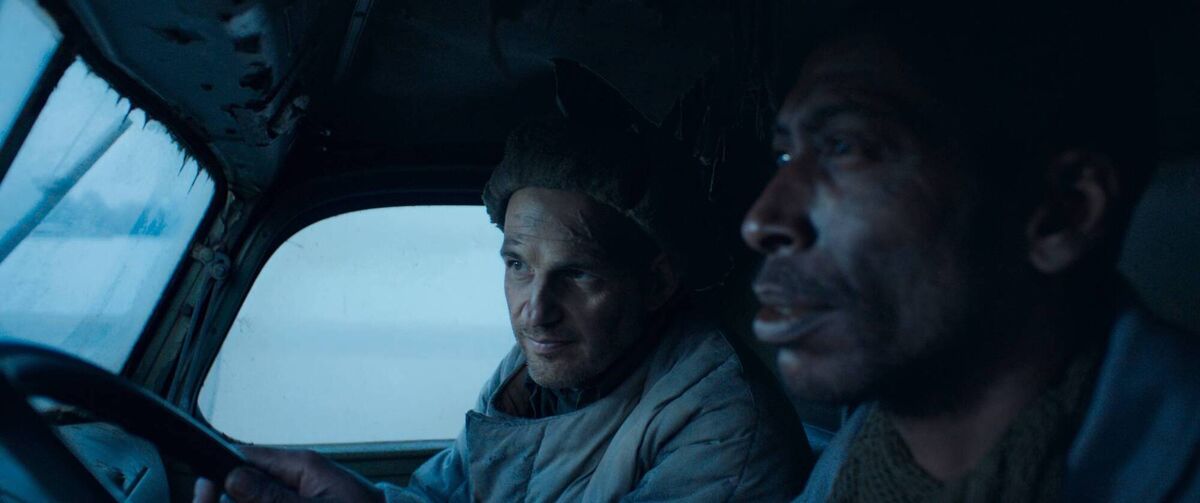
(15A) is yet another futuristic drama, although here morality and conscience are in very short supply. The story opens in a bleak post-apocalyptic landscape, with K (Johann Myers) and Z (Géza Röhrig) driving around in a truck harvesting corpses from the deserted city streets, but soon the story shifts focus to Ron (Michael Gould) and Ruth (Hayley Carmichael), whose bland existence in an abandoned apartment block is given a most unwanted fillip when the sociopathic Harry (Ned Dennehy) knocks on their door.
How the stories are connected is initially unclear, although the viewer quickly realises that writer-director Chino Moya has created a film along the lines of a Russian nesting doll, with one dystopian vignette emerging from another to gradually create an overall story of a future in which civilisation still functions – the electricity still works, and the phone networks are still in service – but one in which the civilising virtues have long since been eroded in favour of the naked ambition to survive at all costs.
Chino Moya and cinematographer David Raedeker combine to create a disturbingly plausible visual spectacle (think Blade Runner after an atom bomb has been dropped), but there are too many intersecting stories to allow the audience to fully engage emotionally with the characters’ plight. (digital release)