Dr Cassidy's Casebook: A harrowing look behind the scenes of some of Ireland's most gruesome deaths
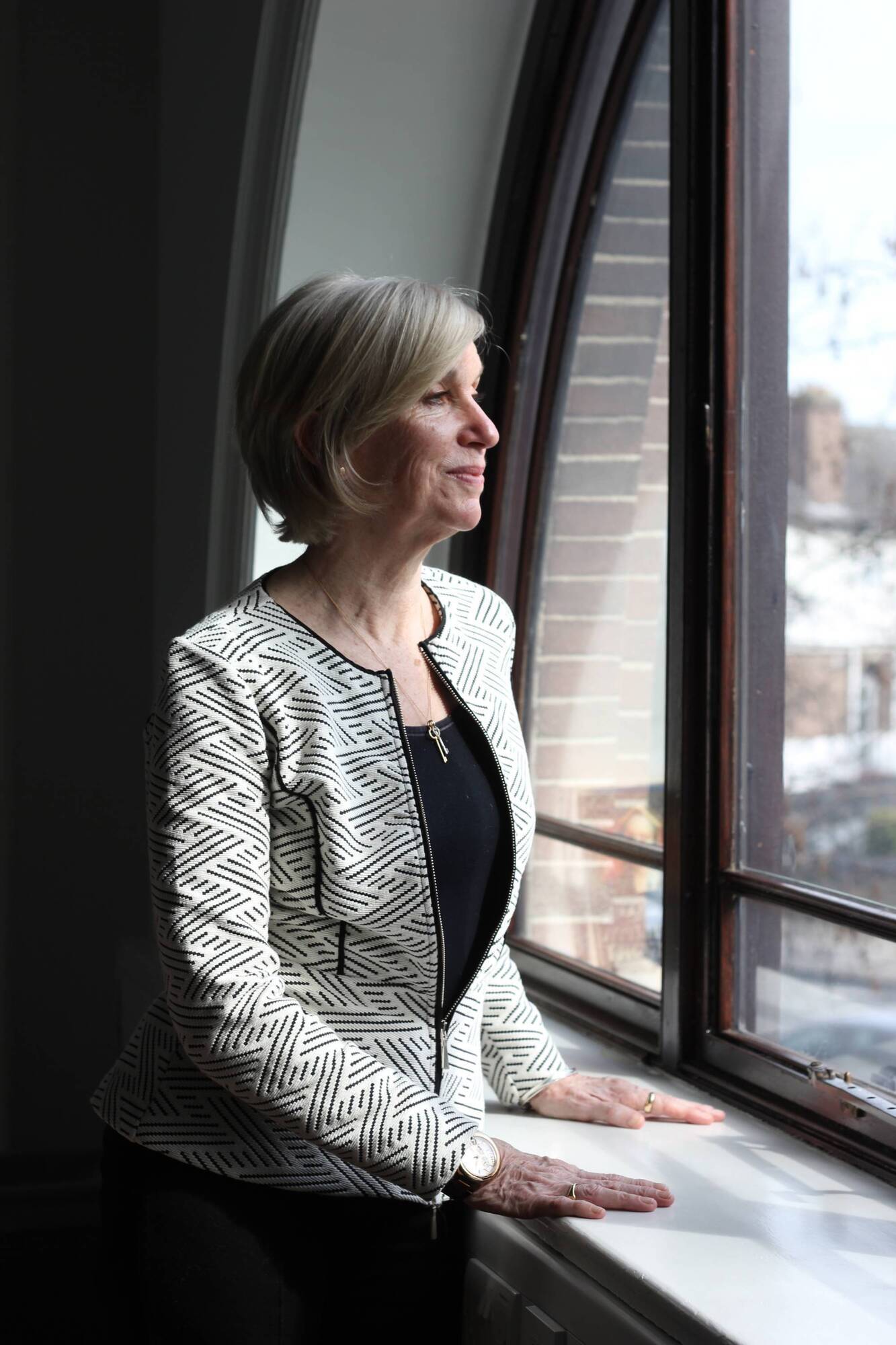
Former State Pathologist Dr. Marie Cassidy reflects on the issues and cases which shaped her career in Ireland
Formidable, warm and empathetic, Dr Marie Cassidy's face is well-known to us all after two decades as State Pathologist. In the first instalment of 'Dr Cassidy's Casebook' on Monday night, we were treated to a behind-the-scenes look at her career via three cases of murder that required forensic detective work to reveal the truth.
The difficult cases often proved the most difficult and disturbing. In 2004, the body of Dolores McCrea was discovered after a fire at her home in Donegal. The fire had burned the body so badly that the cause of death could not be established. "A good pathologist knows when they are out of their depth and need help," says Cassidy.
Help arrived in the form of Lorraine Buckley, Forensic Anthropologist. Buckley pieced the bone fragments that were found at the scene together "like a jigsaw". The fragments enabled a forensic dentist to formally identify the body as Dolores McCrea, and tar on her pelvis indicated that the body had been put into the fire, rather than it happening accidentally.
Buckley says that she felt she was doing a service for O'Shea in her work. "As I was putting her back together I felt that I was restoring some dignity back to her."
After working with such horror every day, Cassidy says that she learned coping mechanisms. Filling her head with 'nonsense' like Coronation Street every evening, and a book before bed, enabled her to remove reminders of her working day and allow her to sleep.
‘I was always the only female in the room’
— Linda O'Sullivan (@lindaosull88) May 10, 2021
What an exceptional woman.
Thank you Dr Cassidy. #DrCassidy pic.twitter.com/xAg60yH7qF
What's clear throughout Dr Cassidy's Casebook is that being female is not what Cassidy wants to be on her epitaph. "I was often the only woman in the room," she says, but she did not feel put upon. It has always been about the job and doing it well. "It matters not a whit to me, who did it and why they did it. that’s for someone else to make that decision. I want to know who this person is and what they died of."
While Dr Cassidy now lives in London with her husband in order to be as close to her grown-up children as possible, the weight of the job dictated that she juggled work and home life significantly.
She dedicated her recent memoir to her family, saying "This might explain all those times when I was not there. Sorry."
Speaking openly in the programme, she says that the only thing she struggled with in terms of the role of State Pathologist was being on-call because receiving a telephone call always meant bad news.
On Christmas Day 2008, Cassidy was alerted of the deaths of Sharon Whelan and her daughters Zara (7) and Nadia (2) in a fire at their homes in Kilkenny. What was initially considered a terrible accident soon became a murder investigation.
"I remember going 'oh' and nobody likes it when I go 'oh'. When I stop smiling, there are problems."
Sharon Whelan had been strangled by local postal worker Brian Hennessy and her daughters had died of carbon monoxide poisoning after he set fire to the building. Cassidy is teary-eyed as she remembers the case.
"How on earth could you ever be justified in killing two little children?"
17-year-old Swiss student Manuela Riedo was raped and murdered in Galway in 2007. "It was obviously very clear, because of the state of the body and the state of undress, that this was a sexual crime - and that was going to be of prime importance because again sexual crimes leave traces."
From the discovery of Manuela's body, the emphasis for Cassidy and her team was on the preservation of the scene. Cassidy outlines in detail the steps taken to ensure a swift cause of death and as a resulting profile of what kind of a person could have committed this crime.
For two weeks Manuela's parents sat in court listening to the evidence that would eventually convict Gerald Barry of the rape and murder of their daughter. "To sit and listen to the details of what happened to your beautiful daughter, it must be like a knife through their heart... I'm always taken aback by families because I always think, what state would I be in if it were my daughter?"
This is worth watching for many reasons, but especially for Dr. Cassidy & her team's balance of professionalism, humanity & respect towards the parents of the late Manuela Riedo #DrCassidy https://t.co/xrVxm2f8AO
— Gerry Hoban (@ramblinghobo) May 10, 2021
Dr Cassidy's Casebook is compelling viewing. There is an obvious draw for fans of crime novels and forensic psychology, but for the rest of us, it gives reassurance that these people who act as caretakers for those of us who meet our end in dire circumstances do so with kindness and empathy. Manuela Riedo's parents gifted Cassidy with a porcelain figurine to remind her of 'their angel.'
"When I'm working and I'm focused, I'm contained. But once you see the effect that a death has had on the family, I'm just like everyone else. you just want to give them a hug and say 'there, there, there."
- Catch up on Dr Cassidy's Casebook on RTE Player. Part two airs next Monday at 9.35.