John Lennon and me: From the Beatles in Hamburg to the Plastic Ono Band

John Lennon and Yoko Ono. Picture courtesy of the Lennon estate
Klaus Voormann first laid eyes on John Lennon in Hamburg’s red-light district while watching The Beatles the autumn of 1960. As he stood watching the band thrash out their rudimentary rock'n'roll to a crowd of sailors, drunks and sex workers, one impression stood out about Lennon: “He was a cocky rocker.”
The German musician would become friends with the Fab Four at that time, and remained a member of their inner circle through the subsequent decade in which they conquered the music world.
After the band split, Voormann went on to play with Lennon in the Plastic Ono Band, the rotating ensemble who would produce such hits as Happy Xmas (War Is Over) and Give Peace a Chance. A 50th-anniversary box-set of the band's output has just been released by Lennon’s estate. Of course, an Irish involvement in the Plastic Ono Band came courtesy of BP Fallon, who helped the group with their PR for a while, and can be seen miming on Instant Karma with the band on Top Of The Pops in 1970.
Voormann, 83, recalls how the path to the Ono Band began with Lennon's dissatisfaction in The Beatles, and that he privately declared his intention to split the pioneering group as early as September 1969.
Exactly a year later, Voormann - fresh from a three-year stint in Manfred Mann – found himself in a studio playing bass as one half of a rhythm section with Ringo Starr. He recalls how the drummer had struggled with a change in Lennon that happened after he'd undergone undergoing primal scream therapy with Yoko Ono.
“Yes, he (Ringo) was a little upset at first. John and Yoko were so engaged with one another, it wasn’t the same type of work he did in The Beatles; it was just John and Yoko and they were so together that Ringo was a little sad. Later John said to him, ‘It’s not just me anymore, it’s Yoko and me, we are together it’s different.’
“Ringo hadn’t known a relationship the way John and Yoko were, he would be more used to John in a more macho relationship.”
Among the issues the therapy had brought up for Lennon were losing his mother Julia when he was 17 after she was knocked down by an off-duty policeman; and the longterm absence of his father Alfred. Such personal themes were poured into a cathartic album.
“The subject wasn’t new to me,” says Voormann of Mother. “I knew about most of those things from talks we had. The song was so strong, he tried to portray his hurt and the way he was left alone. John is able with a few words to pin down a certain situation, I wish I could do it but I can’t. I really admire people that can.”
Lennon would also voice his contempt of the British class system on Working Class Hero. The track has often led some in the media to dissect Lennon’s social background perhaps missing the point.
“John knew what it was like to be a working-class man,” says Voormann. “Of course, he had a better life than a lot of people but there was a lot of people without much money who had a hard life in Liverpool. He knew about those type of people and he had the right to write about them. I don’t like songwriters that write about stuff they know nothing about or have no experience about what they are writing. John never did that, he wrote about things he knew something about.”
Before working with Lennon, Voormann had already begun work on George Harrison’s triple long-player All Things Must Pass, rated by many critics as the best solo album by any Beatle. He would also feature on Ringo Starr’s solo work.
“George would come into the studio with little joss sticks, he would light a candle and dim the lights, it was like a little altar. He would take much more time to record. The Beatles were never mentioned, it was time to turn the page and move on.”
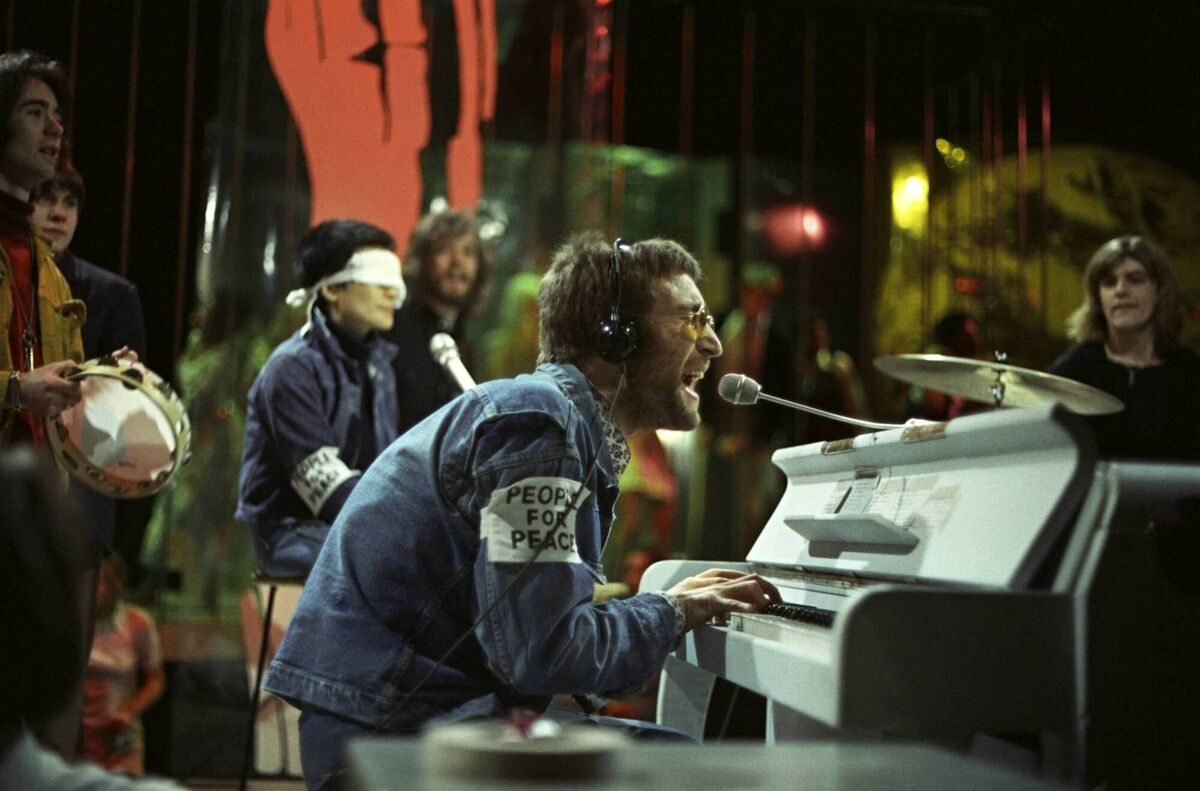
With Lennon, it was impossible not to notice the strong bond with Ono. “John would rely on Yoko, she was a great catalyst for him most of the time, even with just a few words she said the right thing and that wasn’t easy to do.”
As well as doing the rounds on the Beatles' solo albums, Voormann popped on numerous other records in the 1970s. “It was like a snowball effect once I played for John and George and I couldn’t have been happier,” he recalls. The distinctive bass intro on Carly Simon’s You’re So Vain is his. On Lou Reed's Transformer album, Voormann played on Perfect Day and Satellite of Love.
“Lou Reed was fantastic and such a lovely person. He was great long before this album, he was underrated. This project with Bowie and Mick Ronson was a well-done record and Lou had such great songs. Walk On The Wild Side is not me paying but I loved it. He and Bowie got on well and they were always laughing and having fun. It was a strange atmosphere in a great way, they were writing about pimps, transvestites, etc, this kind of thing.”
Outside of the studio, Voormann has enjoyed a separate career as an artist designing album sleeves. He even won a Grammy award for his famous design on The Beatles' Revolver in 1965.
“John called me and I went down to the studio and listened to the tracks, I was amazed. When I heard Tomorrow Never Knows, I thought about all these little Beatles fans from She Loves You. Suddenly you have all these backward tapes at double speed with backwards symbols, sounds of birds. It was a hard job because you have to cater for the young fans and the people who are going to like this new stuff, in the end, that’s what I did with the portraits of the boys with lots of hair.”
Voormann enjoyed a remarkable insider’s perspective, even living with George and Ringo in London and later with George at his Friar’s Park mansion in Henley-on-Thames. He reflects on one edgy experience of Beatlemania describing it as “horrible”.
"I was at Hammersmith (Odeon) listening to this crazy audience, the outside was a different picture. Beatlemania was like being in a prison, they couldn’t move without police.”
The band’s mop-top haircut is attributed to Astrid Kirchherr who, along with Voormann and Jürgen Vollmer, had befriended the band in Hamburg. She rejected the notion pointing to the haircut’s popularity in Germany. Voormann suggests a German influence on the band aesthetic is most visible on the Beatles For Sale album cover while baulking at their silver suit years preceding 1964.
“Those silly suits; they looked terrible, I thought: ‘What crap are they wearing now?’.”
Voormann has remained in touch with Paul McCartney and Ringo Starr, with both men appearing appeared Voormann’s first solo album, A Sideman’s Journey, in 2009.
“Lately I visited Ringo and nothing has changed; he’s the same person, he’s had some hard times with cocaine and all that crap. I went out the picture during that, there was too much of this and that but he came back from it and doesn’t drink now either. He eats well, the same as Paul. When we are together it is always great, when Paul plays a concert close by in Germany he looks after me and Ringo does the same.”
A long and winding road indeed.
- John Lennon/Plastic Ono Band - The Ultimate Collection is out now