Book review: Twists and turns galore in Carol Drinkwater's wartime tale

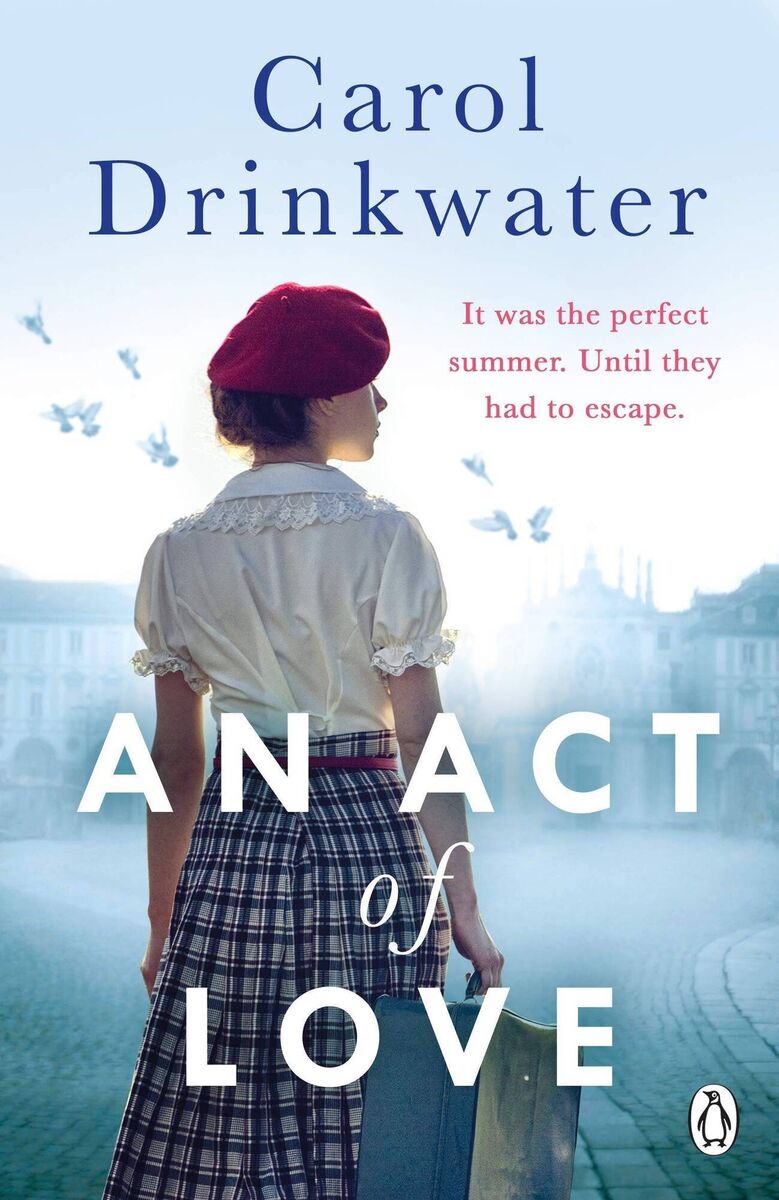
There are twists in the accomplished plot of what is a page-turner - the latest novel by Carol Drinkwater.
The storyline, while set in the context of the desperate attempts by Polish and German Jews fleeing the onslaught of the Nazi regime and their all too willing collaborators seems right up to the minute in touching today’s migrants' story.
But this is not, thankfully, an unrelieved tale of persecution and misery: Set in the south of France, a part of the world Drinkwater - in a former life the lead lady of All Creatures Great and Small - knows better now than the Yorkshire Dales, there is a scent of Provence in every page, of honey days and lavender fields, golden cheese and chickens plucked straight from the yard.
The story is told through the eyes of a girl, Sara, becoming a woman, of wanting to stay forever in the village which sheltered her elderly parents and hundreds of others fleeing the German jackboots taking over the French coast where they had sheltered.
It helps cement her affections for the remote village that Sara meets the love of her life, and her first love in the medical student Alain.
There are parts of this book that reminded me of the true and inspiring story of the late Simone Veil, the French magistrate and politician and first female president of the European Parliament whose autobiography is worth reading.
The Veils lived in Nice where her father had moved from Paris to work as an architect in the property booming Cote d’Azure . While the Italians, allies of the Germans were in charge Simone Veil and her family were left largely to themselves.
However once Italy surrendered in 1943 and the Germans took over, matters changed rapidly.
The little-appreciated lack of enthusiasm the Italians had for rounding up Jews is captured in Drinkwater’s book, and right at the end of the novel there is a quotation from Simone Veil:“Many French people helped Jews and sheltered children. In rural villages, no one was blind to the fact that the children supposedly placed in care by the social services were Jewish – all the more so as some spoke with a foreign accent. People looked the other way or simply didn’t want to know.” We know right from the beginning the firm-footed origins of this story told by Drinkwater in fiction.
In 1996 Drinkwater was travelling through villages in the lower Alps alongside the Italian/Swiss borders regions when she came across a museum in one remote medieval village with the genesis of the story that sparked this novel.
An Act of Love follows on from The House on the Edge of the Cliff, also set mainly in the south of France. But this is a more accomplished work and the narrative is beautifully paced and clever. It seems as if Drinkwater, who has a great social conscience and has wandered from tv to documenting her organic olive farm to more personal fiction has found her true feet in this mix of historical fiction in the setting she has made her home.
If I have a quibble, it is with the use of the generic term “racism” to describe the hatred of Jews that pervaded all of Europe, including Ireland, since the end of the 19th century. I am not sure how conscious people were of “racism” as we understand it in the 1940s, in the first place. Antisemitism was widespread, not confined to Germany or its regime, although taken to infernal depths under Nazism. I am not at all sure that the ugly antisemitism which is a peculiar thing and which is showing its forked tongue again in Europe, in the form of attacks on the street, attacks on synagogues, and online is racism at all. It may be something even more sinister, a many-headed cobra that needs its very own word.