Culture That Made Me: Neil Jordan picks his favourite films, music and writers
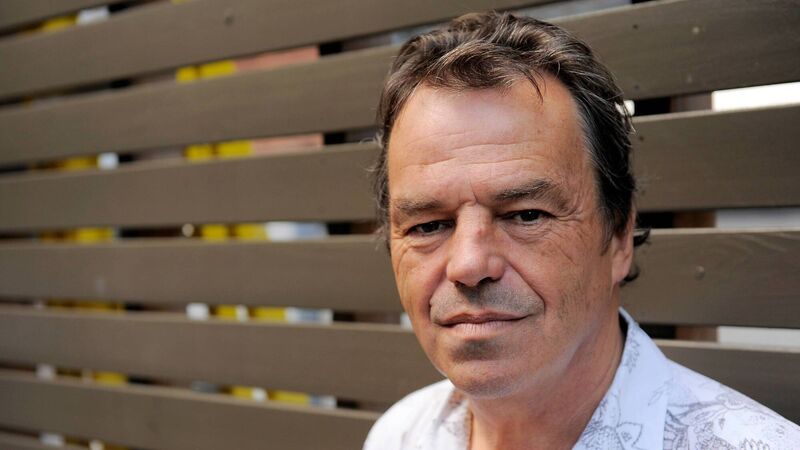
Neil Jordan has just published his latest novel. Picture: Chris Pizzello/ Invision/AP/Shutterstock
Neil Jordan, 70, grew up in Dollymount, Dublin. His films include Michael Collins, Interview with the Vampire and The Crying Game, which won an Oscar for Best Original Screenplay in 1992. His latest novel, The Ballad of Lord Edward and Citizen Small, has just been published by Lilliput Press.
I used to go Dublin’s arthouse cinemas when I was younger, small little flea pits that showed interesting films. The movies that really affected me was the German cinema of the ’70s like Werner Herzog and Rainer Werner Fassbinder and. to a lesser extent, Wim Wenders’s movies. They were made out of a generation and a sensibility that I knew and understood, movies like Herzog’s Heart of Glass, part of which was shot on the Skellig Islands. It’s a beautiful film. There was also a presence of rock’n’roll in these movies. I had this great sense of discovery of cinema in them, particularly in the Fassbinder films. He used to make three films a year. Not all of them were great, but some of them were staggeringly good.
Federico Fellini’s La Strada with Giulietta Masina is one of the best films ever made. Anthony Quinn played a circus strongman who picked this girl out of the little hovel she lived in and took her with him on his motorbike and behaved terribly cruelly to her. Eventually she left him. He ended up being heartbroken, but it was too late. It has that quality that I always love in movies – it's somewhere between fable, the simplicity of a fairy-tale and realism. When they begin to haunt me, I love those elements in movies. Films that strike me as never being realistic. Even the photographed images you see on the screen seem dreamlike and flickering. There’s a kind of poetry in films that I don’t find elsewhere.
John Boorman was a great help to me. He asked me to do a bit of writing on the last draft of Excalibur, and when he was making the movie, he wanted me around just to bounce ideas off. He called me a creative consultant. I was writing fiction at the time. I had applied to the National Film and Television School in England. I got a place there, but there were no grants so I couldn’t afford to go. So in a way John ended up being my film school. If you put somebody on a film set like Excalibur and they want to absorb things, you either learn very quickly or you'll never learn at all.
The most difficult thing to learn on set is that you can actually do whatever you want. Your job is to construct the shot, the scene and the image exactly as you see it in your brain. Everything else is a distraction – all the people pulling cables, lights, trucks, arguments with the actors, the fact that actors are falling in love with each other, as they always do. You can make it as private an experience as you want. That's what you've got to learn as a filmmaker.
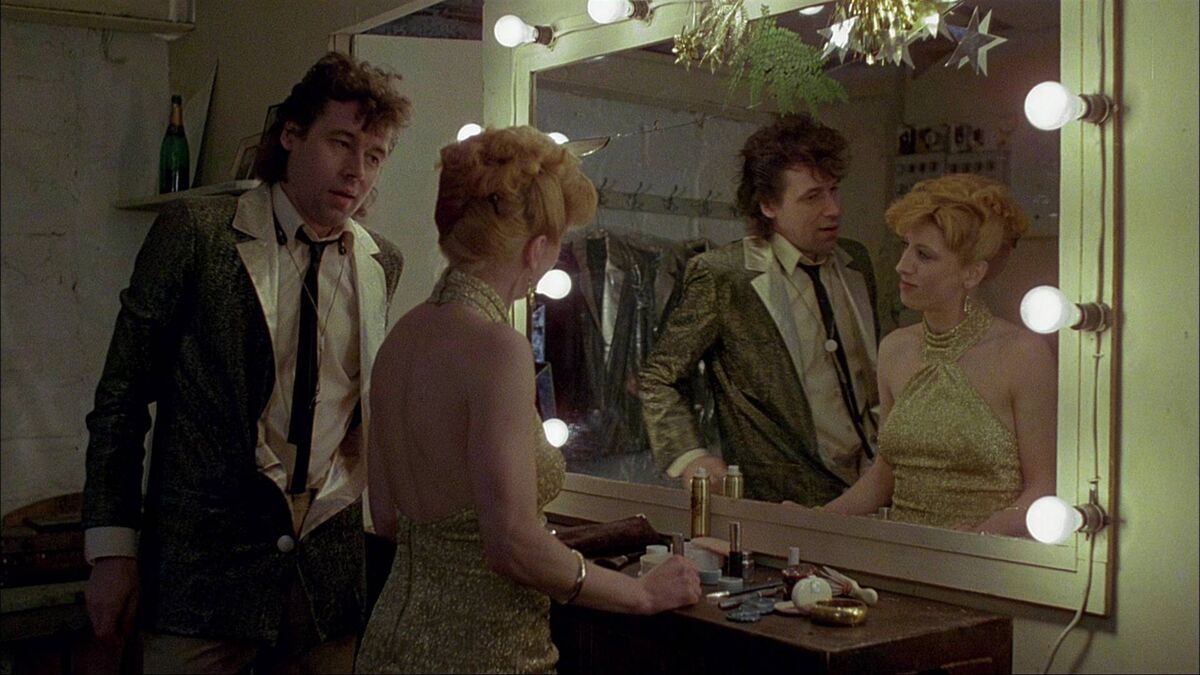
The first time I saw Stephen Rea on stage was in the Abbey Theatre in 1980 in a play by Tom Murphy called The Blue Macushla. It was directed by Jim Sheridan. Stephen was remarkable. He had a quietness to him that was really interesting – this kind of stillness, a different approach to acting then I saw in most other people in Ireland. At the time, a lot of Irish acting was incredibly theatrical. I suppose because Irish theatre has O’Casey and Synge, very wordy, melodramatic kind of material to work with. When I wrote my first movie, Angel, I told Stephen I wanted him to be in it. After that, every time I made a film for some reason there was always a part for Stephen. I suppose because he’s got an intellect as well as an acting talent. He’s someone you can talk to.
I grew up in Dublin so as a kid reading James Joyce’s Dubliners, it hit me like a sledgehammer. It seemed so familiar. From that, I moved to Portrait of the Artist as a Young Man and later Ulysses. It’s interesting re-reading those books now because they seem so contemporary. If you open a page of Ulysses, it seems to jump off the page with a kind of present-ness somehow. It seems to be describing a society that was far more variegated than the society I grew up in – the one that Liam O’Flaherty, Sean O’Faolain or even Edna O'Brien wrote about – this little crabbed, oppressive place that became Ireland after Joyce left it. You don't get that sense from Joyce’s books. You get a sense of life. That affected me very strongly.
The first fiction that really struck me and made me want to write was Ernest Hemingway’s short stories, The Nick Adams Stories. Some of them led to movies like The Killers. They’re about a character growing up in the Midwest. There’s a poeticism to Hemingway’s stories and an accuracy to how he describes the adolescent experience, so beautifully and pithily described. Tiny sentences. Nothing Joycean about the style at all.
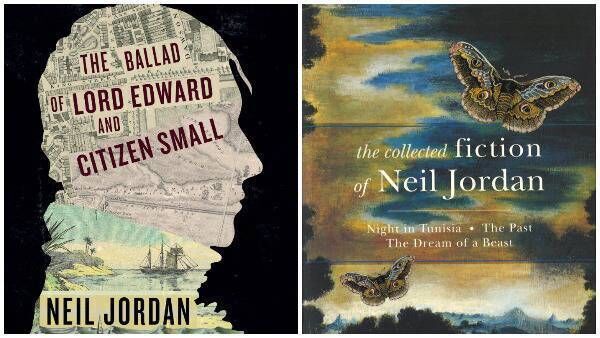
Generally the kind of fiction that was influenced by disorientating cinema – the kind of films that tears apart the fabric of reality and puts it back into place again in a different form – influenced me a lot like, say, the fiction of Jorge Luis Borges and Gabriel García Márquez. I was born in 1950 – García Márquez influenced everybody of my era. One Hundred Years of Solitude is one of the best books ever written. Although I find magic realism has become a tired old thing now. If I hear the phrase magic realism used to describe something I turn off: “Magic realism – wasn’t that a long time ago?”
I listened to a lot of Bob Dylan when I was younger. I remember seeing him in Dublin in 1966 at the Adelphi Cinema. For the first hour, there was a little skinny guy with a guitar on stage, going “Hey, Mr. Tambourine Man, play a song for me...” Then after the break, he brought on his electric band – Robbie Robertson and all those dudes. Half the audience – who were all wearing Aran jumpers – got up and left the building. The minute they heard an electric guitar – it was out the door.