Pelé film launches on Netflix: 'He's Elvis. He's Neil Armstrong. He's the first guy'
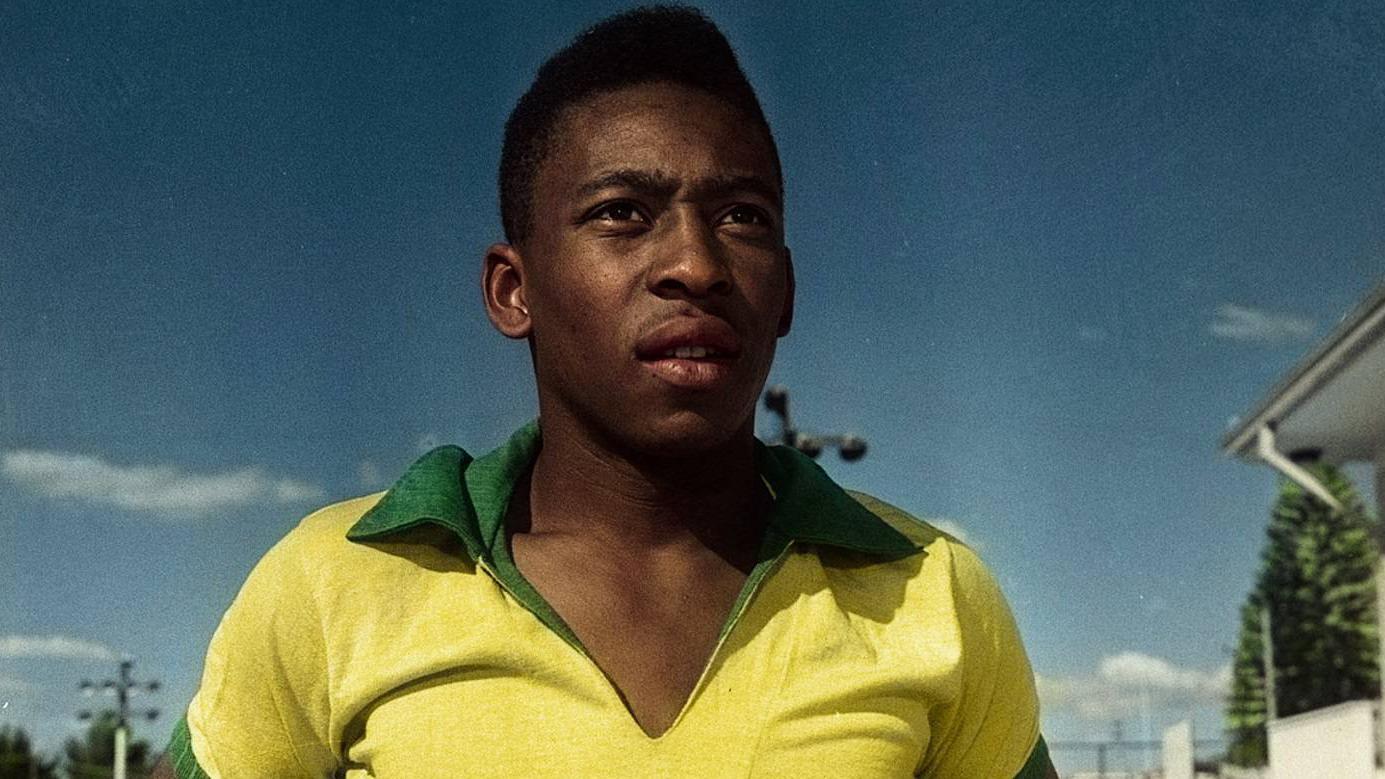
The new Pelé documentary on Netflix is framed around the four World Cups the Brazilian legend played in.
There’s a moment in the new Netflix documentary Pelé where the footballer recalls praying to God the night before the 1970 World Cup Final. Recounting the intensity of his prayer that Brazil would prevail decades later on camera, he suddenly bursts into tears. It’s a remarkable scene to watch Pelé, now 80, remembering the raw emotion of that night and to witness how much victory still means to him.
According to directors David Tryhorn and Ben Nicholas, who spent many days with the star as he spoke about his life, the tears were an expression of relief. He was just a boy when he stormed to fame during his first World Cup in 1958 - but twelve years later, he felt a sense of responsibility to the Brazilian people. Having won two consecutive tournaments, the team departed early in 1966, a disappointment Pelé later described as: “the toughest experience I have ever had in football”. For a country suffering under the grip of a military dictatorship, the stakes were high.
“Before 1958, Brazil isn't really regarded as the country of football,” said Tryhorn. “It's certainly regarded as a country that plays football to a high standard. But that's not one of its cultural assets. After 1970, football is the first thing people think about when they think of Brazil. That's not solely, but very largely down to Pelé.
"Without 1970, Brazil doesn't become Brazil, Pelé doesn't become Pelé. That's the moment he's having to rubber stamp not just his own identity, but his nation's identity as well, which is a huge thing. I think there's a very telling line when we were all expecting Pelé to talk about the joy and happiness of winning, and he actually talks about relief. It's the relief that there's a rubber stamp for all his hard years of work.”
Framed around the four World Cups in which he played, Pelé tells the story of a player widely regarded as the greatest ever. He’s the only player ever to win three World Cups. But it seeks to look beyond the statistics and celebrity, contextualising the footballer’s successes against the political and social turmoil that was ongoing in Brazil at that time. After the country’s left-leaning president Joao Goulart was toppled in a military coup in 1964, the country would live under military rule for two more decades. By 1970, many of the country’s freedoms had been taken away by an increasingly repressive regime. Indeed, Pelé’s relationship with the government at that time is examined in some detail.
The documentary features a wealth of excellent archive footage in telling the legend’s story and takes a detailed, workmanlike approach in breaking through that legendary status to find the person behind it. It does so through interviews with the man himself, now 80 and walking with the aid of a frame, but also his teammates, managers and family.
“When you dive a little bit deeper, you realise that actually everyone has a very superficial knowledge of the story, including us at the time,” said Tryhorn. “I guess the mission of the film was to contextualise this guy, this unbelievably famous guy, let's put him into his historical context. Let's show what he achieved, from a cultural point of view, from a national point of view, from a global point of view.
"Because he has this mythology around him, he’s often this sort of suddenly two-dimensional character: ‘There’s the guy who's the greatest’. So it's important to humanise him as well and get the viewer to have an emotional connection with him.”
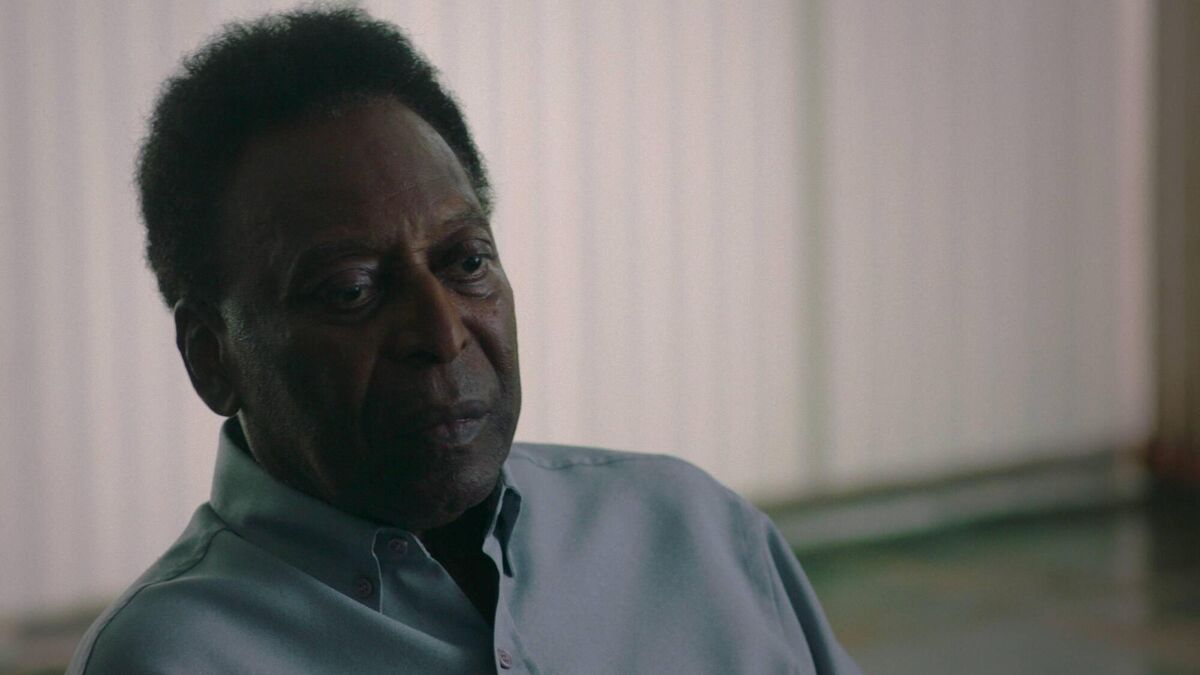
They found him a candid and open interviewee, as he relived the story of his life. “He’s at a time in his life when I think he is feeling more reflective,” observed Nicholas. “We wanted to create that feeling that you're living or reliving the story with him and with the other people who were actually there when it happened. So that meant grasping this opportunity to get in the room with him and the people who had a personal relationship with him at that time or a relevant connection to the story that we're telling in that timeframe.”
Pelé grew up in a working-class family in a poor suburb in the city of Bauru, shining shoes as a boy to help support his family. His skill with a football was noticed from an early age, and by his mid-teens he was signed to Santos, where he would stay for most of his career, before seeing it out at New York Cosmos.
After being selected to play for Brazil in the 1958 World Cup, the 17-year-old would return home a superstar, set to become one of football’s first millionaires through endorsements and advertising. “I think he had the good fortune, and a strange knack throughout his life, for being the right man at the right time,” said Nicholas. “There were other great Brazil players before him, of course, but our ability to watch stuff with them is non-existent, really.
“He managed to explode onto the scene at a time where radio is already massive, TV is becoming big, and a byproduct of that is the beginning of the culture to use celebrity to advertise things. There's also air travel becoming affordable. So Santos are able to monetise Pelé by basically making him a touring footballer. But he definitely is a product of his era. And he's someone that for whatever reason, suited that era so perfectly, and was able to really parlay his football talent into a level of fame, which no one had achieved up until then.”
“I think he sets the precedent, ultimately,” added Tryhorn. “We've gone out of our way to avoid the usual comparisons when people say who's the greatest. That doesn't really interest us to be honest. I don't think there's much value in cross generational comparisons. But what we did want to establish is that he was the first. He's Elvis. He's Neil Armstrong, he's the first guy to do it. And he's going where no one's gone before him.”
Prior to our interview the filmmakers requested that I watch it in Portuguese with subtitles (it’s also available in English) and it’s easy to see why. By hearing Pelé and others speak in their own voices, this becomes a truly Brazilian film. And with streamers getting international hits with series such as Call My Agent and Lupin, subtitled storytelling has become more accessible and commonplace.
“I think we're definitely seeing a trend where you have these global platforms like Netflix open up foreign language films, you have films like Parasite winning the Best Picture Oscar,” said Tryhorn. “Stylistically, we made a very conscious decision that every interviewee would be Brazilian. It would be first hand testimony.
“Then to surround that and give the global context a lot of the reports were in English or Italian or French. We wanted to create this quite intimate Brazilian love letter, and then the viewer can experience the global phenomenon that was Pelé through reports that were not in Portuguese. Because this is a Brazilian story.”
- Pelé is available now on Netflix