Oliver Stone’s freewheeling autobiography tells the story of the first half of his life
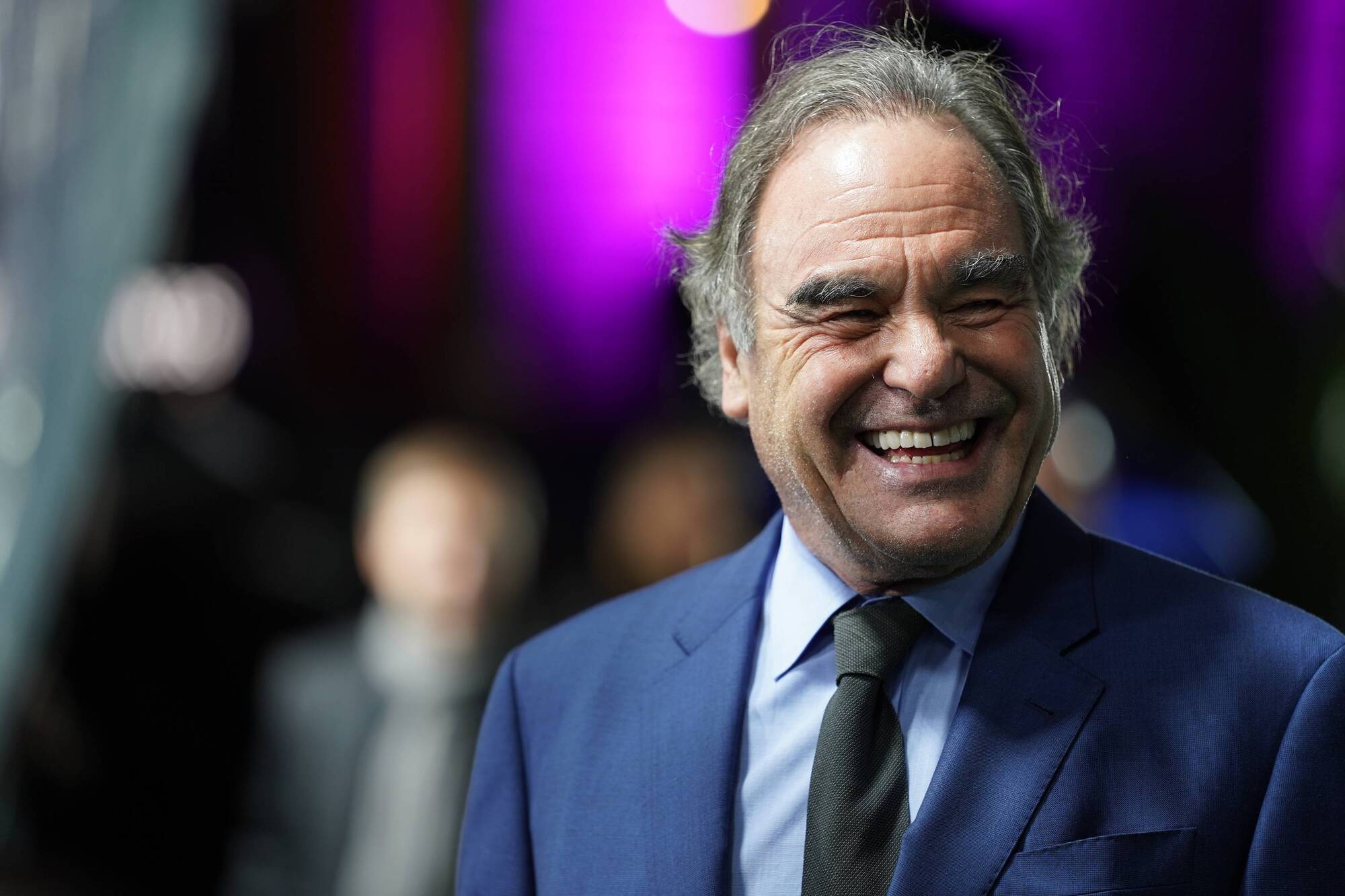
Oliver Stone won a medal for bravery in the Vietnam war in the 1960s and won Oscars for his films in the 1980s. Picture: Thomas Niedermueller/Getty Images for ZFF
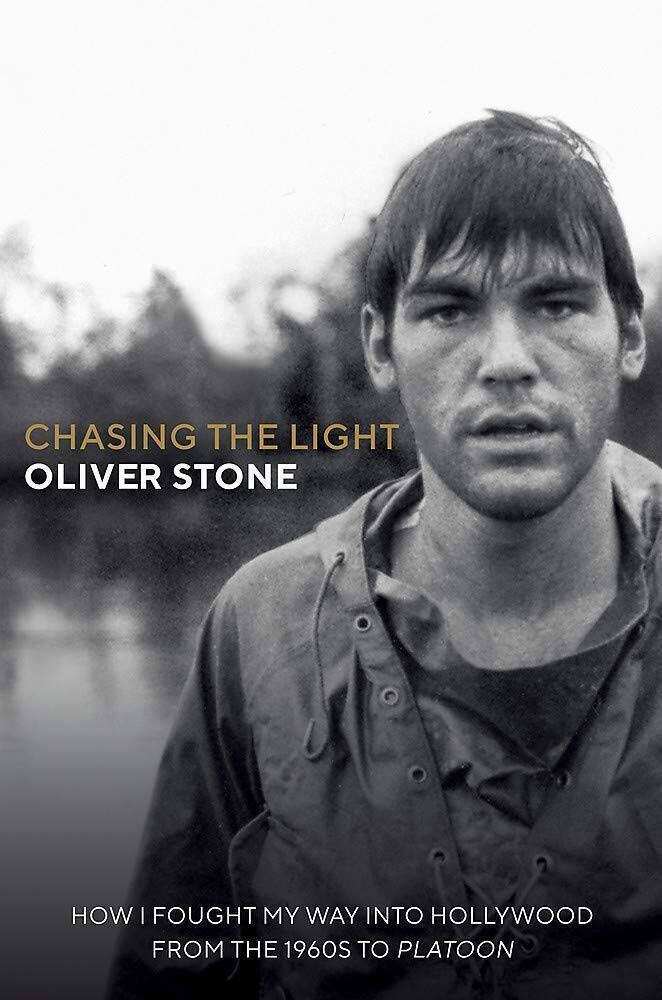
- Chasing the Light
- Oliver Stone
- Monoray, €20
IT'S early in the piece but maybe the best way to explain the allure of Oliver Stone’s romantic, freewheeling autobiography is to tell you how one of my best friends took on the experience.
My mate, a self-confessed Stone nut, downloaded the audio version of Chasing the Light - as read by the author - and then proceeded to drive around Cork city with the Oscar-winning director and screenwriter for company. “Love how he paints a picture of post-war optimism in New York circa 1945-46,” he messaged me. “Take me there...” Throughout his storied but turbulent career, Stone has certainly taken us places - the steaming jungles of Vietnam, the (serial) killing fields of the American heartland, the fervid political theatre of El Salvador, the grassy knoll. Even if we didn’t always like the destination, more often than not it was worth the journey.
Reading Stone's words in Chasing the Light, it’s impossible not to hear that coffee and cognac voice. The words roll from the page, sentences topped off with little rejoinders, just about maintaining an elegant flow. Drugs are mentioned early and often, while the word “sexy” features half a dozen times in the opening chapters alone. As in his best movies, Stone displays a positively moreish lust for life, at one point referring to how the two parts of the filmmaking process, if working well, are "copulating".
The book tells the story of the first half of his life, up to the acclaim and gongs of Platoon, and it’s clear that his own sense of drama was underscored by his family background, which is part torrid European art flick, part US blockbuster. His mother, Jacqueline - French, unerringly singleminded - grew to womanhood during the Nazi occupation of Paris. She downplayed her striking appearance as the jackboots stomped the streets but quickly scaled the social ladder, becoming engaged to a pony club sort. Enter Louis Stone.
Considerably older than Jacqueline, Louis quickly zoned in after spotting her cycling on a Paris street. In no time Jacqueline has jilted her fiancée (who, remarkably, appears to have turned up as a guest at the wedding), Oliver is conceived and one ocean crossing later, William Oliver Stone is born.
This family contains fathoms, Stone's father straight-laced and Commie-hating on the surface, yet a serial adulterer (even threesomes are mentioned) and positively uxorious towards his own mother. "It was sex, not money, that derailed my father," he writes. Louis's infidelities nixed Jacqueline's American dream, and Oliver’s with it. Jacqueline ultimately cheats on Louis, not simply via a fling but a whole new relationship, and with a family friend to boot.
What’s even more interesting is Stone’s reflections on *how* it was dealt with. Already dispatched to a boarding school, he learns of the disintegration of his family down the phone line. It has the coldness of some of the best scenes from Mad Men, children of the era parceled off to the side even as momentous events in their home life detonate in front of them. As things veer ever more into daytime soap territory, Louis then tells his son he's "broke", echoing the impact of the Great Depression on his own father's business interests.
By now, Stone is unmoored. He has secured a place in Yale but blows it off for a year and heads to Saigon to teach English: "I grew a beard and got as far away from the person I'd been as I could." On his return he decides he is done with academia; he'll be a novelist in New York, much to the distaste of his father. "That's why I went back to Vietnam in the US Infantry - to take part in this war of my generation," he writes. "Let God decide."
And here we are at the pivotal moment in Stone's adult life. Plunged into the strange days of 1968 in the jungle, he recalls a scene in which his patrol group comes under attack, imagining itself surrounded. Time elides and a metre may as well be a mile, explosions going off everywhere and bullets flying amid paranoia and uncertainty that borders on the hallucinogenic. "Full daylight reveals charred bodies, dusty napalm, and gray trees."
Tellingly, Stone focuses on this arguably cinematic episode while other incidents in which he is actually wounded don't receive the same treatment. By the time he leaves Vietnam he has served in three different combat units and has been awarded a bronze star for heroism. So many of his peers were drafted, yet he had decided to go. You never get a direct sense that his subsequent career is in any way a type of atonement, yet it is never fully explained. "Why on earth did you go?" he is asked. "It was a question I couldn't answer glibly."
From this point on, Chasing the Light mainly becomes a love letter to the redemptive power of the cinema, pockmarked with acerbic commentary on Hollywood powerplays. Stone's firsthand experience of jungle combat gives him a sense of perspective that no amount of cocaine or downers can ever truly neutralise, and it also imbues him with a sense of derring-do. At NYU School of Arts, his lecturer is Martin Scorcese, an educational home run. Watching movies is a place a refuge, writing them a cathartic outlet. It leads to visceral filmmaking, beginning with his short film Last Year in Vietnam. That burgeoning sense of career before anything else brings an end to his first marriage - "'comfortable' was the killer word". The seeds are sown for the plot that would germinate into Platoon.
As he moves past the relative disappointment of his first feature, Seizure, the big break of writing Midnight Express, and then onto the speedbump of The Hand, his second movie, Chasing the Light becomes a little more knockabout, though no less enjoyable. Conan the Barbarian, for which he wrote the screenplay, became someone else's substandard vision, Scarface a not entirely pleasant experience as his writing efforts move to the frosty embrace of director Brian de Palma. Hollywood relationships rise and fall like scenes from Robert Altman's The Player. His second marriage, the birth of his son, the slow-motion passing of his father, and all the time Stone is chasing glory on the silver screen.
By his late thirties it feels like he's placing all his chips on Salvador, a brutal depiction of central American civil war based on the scattered recollections of journalist Richard Boyle and starring the combustible talents of James Woods and John Belushi. His own high-wire lifestyle is perhaps best encapsulated in his reference to Elpidia Carrillo, cast as Maria in Salvador: "Elia Kazan once argued against any restrictions for a director exploring personal limits with his actresses, and I wanted badly to get down with her," he writes with delightful candour. Yet ultimately "I convinced myself that repression, in this case, would make a better film." Note: in this case.
Salvador was a slow burner, not an immediate critical or commercial success, but then in the style of a rollover jackpot, it started climbing the charts just as Platoon is about to announce itself to the world. Despite some loopy goings-on, that shoot in the Philippines had never gone down the Apocolypse Now route of near-madness, the drama mainly confined to warring factions within the production team. Ultimately, Platoon was the movie mid-Eighties America wanted to see about Vietnam. The book finishes in triumph, Stone clutching Oscars for Best Director and Best Picture.
There are piercing insights and inconsistencies dotted throughout. Stone lusts after good reviews but rails against the influence wielded by certain writers, such as Pauline Kael. He makes frequent reference to his yearning for truth and factual accuracy, yet hardly raises a quibble with The Deerhunter, the brilliant but flawed movie by sometime ally Michael Cimino which - particularly in the infamous Russian Roulette scenes - delivers an entirely concocted depiction of North Vietnamese forces. But then again, Stone revels in what he says is the ability to "not to have a fixed identity, to be free as a dramatist, elusive, unknown."
We've come to know him more in the decades since - through the menacing Natural Born Killers, the riveting but wonky conspiracy of JFK, the all-star lost classic U-Turn, even the missed opportunity that was The Putin Interviews. As my friend, who is the real authority, correctly observes, Chasing the Light is also weighted with nostalgia for a time when political dramas and anti-war films were smashing the box office, something hard to imagine today.
The second volume, if and when it arrives, will surely make for good reading - or listening. Buckle up your seat belt and take a spin.