Rewilding: a concept borne of frustration with the dwindling of nature
"It is a concept that could see rhinos roaming the Australian outback or beavers creating wetlands in the British countryside."
Rewilding: a concept borne of frustration with the dwindling of nature

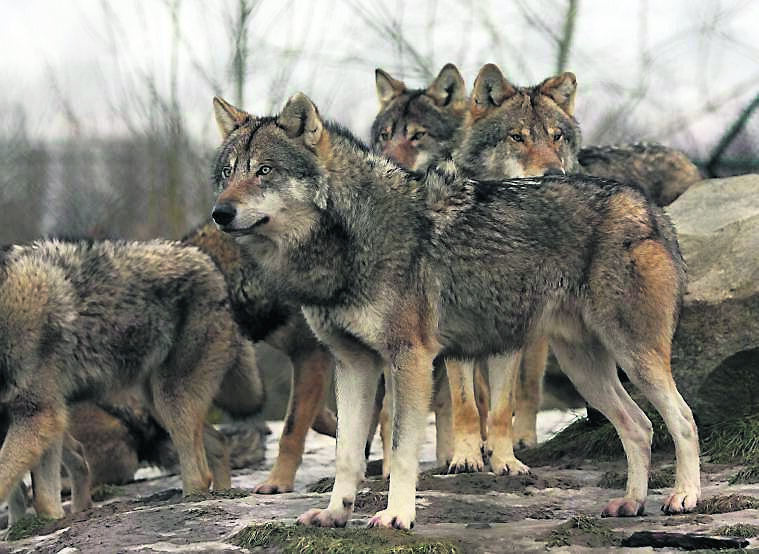
Scientists found the reintroduction of top predators such as wolves, re-establish top-down ‘trophic’ controls which regulates the transfer of energy between vegetation and animals via food webs.

  • Rewilding: The Radical New Science of Ecological Recovery
  • Paul Jepson and Cain Blythe
  • Icon €9.90

THAT the planet is in serious danger is in no doubt. That there are plans and methodologies to derail the drastic decline in species’ extermination and global warming (to cite just two of the armageddon scenarios that await us) is also not in doubt. Among the bolder of these plans is rewilding. Jepson and Blythe are two of the strongest advocates for this theory which recognises the interplay of all ecosystems with one another in the essential functioning of the biosphere.

Fundamental to the reassessment of this eco-philosophy is the realisation of shifting baselines where each generation assumes the nature it grew up with was the norm. People of a certain age only have to think back to their youth to agree with this idea - remember the clouds of insects on windscreens that the wipers would turn to mush? We no longer have that problem.

The rewilding movement was born out of the frustration of scientists recording the endless dwindling of species (a recent report declared 40% of the world’s plant species are at risk of extinction). Rather than endlessly record this erosion of the natural world some began to advocate a return to ecosystems that could support endangered species. In 2005, US conservation scientists advocated a Pleistocene Park where a restoration of herbivorous ‘guilds’ such as elk, bison, and feral horses could help reconstruct complex natural webs that would benefit all species.

It is a concept that could see rhinos roaming the Australian outback or beavers creating wetlands in the British countryside. Radical Dutch scientists developed a park at Oostvardersplassen, 30km from Amsterdam that reintroduced ‘wilded’ horses and cattle and red deer to create a type of Dutch Serengeti. The scientists were startled by the resultant boom in populations of birds and small mammals which also dispersed into the wider landscape. The downside, and one which was the subject of farmer protests, was that some of the cattle starved to death as a result of an uncontrolled system.

Scientists found that the reintroduction of top predators such as wolves, re-establish top-down ‘trophic’ controls which regulates the transfer of energy between vegetation and animals via food webs. In Ireland, there have been discussion on reintroducing the wolf led by conservationist and author Padraic Fogarty. It is an argument that not only benefits the wolf but the entire food chain at the top of which it sits.

The authors predict that as rewilding penetrates the popular consciousness, that its importance will of necessity climb the agenda “at a scale where conservation will regain its position as a cultural force with the power to change societal futures.” 

They advocate a symbiotic relationship where societies live within ecosystems, and that the old concept of environmentalism which promoted a limitation of economic growth, abstention from foreign holidays and eating meat, and exploiting nature would be overthrown. Its principals on the other hand: involve “innovation; technology, economic adaption, and grounded action”.

Tha authors make a bold assertion that because of the creation of swathes of territory due to rural depopulation that more opportunities for the introduction of megafauna will take place. In fact, this is already happening in Europe and the US with wild areas for bison, wild horses and tauros (wild bulls). 

They further predict that Europe will establish such reserves for megafauna in a way that will rival Africa. This is a noble, if somewhat naive, hope. Surely, this is about how far up the agenda its proponents can keep rewilding. A global pandemic, deep recessions, multiple health crises, mass migration and war, are just some of the problems that might depose it. Then again, the authors would argue, these are all linked.

However, the concept of rewilding has been proven to benefit attempts at reversing rural depopulation, soil degradation public health, and not least climate change. It boils down to this: corporate power or saving the planet. Essential reading.

x

More in this section

Scene & Heard

Newsletter

Music, film art, culture, books and more from Munster and beyond.......curated weekly by the Irish Examiner Arts Editor.

Cookie Policy Privacy Policy Brand Safety FAQ Help Contact Us Terms and Conditions

© Examiner Echo Group Limited