Getting Cork commuters to cycle would not reduce 'deeply-rooted car dependency', study finds
Getting Cork commuters to cycle would not reduce 'deeply-rooted car dependency', study finds

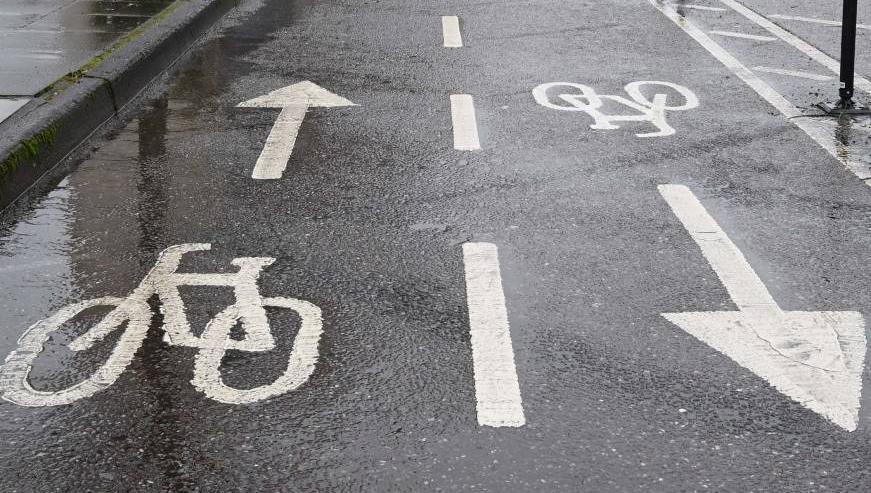
Researchers said there was 'significant potential' for cycling uptake in cities such as Cork, but it would be wrong to assume such a move would reduce emissions in the process. Picture: Denis Minihane

Getting more commuters to travel on bicycles will not necessarily reduce private car use in Cork, but would more likely take people away from walking or using public transport instead, new research has found.

A study published by the National Transport Authority and the Centre for Transport Research at Trinity College Dublin said there was “significant potential” for cycling uptake in cities such as Cork, but it would be wrong to assume such a move would reduce emissions in the process.

“Public discourse frequently assumes mass cycling uptake will displace car trips over short distances,” the research paper said.

“However, transport systems are complex, and such direct car-to-bicycle substitution cannot be assumed.” 

The researchers said introducing policy measures to encourage cycling over using a car had many challenges.

According to NTA figures, 65.4% of car trips in 2022 were under 10km, but these accounted for only 20.1% of total car kilometres.

Ireland’s “deeply-rooted car dependency”, the study noted, is the result of decades of car-oriented development in this country, which has meant driving remains dominant while cycling rates are persistently low.

It modelled how cycling levels would change based on a number of factors, such as the speeds at which the cycling network allowed people to get from A to B, along with the time for the other journeys, the cost, and other factors.

“We show that much of the growth in cycling comes at the expense of walking and public transport rather than cars and that even substantial cycling uptake produces only modest carbon savings,” the study said.

“These results are not in and of themselves surprising, given the advantages that cycling has over the respective non-car modes, such as speed and reliability.” 

It said there would be a considerable number of trips for which cycling would be an attractive option, even as the car retains its same popularity.

On the other hand, there could be factors holding people back from cycling more, such as perceptions around how safe it is, which the research described as “highly legitimate” concerns.

It concluded measures could be taken to try to encourage cycling over car use in the short term.

“These measures could include the re-allocation of road and car parking space for walking, wheeling and cycling; retrofitting car parking facilities for cycle parking; giving priority to pedestrian and cycle traffic at urban junctions; and improving the density and permeability of urban active transport networks, while restricting private motor traffic to circuitous routes,” it said.

“With a similar population to Cork City, the Belgian city of Ghent, for example, developed and implementing a private car traffic circulation and parking plan to promote modal shift in the city centre, and demonstrates very high levels of active and public transport modal share.”

More in this section

Lunchtime News

Newsletter

Keep up with stories of the day with our lunchtime news wrap and important breaking news alerts.

Cookie Policy Privacy Policy Brand Safety FAQ Help Contact Us Terms and Conditions

© Examiner Echo Group Limited