Great songs and green links: Give Paul McCartney back to the Irish
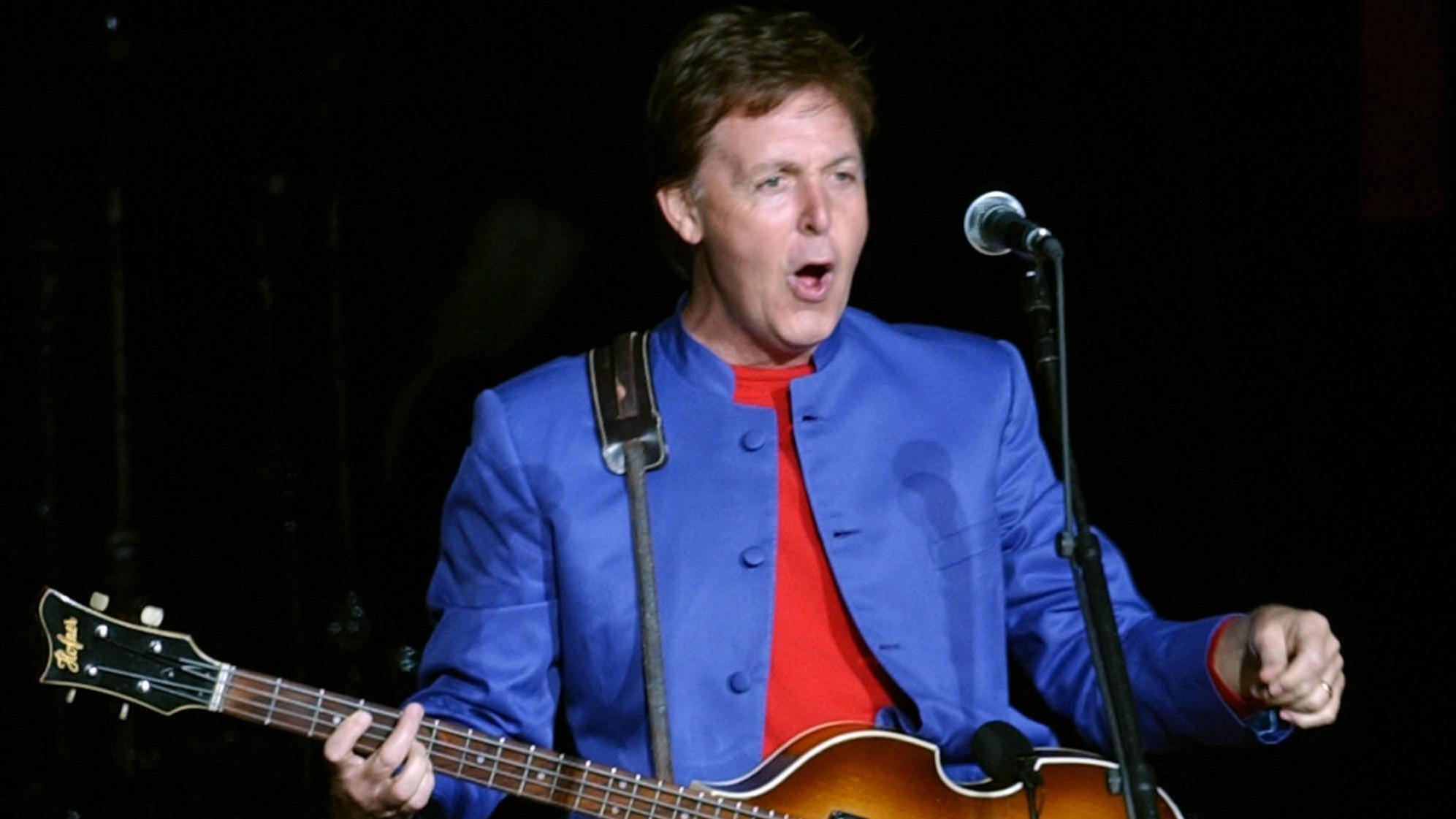
Paul McCartney during one of his live concerts.
Over the autumn rumours began circulating about Paul McCartney. The gossip among Beatles fans was that the 78 year-old former Fab, was having a productive lockdown. So productive in fact that he was working on a follow-up to two of his best loved records, 1970’s McCartney and 1980’s McCartney II. After a tough 12 months, were Beatles aficionados getting ahead of themselves in hoping for a McCartney III?
“For years fans have wondered… ‘we’ll never get a McCartney III’,” says Jason Carty, Beatles and Macca fan and co-host of the acclaimed Beatles podcast Nothing Is Real. “We never thought we’d see it.” But their wishes are about to come true with confirmation that McCartney III is to be released on December 18. Christmas is arriving a week early for McCartney devotees . The appeal of the 'McCartney' records is that they capture the singer at his rawest and most unedited. This is the McCartney of Eleanor Rigby and Blackbird rather than of We All Stand Together and Pipes of Peace. A Beatle without the bluster.
“There are two types of solo McCartney,” says Carty. “He’s never stopped wanting to be a big commercial player – to have hits. If you look at a chunk of his solo albums – it’s usually him with one or two big name producers.
“They’re not bad albums. They’re great. Then there is this other type of McCartney record, which is really just him and one or two other people. These are the ones that the [hardcore] fans like – I’ve described it before as him just tipping his head onto the tape.”
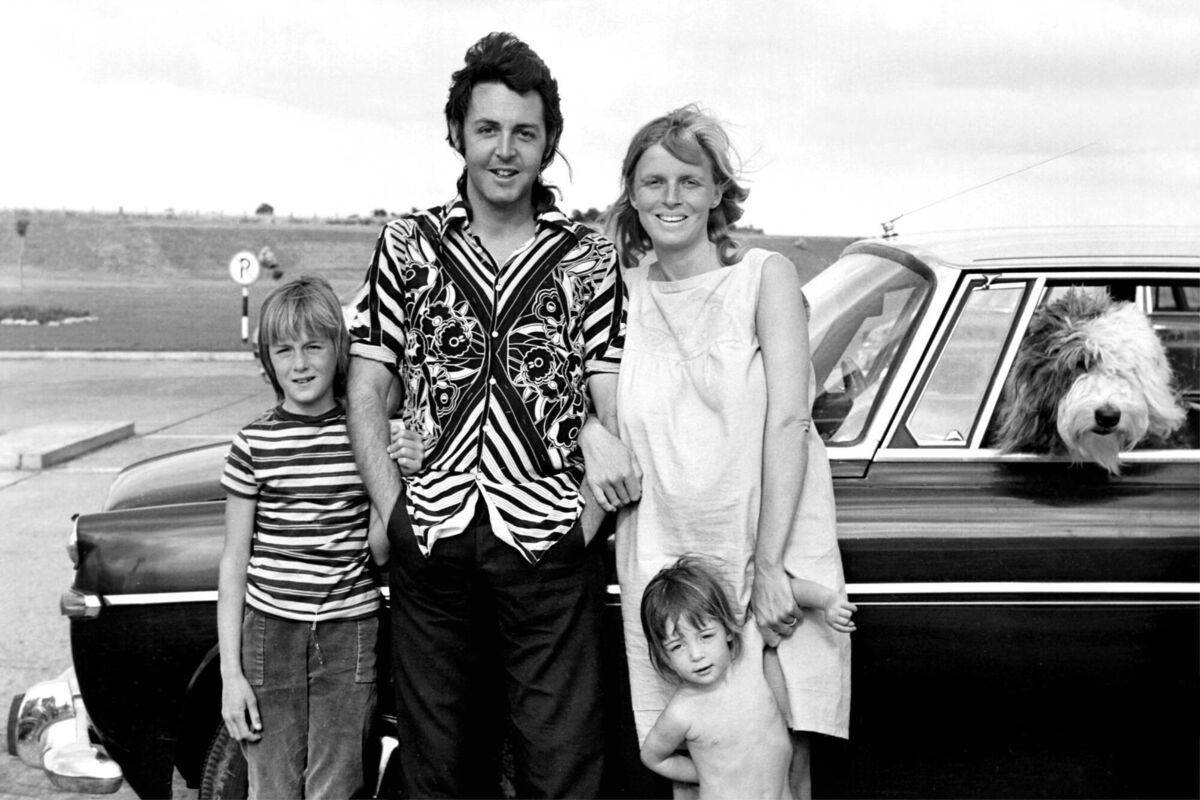
McCartney and McCartney II were each recorded at points of huge transition in McCartney’s life and career. In September 1969, John Lennon had told the rest of The Beatles he wanted a “divorce”.
With relations within the group at an all-time low, McCartney retreated to his farm near the Mull of Kintyre in Scotland and started writing songs. By the time he had finished what would become the first McCartney record – which includes the favourite 'Maybe I’m Amazed' – The Beatles were no more. Ten years later, with his band Wings running out of steam, he wrote McCartney II. It’s a much odder record than McCartney: Jason Carty describes it as Macca’s attempt at making Bowie’s Low without having actually heard Bowie’s Low. “An album of aural doodles designed for the amusement of very young children,” said a baffled Rolling Stone. “Most of the songs are merely sound effects”.
No such dramas attended McCartney III. Still, it can be argued that it is once again the work of an artist moving from one phase of life to the next.
“I was living lockdown life on my farm with my family and I would go to my studio every day,” McCartney said in a recent press release. “I had to do a little bit of work on some film music and that turned into the opening track and then when it was done I thought what will I do next?”
Recording in lockdown may have reminded McCartney of the isolation of Scotland, where he wrote McCartney and McCartney II. Having turned 78 in June and with the 40th anniversary of the death of John Lennon approaching, he may have felt, moreover, that he was at another personal threshold.
This year may mark the half century anniversary of McCartney’s first solo record. However, another significant milestone will arrive in February – the 50th anniversary of Wings’ debut release, 'Give Ireland Back to the Irish'. Bashed out by McCartney the day after Bloody Sunday in Derry and released on February 1, it was banned in the UK and went to number one in Ireland. It is a curio in the repertoire of an artist who has rarely engaged with politics. And for a while McCartney seemed inclined to edit it out of history.
'Give Ireland Back To the Irish' is, for instance, conspicuously absent from Wingspan, the 2001 Wings retrospective. However, he appears to have subsequently had a change of heart. When Wingspan was reissued in 2018, 'Give Ireland Back to the Irish' has mysteriously reappeared.
“I wouldn’t overplay the Irish card, but all The Beatles did have Irish heritage, except for Ringo Starr,” says Stephen Kennedy, founder and director of the Dublin Beatles Festival. “Paul’s mother, Mary, came from an Irish Catholic family called Mahon; but the Irish background didn’t feature very strongly in Paul’s childhood. It was different for George Harrison. His mother was Irish and brought him on holidays to Dublin when he was growing up.”
Jason Carty says McCartney never played the ‘I’m from Ireland’ card, says Jason Carty. “Even if you listen back to 'Give Ireland Back to the Irish' – one line goes, ‘Great Britain you are tremendous’. 'Give Ireland Back to the Irish' is a very curious thing. He kind of made it disappear for a while. It kind of went missing in action through the Eighties.”
John Lennon was also motivated to write a song about the shootings in Derry. 'Sunday Bloody Sunday', which has nothing to do with U2, featured on Lennon and Yoko Ono’s 1972 record, Some Time In New York City. And it’s a good deal more bare-knuckled than 'Give Ireland Back to the Irish'.
“You Anglo pigs and Scotties,” Lennon begins. “Sent to colonise the North”.
This underlines the degree to which these friends and collaborators were also occasional rivals. Even after all McCartney has achieved – and with excitement ahead of McCartney III at fever pitch – the idea of John as The Beatles’ torture genius and Macca as the naff dad has never entirely gone away.
“John is still often seen as the cool edgy Beatle, and Paul is sometimes considered the clumsy uncle in a bad Christmas jumper,” says Stephen Kennedy. “It is of course a cliché and an over-simplistic way of looking at both men; but, like most cliches, there is some truth in it. The Paul fans I know are excited about McCartney III, the John fans not so much.”
“When the lockdown happened, there were two main responses among McCartney fans,” says Carty. “One was, ‘is he okay – let’s wrap him in cotton wool’. The other was, ‘wouldn’t it be funny if we got McCartney III? It’s almost as if it was willed into existence.”
Best Bond theme ever? It was certainly a statement of intent from McCartney as he left The Beatles behind and launched himself upon the Seventies with a vengeance. George Martin produced what is in many ways an unusual song, with its big orchestral flourishes and a cod-reggae mid-section.
One of Wings’ finest moments and a song recorded in challenging circumstances in Nigeria (at one point Fela Kuti, the greater afrobeat artist, accused McCartney of trying to exploit African music). It can also be interpreted as a commentary on life in The Beatles. “Will we ever get out of here,” was apparently a frequent complaint of George Harrison.
The lyrics verge on nonsense but the tune is irresistible. “I can’t really explain what it is,” said McCartney of the juxtaposition of space travel and the suffragette movement (“Jet” was the name of one of his dogs). “It sounded silly, so I liked it.”
The Fireman is McCartney’s low-key collaboration with producer Youth. Much of their output together is ambient electronica. But this single from the Electric Arguments album is Macca at full pop-genius tilt.
The spoken-word outro to Michael Jackson and Paul McCartney’s The Girl Is Mine is one of the great toe-curling moments of Eighties pop (“Michael, we're not going to fight about this, okay”/ Paul, I think I told you, I'm a lover not a fighter”). However, the McCartney–Jackson friendship, which soured when Jackson bought The Beatles catalogue, did yield one moment of pop gold in his hit from the Pipes of Peace album.