GameTech: Visage is a great way to face up to your fears

An image from the Visage video game.
Stay in your house, and stay safe. That’s not a message that applies to this game. In Visage, your worst nightmares lie at home, with the four walls literally closing in around you, and psychological horror behind every door.
Visage was released just in time for Halloween last weekend, and delivers exactly the kind of horror only gaming can provide. Like many of the best horror stories, it takes something ordinary – a family home – and turns it into a twisted fever dream, with the player trapped inside.
Visage opens on a sombre scene, in which three family members, tied and gagged in chairs, are shot by a man who then turns the gun on himself. From there, the player wakes up in the hallway of a family home, on a dark and stormy night, to begin exploration of the house and to dive into the twisted psychological story behind the family and the violence that occurred.
The first thing to praise about Visage is the exceptional level of detail applied to the house itself. Although it is larger than the average Irish home, it feels truly real and lived in, and nothing like the standard ‘template’ houses we often see in gaming. You’ll even find yourself admiring some of the furnishings and touches the family applied.
At least, for the first ten minutes or so. Soon enough, the game explains to you that there is a ‘sanity’ meter, which depletes when you encounter ‘paranormal’ activity and when you stay in the dark for too long. From there, things only get much worse.
There are a number of chapters or ‘stories’ to play through in Visage, each related to a family member. Once you start a chapter, you must play it through to the end.
As the stories progress, by exploring the home and discovering new items or memories, the house begins to shift and turn on itself, with new pathways opening up to realms of memory and psychological horror, which can eventually lead to death. Let’s put it this way – at first you might admire the upstairs toilet, but later you will be jumping headfirst into it, quite literally, to access a nether realm.
Where Visage really succeeds is not by telling a creepy story, although the central themes are certainly unnerving. Instead, Visage plays to gaming’s primary strength – a physical sense of place. By taking a familiar and comforting ‘space’ and twisting it into something like a fever dream, Visage gets inside your head in ways that movies and books struggle to do. It forces you to be present in the horror, to live there – and despite all that, you’ll relish every second.
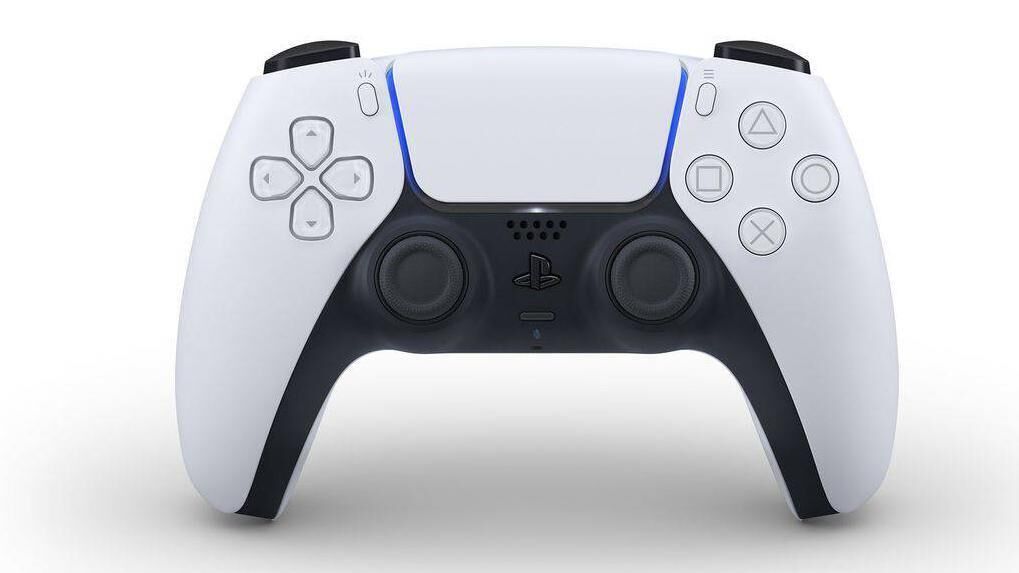
We’ll have full impressions of the PS5 in coming weeks, as we lead into the launch on November 12 and beyond. For now, however, we want to talk about one of the console’s coolest features – the DualSense controller.
For the first time since Nintendo Wii, a console’s controller is a real selling point. The DualSense has two main features that make it different, which we have tested in full. The first is the incredible new haptic feedback through the device, which basically means you can ‘feel’ things that are happening in a game. The second are the adaptive triggers, which can ‘push back’ against your touch to simulate resistance.
The haptic feedback is easily the more entertaining of the two. During our testing time, we played a character that skated on ice, and we could ‘feel’ the ice skating through the controller, that sense of a blade crossing a frozen pond. We could ‘feel’ sand blowing in the wind against our character. We could ‘feel’ blocks tumbling around us. The key to the magic are speakers in the controllers that create soundwaves to simulate texture, much like a subwoofer might create shaking at a larger scale.
Although we really love the haptic feedback, we can see the adaptive triggers being put to good use also, and not just for shooting games. Any action that requires ‘resistance’ in a game could use the triggers, and in combination with the haptics, traditional games are suddenly feeling a lot more physical and tangible. We can’t wait to see what developers do with it!