GameTech: Augmented reality and mounted cameras ensure Mario Kart Live is a winner
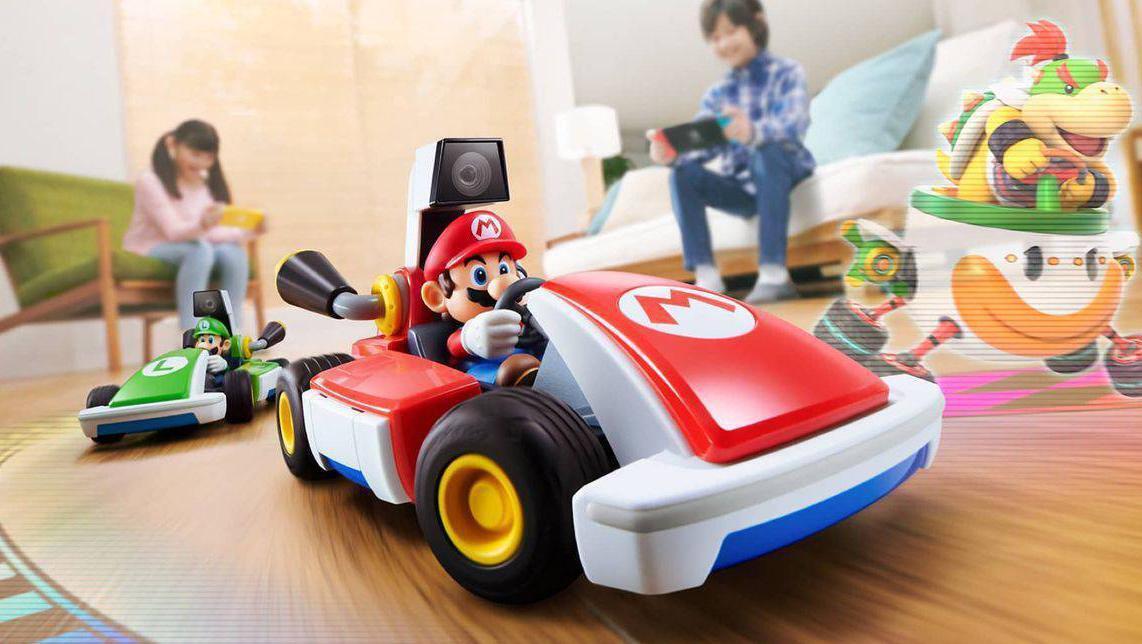
Mario Kart Live combines real karts, mounted cameras and augmented reality software.
Mario Kart is so successful it has added ‘live’ to its title. Mario Kart Live is an absolutely brilliant idea from Nintendo, combining real toy karts, mounted with cameras, and augmented reality to turn your home into a Mario Kart circuit.
The idea really is that simple. The package comes with one Mario toy kart, with a camera on top, plus four ‘gates’ to mark the courses, and a USB charger. The only other thing you’ll need is space and your Switch console. Nintendo recommends 10’x12’ to allow for your kart to reach full speed and to accommodate all the courses.
There are eight cups, each with three courses, and there’s even a multiplayer options. This is effectively a full Mario Kart game, with the difference being you are driving a real toy kart around your house and your room is the course.
However, you won’t just track your house, you’ll be tracking your expenses too – Mario Kart Live is €159,99, almost three times the prices of a standard game, due to the toy kart. You’ll also need to watch out for cats, who may turn the game into ‘hard mode’ as they chase your kart.
Although they used to come on floppy discs, games aren’t often flops. That’s because to be a true flop, something needs marketing and hype to precede it and then published numbers to back the point. Very few games get that kind of budget, but the ones that do rarely fail.
But that doesn’t mean flops don’t exist in gaming – sometimes they just aren’t as obvious. One case in point is Marvel’s Avengers, a game that released just last month and initially sold quite well, after years in development and huge anticipation from fans. Most of us expected a story-driven experience in the vein of the Batman Arkham games, but instead we got a live service multiplayer-driven game that was simply average, at best.
The result is that the player base for Marvel’s Avengers on PC dropped to as low as 1,000 players last week, causing match-making issues for players on that platform. In short, it wasn’t so easy to find people to play with, due to the lower player count. While player count for console is harder to come by, the pattern on PC is not a good sign.
A few years ago, BioWare’s Anthem faced a similar fate. Originally expected to be the next big story-driven game from a sleeping giant of the industry and costing upwards of $100m to make by most estimates, it rolled out as a half-baked live service game that nobody really wanted. It too saw player counts fall to 1,000 on PC shortly after release, and it has since all but died.
Meanwhile, if return on investment is the best way to categorise a flop, Amazon’s Crucible certainly fits the bill. Intended to be Amazon’s first triple-A entry into the market, and an attempt to stake a claim in the industry, it released to terrible reviews in May and was withdrawn for reworking as an invite-only beta. This month, Amazon officially cancelled the game, meaning all that investment was for nothing.
“We very much appreciate the way that our fans have rallied around our efforts,” said the development team in a blog post. “And we’ve loved seeing your responses to the changes we’ve made over the last few months, but ultimately we didn’t see a healthy, sustainable future ahead of Crucible.” Making games is an extremely difficult, collaboratively creative task, with an expected profitable outcome. Games need to be both functionally excellent and creatively sound before even standing a chance. Even with the weight of Amazon behind it, Crucible just didn’t get lucky.
Of course, another way of looking at a flop is the reception of fans. While a game might be financially successful, that doesn’t mean it becomes a ‘success’. The best example might be No Man’s Sky, developed by Irishman Sean Murray, which sold hundreds of thousands of copies on release, but suffered a huge backlash due to expectations not being met.
What the finances did allow, however, was Murray and team to keep working on No Man’s Sky and turn it into something closer to original vision, and now a very entertaining game.
Perhaps Marvel’s Avengers can still make that same adjustment, with new updates rolling out in the coming months, turning it from big-budget flop into a Hulk smash.
Read More