Locusts, legends and an Irish nun: Hector is back in Africa
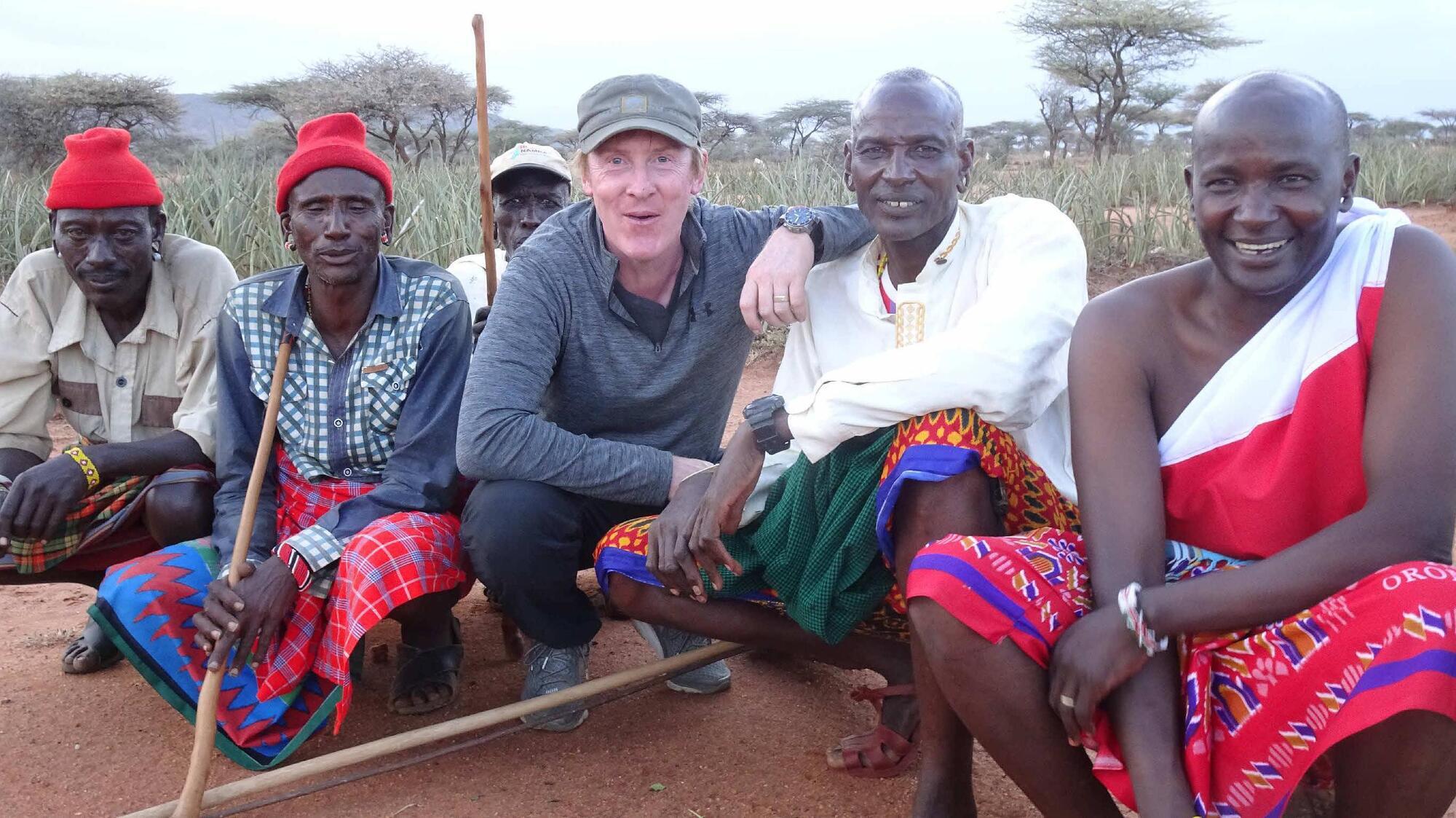
Hector Ó Heochagáin (third from right) in Kenya with members of the Samburu tribe.
It's 16 years since Hector Ó Heochagáin last filmed in Africa, and the well-travelled presenter was lucky to get enough footage for a new series of travels just before Covid struck.
The Navan man and his crew managed about five weeks on the continent at the start of the year, returning to Ireland on March 10. They were due to return to film the series in May, but by then the world had changed. Instead of travelling to the remote parts of the continent, Hector was locked down at home.
Happy to have at least got three episodes in the bag, the 51-year-old believes his new show will be even more enticing to viewers who might be tired of the constant feed of Covid updates.
“Now more than ever, I'm going to try and bring them away and show that it's still an amazing world that we live in,” he says. “The world is broken at the moment... hopefully people can escape for an hour.”
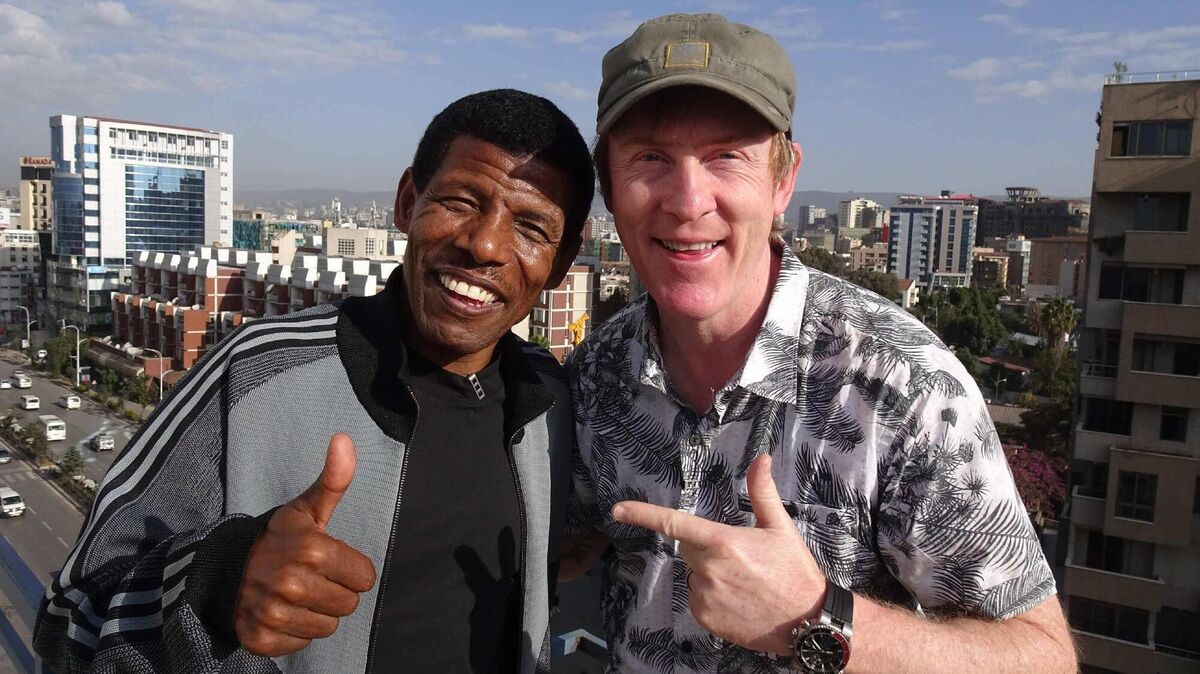
After just retiring from an incredible period on the the track that had seen him dominate the 10,000m distance, Gebrselassie was now focusing on the international marathon circuit, and also told Hector about plans for a long-distance career after running.
“He laughed when we showed him the picture of us with him 16 years ago. He was just starting out on his business empire, telling us he was going to build hotels. He's a very proud Ethiopian, and he didn't want the international conglomerates taking over his city, so set up his own indigenous hotel brand. He has built seven hotels since then.
“It also great being back in Addis – I call it the New York of Africa – to see how it's changed with the high rises and the five star hotels, a thriving modern city.”
Shashemane in Ethiopia is famous for its settlement of Rastafarians, the religion most associated with Jamaica and Bob Marley. Believers worshipped Ethiopian ruler Haile Selassie, and he granted them a portion of the 'promised land of Zion' in the 1950s. Hector had visited the settlement during his last African trip, but was taken aback at what he found this time around.
“We were expecting to go there and have the craic, with reggae music and a few beers at night. And then we found out that the shit has hit the fan. There's been a lot of unrest, and a lot of jealousy among some of the tribes in the area towards these Rastafarians who were given land for free by the emperor. There are some nasty things happening, and many Rastafarians have left because of the violence and hatred. It was a very different take on it from 16 years ago.”
“Sudan was a country that stood still for many years under the horrible dictatorship of Omar al-Bashir, who is due to be tried for the atrocities he performed on his own people. Now, it's a brilliant place. Finally things are changing – women can wear jeans, play soccer and even just drink a coffee in public.
"We met some amazing people there. A lot people we met had known of Ireland because so many Sudanese come to train at the Royal College of Surgeons and other medical places.
"I went to the city of Khartoum where the White Nile meets the Blue Nile. I think the Nile is the greatest river in the world, and it was incredible to see the junction of the two rivers and to get out to an island in the middle of it where all the young people come out to congregate at night. They can listen to music for the first time ever without fear or without a curfew.”
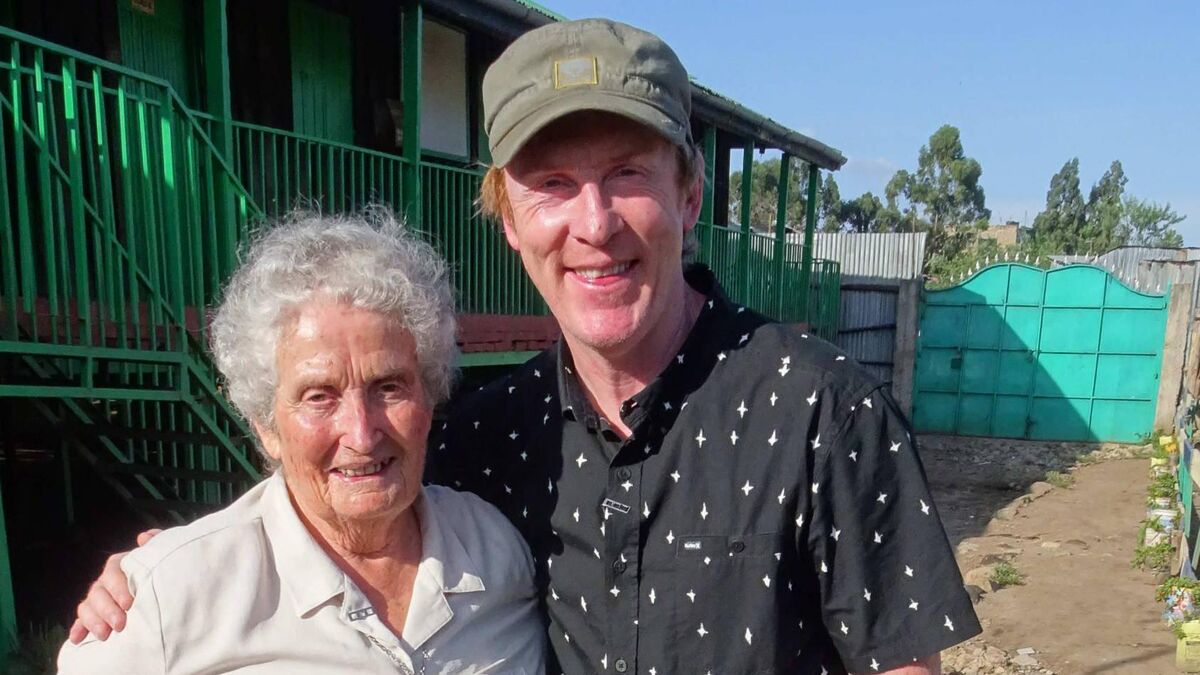
While the Catholic Church's reputation has taken a hammering in recent decades, Hector spent time with a nun who serves as a reminder of some of the incredible work still being done by members of religious orders. Sr Miriam Duggan from Co Limerick has spent decades in various parts of Africa, and the former UCC student is currently based in Nairobi in Kenya.
“This amazing Limerick woman has dedicated her life to the poor of Africa. The work she's doing with the poorest of the poor is just incredible. It was great to meet some of the students who've gone through her school and to hear what she's given them. As we walked through the slum, she told me: 'You don't have to be rich to be clever; the only reason these children are here is because they haven't been given an opportunity'.”
Another memorable encounter for Hector was meeting Bro Colm O'Connell from Co Cork. The Mallow man went to Kenya in 1976 to teach geography, but has since achieved an exalted status in the athletics world for the amount of gold-medal winners he has helped develop at his base in Iten in the Rift Valley.
“We travelled eight hours to get to Iten, and when we got there at six in the morning, Brother Colm was there training champions from all over the world. As well as Kenyans, there were Germans, Argentinians, Chinese – all there because of this amazing Corkman in the middle of it all. And he's still so humble and down to earth.”
Even before the pandemic struck earlier this year, parts of Africa were ravaged by billions-strong swarms of locusts . Hector heard first-hand accounts from members of the Samburu tribe of the effects on their already precarious existence.
“They were telling me at one stage they couldn't see the sky, as the swarms were so big. They eat all the crops. We filmed one scene where we stopped in the desert and there were millions of baby locusts moving across the sand. There in the middle was one farmer trying to hit them with a brush he'd made... it was biblical.
“We still had a lovely time with the Samburu. They slaughtered a goat in my honour, and while some people may find it a bit much, it was amazing stuff to see how important an animal can be in the circle of life. They suffocate the goat and the warriors drink the warm blood straight from the goat's throat.”