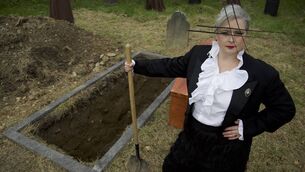
Michael Harding on love, loss and a good way to die
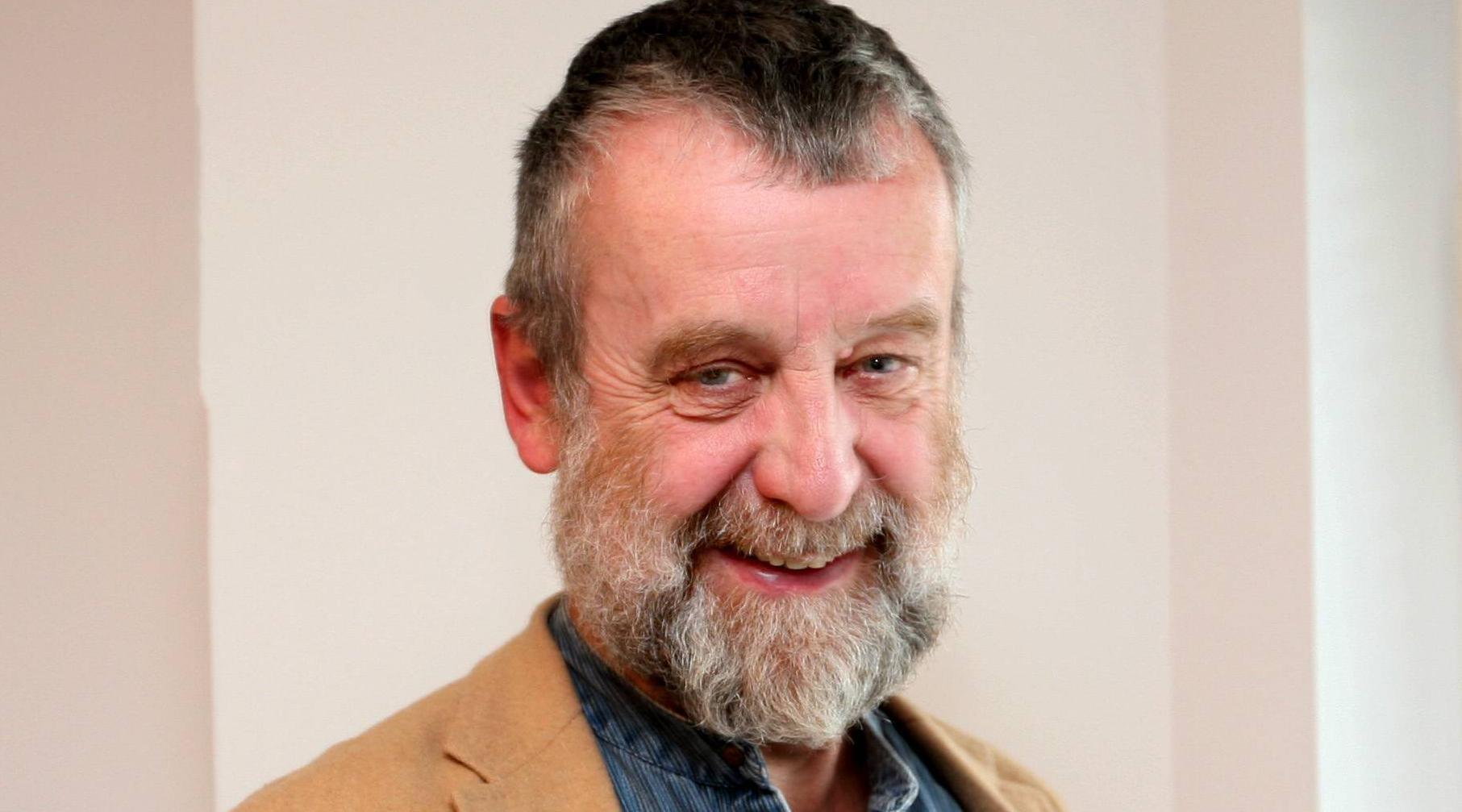
What is Beautiful in the Sky is the sixth in a series of memoirs by Michael Harding. Picture: Brian Farrell
Writing can be a difficult pursuit at the best of times but there’s nothing like a global pandemic to kill the creative urge. Those who have struggled to even look at a keyboard in the last six months will envy Michael Harding, who wrote his latest memoir What is Beautiful in the Sky during lockdown.
“Of all the books I’ve done, to be honest with you, it completely wrote itself. I didn’t have to make any choices. I started on page one and I just wrote it,” he says.
What is Beautiful in the Sky is the sixth in a series of memoirs by the Leitrim-based writer, who has built up a loyal readership with his quirky, confessional and wryly observed chronicles of life and all its vagaries.
“I have thrived on gossip. I have made an art of rediscovering small stories. Finding in the meaningless meanderings of strangers, and other ordinary people, a kind of heroic failure, or faith in what is impossible,” he writes.
The themes of love and loss are weaved throughout the book, and the death of Harding’s mentor, the poet, playwright and fellow Cavan man Tom MacIntyre, looms particularly large.
“I talk a lot about him in the book because he was like a father figure and an authority figure to me.
"I never treated Tom McIntyre as an equal. He was always the boss, my superior. That means I learned an awful lot from him and I wouldn’t have been able to get access to writing in the way that I did if I hadn’t knocked on his door.”
MacIntyre died last October at the age of 87 after a long illness. For Harding, the manner of his death threw the effect Covid has had on the Irish way of dying and grieving into sharp relief.
“It was a beautiful, elegant death. He slowly went to sleep over about two years. He would talk to you, wise and funny. That was him. His funeral was so beautiful as so well, and so full of ritual — people hugging and kissing and the grief. It was just like this is how a person dies in Ireland — a beautiful thing almost. When the lockdown came, it was one of the big things I started reflecting on, how blessed he was, that he was able to be so sharing with his wife and the people who loved him and there was such a rich and deep and emotional grieving for him afterwards. Then, here we were in the lockdown and it was horrific — waving at people on your iPad.”
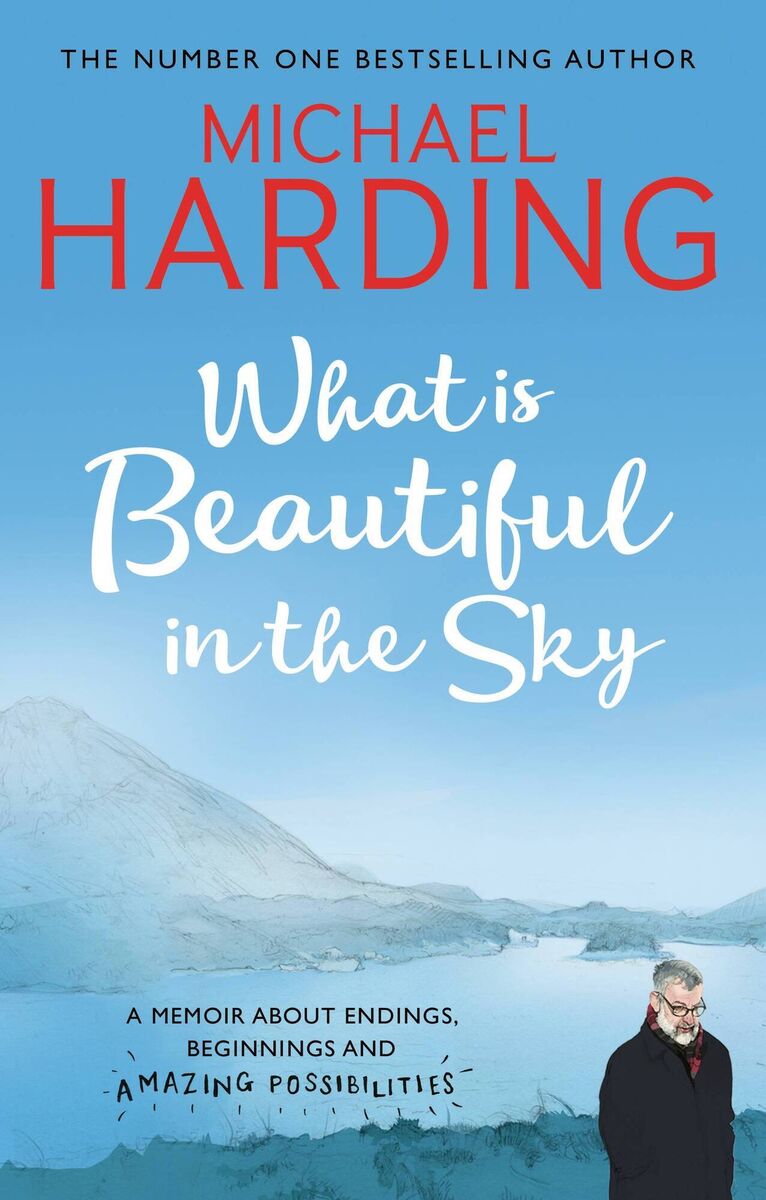
In his memoirs, and his columns for The Irish Times, Harding has forged a deep connection with many readers. What is it about his writing that appeals to them?
“I think it is the practice of what I do rather than the content. Because I was into playwriting as well for a long time, it is like I found a way to tell a story that’s not really about the story, it is about the dynamic. If you sit with somebody and tell a story, you feel close to them. I think that because in some way in the memoirs I tell stories against myself, that I’m not very healthy, I’m not a wise man, and all of that, I think people connect with that.” From his depression to his sex life, there are not many subjects that he shies away from.
“I don’t think there is anything I wouldn’t share,” he says.
“I was doing a column during the week and I started writing about constipation. I thought to myself for a second, well, even a heart attack is sexy, depression is really cool but maybe constipation is pushing it. Then I said ‘fuck it, put it in’.”
Harding’s memoir is subtitled ‘A memoir about endings, beginnings and amazing possibilities' and he has had some new beginnings of his own during lockdown, trading in his camper van for a holiday home in Donegal, and also starting a podcast, an experience he describes as ‘amazing’.
I started it on April 13 and I thought I’ll do this for a week, then I thought I’ll do it for the month, then until the end of the lockdown. Then coming to the end of the lockdown, I had a continuing strong reaction from people sending me messages and saying it was lovely and thank you for sharing. I thought, well I had better keep doing it.”
While the therapeutic power of storytelling is an important element in Harding’s life, finding beauty in our daily existence when we can is also part of his personal arsenal for staying afloat during these trying times.
“This book is hugely about hope. The strange thing was we didn’t know if the whole world stopped, like it did in Ireland, that people would suddenly start sharing meals together, talking to each other and walking around the garden together. No-one ever imagined this happening in our lifetime — that there would be no flights, no pubs open for six months. Even though it was full of tragedy and death, open it up and it was something extraordinarily beautiful. And no matter how dark it is in the next six months, I think it is fierce important for people to hold on to what is beautiful.”
I like the Blindboy podcast. Because I’m up in Donegal at the moment, I listen to Raidió na Gaeltachta, My Irish isn’t too bad. I need to work at it because I’m in the Gaeltacht.
I’m reading an Irish language book called Eachtraí Mara [Phaidí Pheadair as Toraigh], it’s about Tory Island. I’ve also been reading an awful lot of early Christian theology.
In the past two months, the only thing I’ve been watching is TG4 — the news, the weather and Bailte, the programme about the towns. There are some great programmes on TG4, it does give you a different point of view.
I have been listening to a lot of Russian Orthodox music, stuff like Rachmaninoff’s Vespers, it is an amazing piece of music. I have been overdosing on liturgical music through lockdown and the past few months. I’m also a fan of Lisa O’Neill and I listen to sean-nós music as well.