'The arts can reassure us and be a salve for people'
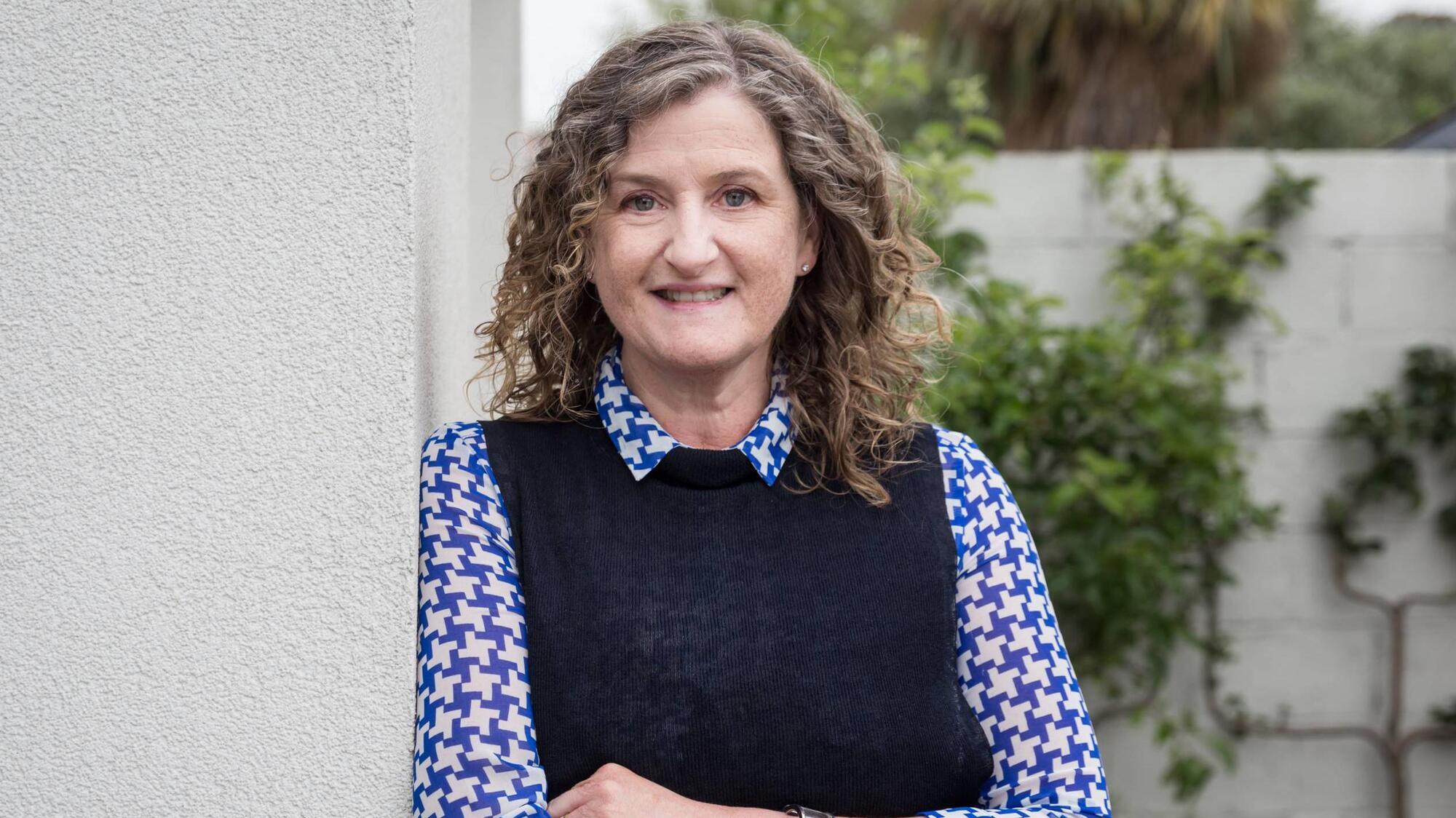
Describing herself as a cultural omnivore, Niamh O’Donnell, the new director of Poetry Ireland, is joining the organisation at a time of ambitious development.
Situated at No 11 Parnell Square, Dublin 1 for the past four years, Poetry Ireland is becoming the Poetry Ireland Centre with the Georgian townhouse undergoing refurbishment and expansion with its partner, the Irish Heritage Trust.
O’Donnell has over 25 years of experience in the arts sector. Her most recent role was as artistic director of the Mermaid Arts Centre in Wicklow (a post that will be filled by Cork’s own Julie Kelleher who is leaving the Everyman).
O’Donnell, whose career includes a stint at the Project Arts Centre as executive producer and manager, says that what she is most proud of at the Mermaid is turning the centre into a creative space where work is made. “Arts centres like the Mermaid are seen as receiving houses for touring work. We altered that which means supporting a lot more local artists but also artists from around the country.”
Poetry Ireland is a resource centre for poets and has four main strands; education, publication, support for poets and programming events. The current status of poetry in Ireland is strong, says O’Donnell.
There are, says O’Donnell perceived barriers to engaging in the arts. “Some people find it difficult to connect. They feel it isn’t for them. But the social participation in any cultural activity is really important. We know it builds capacity and it helps us to celebrate our diversity, leading to acceptance. It helps us to find meaning.” O’Donnell considers spoken word poetry as a really quick and easy way to engage younger people.
“There is quite a vibrant spoken word scene with people like Emmet Kirwan, Stephen James Smith, Colm Keegan and Natalya O’Flaherty being really good and politically engaged.” Reaching out to schools is an important part of Poetry Ireland’s remit. It runs a programme called Poetry Aloud, an annual poetry speaking competition for post primary schools.
“Considering the pandemic, we’re looking at how we can re-imagine the programme, how we can still gather in a safe way and engage with the students. We can either have in-person visits or a combination of virtual live engagement as well as visits of poets.
“I would say poetry is more versatile than theatre in terms of virtual engagement. While the virtual experience isn’t for everyone, with certain technologies you really can have an interactive exchange with pupils in a class. It doesn’t have to be a recorded piece. I think that’s the way forward. It has to be participatory rather than something that is just viewed.” However, in these restricted times, O’Donnell says the sector has been devastated.
“Artists across all disciplines live in an unstable situation anyway. It really does feel now that we’re on a knife edge. It’s very difficult but I have to remain optimistic. I’ve been telling my team that optimism is a form of resistance. We have to continue to try and engage people because we believe in poetry.” With our lives pared back, O’Donnell says that now is a time to reflect on what is “essential and vital when things are taken away from us such as our freedom of movement. It’s actually undeniable how the arts can reassure us and be a salve for people.”
Francesca McDonnell Capossela reads her poem 'Shaving Our Legs for the First Day of Summer'.
— IrelandChairOfPoetry (@ChairOfPoetry) August 18, 2020
Recipient of a 2020 Student Award @CheskaFranny is pursuing an M. Phil in Creative Writing at TCD, where she was awarded the Constantina Maxwell scholarship for her writing. pic.twitter.com/AKpvC2KLxl
Poetry Ireland publishes three editions of Poetry Ireland Review every year. It invites open submissions, with Colette Bryce as the current editor. The organisation also publishes a literary pamphlet called Trumpet. That will come out before the end of the year and will be titled ‘Fear and Release’. The guest editor for that is Dublin-based poet, originally from India, Chandrika Narayanan-Mohan. “She is an incredible poet,” says O’Donnell.
The Poetry Ireland Centre is something to look forward to. It will include a poetry cafe, the Seamus Heaney Library, performance and workshop spaces and potentially, an exhibition space. O’Donnell is hopeful it will be ready in about three years.
“We’ve been engaged in a fund-raising campaign. People can donate on our website and we’re also chasing other subsidies.” It will cost in the region of €5m. It’s ambitious, but O’Donnell would probably say it is vital for the soul of the nation.