Appliance of Science: If a cow sits down does that mean it will rain?
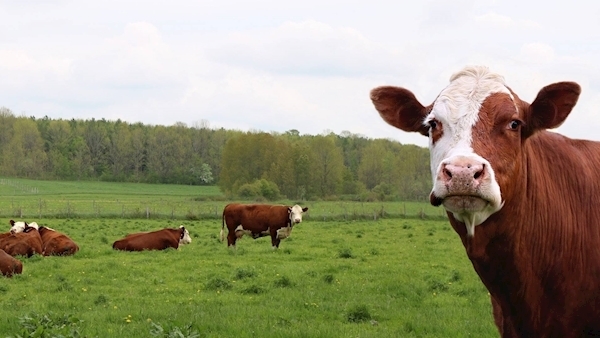
We’ve all grown up with a few sayings that we may believe without ever questioning how likely they are to be true. I may not go around counting magpies anymore (well not out loud anyway), but I do catch myself looking for rain clouds if I see a field of cows lying down. Is there are science to back up some of the folklore we have grown up with?
Cows seem to be well connected to the weather, according to farming lore in this country anyway. Most of us are familiar with the saying that if cows are seen lying down in a field it is a sign that it is going to rain.
One study did report a connection between cows and weather; they found that cows stand up for longer in hot weather, and lie down more in cold weather.
While this may give this old wives tale a little credence, the final scientific verdict is still a firm ‘no’; cows cannot predict the rain. If they are lying down it is probably just a sign that they are tired or taking a break and chewing the cud.
So if cows can’t predict the weather, can humans do so? How many of you have hear an older relative interprets theirs aches and pains as a sign of impending rain? Can arthritic joints really tell us if an umbrella is needed?
This one has more scientific research vested in it that the tired cows. There is some evidence to suggest that parts of the body, particularly fluid in the joints, can be affected by a change in barometric (atmospheric) pressure.
A drop in pressure may cause swelling in the joints or cause joint fluid to thicken, which would certainly make it possible to feel an increase in pain levels with a change in the weather. Although many people are sure that their arthritic ailments increase with rain, more recent scientific reports are less convincing.
These studies compared the number of people presenting with these types of ailments, with weather reports. They have found no obvious correlation.
However, it is still possibly that these studies require further research and data, such as if or when patients took pain medication. With this in mind we can mark this one as a ‘maybe’.
Bringing the conversation back to cows, or rather, the cheese we make from their milk, can eating cheese late at night cause nightmares? Many people believe this one is true and it appears they could be right. It may be less about cheese though and more about eating habits.
Eating late at night, especially a meal of rich and fatty cheese, can alter our sleep patterns. It can put pressure on our digestive systems as we try to rest, causing more fitful, distressed sleeping.
This makes us more likely to wake up from a dream and therefore more likely to remember it. Or, the heavy meal can put us into a deeper sleep, with more Rapid Eye Movement (REM) phase sleeping.
As this is the stage of sleep connected with vivid dreaming we are more likely to say we had bad dreams.
So this one is a marginal yes, showing that sometimes science, and folklore, agree.


CONNECT WITH US TODAY



Be the first to know the latest news and updates