New film shows veteran campaigner Jane Goodall still has hope
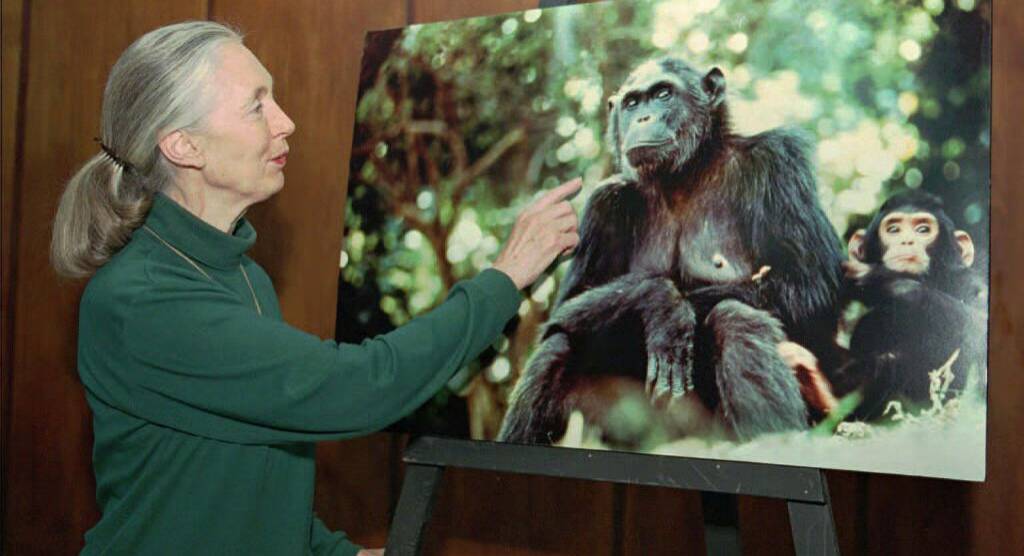
Jane Goodall, 86, is in lockdown, but she has found a way to spread her message, writes

WHEN Dr Jane Goodall arrived on the shores of Tanzania in 1960, she hadnât envisaged where it may lead.
Aged just 26, the keen ethologist had set her sights on Gombe Stream National Park and it was there, with her mother in tow, that she began her field research on the little-known world of wild chimpanzees.
Equipped with little more than a notebook and binoculars, Dr Goodall â who immersed herself in their natural habitat â would observe the primates, coming to understand them not only as a species, but also as individuals with emotions and long-term bonds.
Among her findings was the discovery that chimpanzees make and use tools â a breakthrough that remains one of the greatest achievements of 20th-century scholarship.
Understandably, Dr Goodall, now 86, describes those days as âthe best time of her lifeâ.
âI knew those chimps; they were like part of my family,â she reasons. âI was joyful with them when they had a baby and I was grieving when one of them got sick or died. Being out in the forest, it was an amazing time.
âThen in 1986, realising that the chimps across Africa and the forest were in trouble, in captivity, I knew that my time had come to pay back.â
Her decision to embark on this journey was to be the marker of her groundbreaking legacy; a plea thatâs seen her go on to transform environmentalism, non-human animal welfare and conservation; and redefine the relationship between humans and animals in ways that emanate around the world.
Yet today, Dr Goodall DBE, much like the majority of us, is at home.
âIâm actually busier; itâs more exhausting than being on the road to be honest!â she whispers down the phone, having retreated back to her family home in Bournemouth during the Covid-19 pandemic.
âI hate the airports, the aeroplanes, but now Iâm busy all day trying to get out on social media, trying to make up for not being able to travel!
As for what we can learn from this crisis, âItâs our messing with nature, cutting down forests, hunting animals, eating them and selling them, thatâs led to these viruses spreading from animals to people,â warns the primatologist-cum-anthropologist.
âIâm hoping what will emerge from this is a better understanding of our relationship with the natural world.â
One offering likely to inspire such thinking is her latest National Geographic venture, Jane Goodall: The Hope.
âWell, isnât it amazing that a film called The Hope should come out right now, when we desperately need hope!â she says with a chuckle.
âIf we donât have hope, we all give in, right? Thereâs no point in planning anything for the future, if you donât have hope.â
The two-hour documentary special charts Dr Goodallâs rise to worldwide icon, from her days in Gombe and the 1977 formation of the Jane Goodall Institute (JGI) to her Roots & Shoots youth empowerment programme, founded in 1991, and beyond.
âItâs in 24 countries - nearly 25,â she announces of JGI, which has a strong base in the UK, and was set up to inspire hope through action across the globe. And Roots & Shoots is in 65 countries and growing. Itâs all over the world â kindergarten, university, rich children, poor children and children in different environments. It can grow on any soil, in any place, in any culture.
âWhat Iâve learned of young people,â she continues, âis once you give them the tools to understand the problems, you empower them to take action to solve them. Listen to their voices, donât dictate to them. Theyâre so dedicated, determined and passionate and hopeful.
âWe are going to change the world; we will slow down climate change.â
Achieving lasting change is in the approach, Dr Goodall â a mother and grandmother herself â has learned. âWhen I first began talking to the scientists in the medical research labs â these awful 5ft by 5ft cages â there were animal rights people who refused to speak to me,â she recalls.
âThey said, âHow can you sit down with those evil people? How can you talk with them?â And I said, âBut if you donât talk, how on earth do you think youâre going to change them?â
âI think sometimes at the beginning of a movement, this kind of aggressive approach may be necessary to wake people up, but I couldnât do that,â says Dr Goodall. âMy way has always been to go and talk to the people quietly.â
She is aware of tempering her approach from nation to nation. âCertain cultures, you must not make people lose face. You want to change their heart.â
âI hope this film inspires people,â she finishes. âI hope it gives them hope â itâs title should, if nothing else!â












