Máiréad Hickey: ‘If money was no object, it would be lovely to play a Stradivarius’
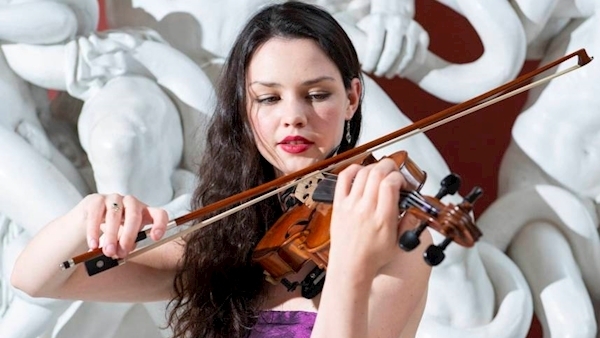
In advance of this weekend’s Ortús festival of chamber music in Cork, musician and co-organiser Mairead Hickey talks violins with .
I am playing a gorgeous Giovanni Tononi violin made in 1702 in Italy. I feel that I really connect with it. It’s got an earthiness and a sweetness to it and can produce so many colours. It feels like part of me. I have been playing it for four years, I still feel that there is the possibility of new sounds from it.
First of all, I look for the possibility of finding different colours in the sound and be able to express the music exactly how I feel it, without any limitations. It needs to be able to project to the end of a large hall. There should be nice balance across the strings (one should not be louder, brighter or softer than the rest). Then there is the question of personal preference — do you prefer a sweeter or darker sound? Instruments with all these qualities are difficult to find and even more difficult to have the opportunity to play on.
I was fortunate to have several violins on loan from the CIT School of Music. I have tried a Strad [Stradivarius] just briefly. Yes if money was no object, it would be lovely to play one. The Tononi I am playing now is the best violin I’ve played on consistently.
Right now, I am trying a combination of Pirastro’s Passione Solo and Perpetual Strings which I like very much. Passione is covered with gut which gives a beautiful warm and open sound. I try and find a combination that works in all venues. And I change then roughly every month. With playing a lot, they tend to start sounding a bit tired.
High end bows tend to be wooden. Having a good bow is just as important as having a good instrument. You need a bow that will allow the violin to sound at its best. I’m playing with a wonderful modern pernambuco bow made by Noel Burke. Whether you use a heavier or lighter bow is mostly down to personal taste.
I always try to travel by train if possible, for environmental reasons as well. It’s always stressful to travel with a violin, because whatever the stated airline policy is, it comes down to the discretion of the personnel. My tip is to avoid flying if possible, even if it takes longer.
The supply of historical instruments is dwindling but there are some great modern instruments being produced right across Europe, not just in Italy. I love visiting the luthiers at the annual exhibition at West Cork Chamber Music Festival. It’s always fun and interesting to try new instruments and I love trying new bows. It adds an extra dimension to the festival to have all these great luthiers and bow makers from Ireland and Europe in one place.
There is a large gap between the support that is available for young Irish professional musicians, by comparison with their European and international counterparts. In Ireland we just don’t have the stocks of fine instruments available.
In reality, most musicians have to rely on patronage and philanthropy to have the chance to play on a great instrument. It is isn’t a luxury. It’s what you need to do the job when you are playing in big halls. It can be a precarious situation. My instrument has been loaned to me through Beare’s International Violin Society. Set up in 2011, the scheme connects music loving patrons with young professionals. It encourages the sponsorship of artists through loaning, or investing in, fine musical instruments.








