Cork director John Crowley on bringing The Goldfinch to the big screen
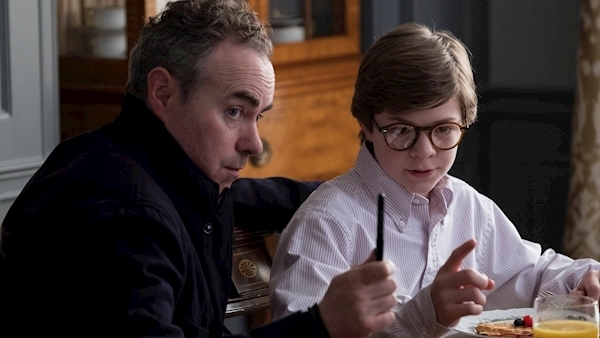
Cork director John Crowley impressed with Brooklyn and Intermission. Now he helms the film adaptation of bestselling book The Goldfinch, writes
CORK filmmaker John Crowley takes on The Goldfinch â a novel that achieved both literary success and impressive sales â in his latest movie project.
The novelâs Pulitzer Prize win may have polarised critics, but Donna Tarttâs tale of a young man traumatised by the death of his mother in a terrorist bombing won a global and committed fanbase.
Among them was Crowley himself. âI loved the book when I read it. And even despite its scale and heft, 800 plus pages of it, it actually felt like there was a very small, intimate story at the core of it, about a boy getting stuck in his own grief and living an incredibly difficult life because of that. That felt to me like the anchor and that if we could communicate the essence of that, that actually would be very true to the spirit of the novel.â
While bringing such a wide-ranging tale to screen was going to be a challenge (âThey always say you either betray the film or betray the book,â says Crowley), he was glad of the involvement of screenwriter Peter Straughan (Tinker Tailor Soldier Spy).
âEarly on, his instinct led him to focussing on two time periods,â says Crowley, âwhereas the book is a big linear story where you follow him from 14 right up to his mid-twenties. That also allowed me a sort of visual approach to it which is that we were able to cut back and forth between the past and present a lot more frequently than the book does. It gave us a certain cinematic doorway into it.â
Directing Brooklyn, his triple-Oscar nominated emigrant drama starring Saoirse Ronan, taught him about the values of adaptation.
âWhen youâre adapting anything, the same with Brooklyn, the best compass as it were, the best thing that you can carry with you on the journey, is your own first reaction as a reader. If you can hold on to what you loved about the experience of reading it then youâve got a shot at getting that into the film for the viewer, whether they know the book or not.â
The film received mixed reviews out of its world premiere at Toronto Film Festival, though many have praised Crowleyâs cast performances and the exquisite cinematography of Roger Deakins. For the director, working with the 14-times Oscar-nominated Deakins (he finally won for Blade Runner 2049 last year) was a big draw.
âI think that Roger had a strong emotional connection to that story. And I think he understood the theme of grief himself. Whatâs striking about him, for somebody whoâs such a consummate visual artist whoâs working on an incredibly high level, is heâs about story, character. Itâs all about what the film is really about, what the story is. Itâs not about: âWouldnât this make a cool shot?â I think thatâs testimony to the story. Thatâs what drew him.â

The project drew a big-name cast including Ansel Elgort in the lead role, as well as Nicole Kidman, and Stranger Thingsâ Finn Wolfhard. Still, taking on a big studio adaptation of a cherished novel, set in several different locations, was always going to lead to various challenges.
âWe shot most of it on location in New York which is very difficult. Itâs not an easy city to move around. It wasnât a small crew. So itâs like trying to negotiate an oil tanker in a small harbour at times. We were a big operation. We were also shooting in the depths of winter. It was minus 13 degrees when we were shooting one night at three in the morning. So there were all the logistical difficulties, but nothing that stopped us from getting what we wanted to get.â
Crowley grew up on Corkâs Douglas Road and went to St Anthonyâs primary school in Ballinlough and, later, St Francis College in Rochestown and Christian Brothers College. By the time he took Arts in UCC, he thought about following his brother Bob, a very successful theatre designer, into theatre. After directing on stage in Dublin, John got to direct at The National in London at the age of 27 and has since become one of the cityâs most established theatre directors. But Cork is never far from his mind.
âI have so many vivid memories because I went to university there as well. I didnât leave Cork until I was over 21. My sisters and brother were older than me. So they would come back and visit and I was still at home. Bob had gone off to England to become a stage designer by the time I was starting school. My sisters Deirdre and Marie went to Dublin to train to become teachers. And my mum passed away when I was 16, so that sort of defined a lot of the second part of my growing up there really.
âI miss it, I do miss Cork. I get back as often as I can. My sister Marie has a house in Kinsale and Bob has a place down outside Skibbereen. And now that Iâve got a family myself here in London, they cannot get back there often enough, they love it there, so I donât need an excuse to get back and I get back as often as I can, work allowing.
Cork feels very present to me; it feels as though I left it but that it never left me.
As well as the acclaimed Brooklyn, Crowley is best known among Irish audiences for his sparkling, foul-mouthed and funny debut feature, Intermission, featuring among its cast two up-and-coming young Irish actors named Colin Farrell and Cillian Murphy.
Though he could never have anticipated the hit it would become, filming it was, he says, a blast.
âI loved making the film. We were having a ball making it, that was the main experience. I couldnât believe that I was finally going to direct a feature film which Iâd dreamt of doing all my life and that it could be this much fun.

âBut there was no sense that it was going to have any impact beyond its immediate circumstances.
âBut when it came out in Ireland it just sort of hit a chord and people started going to see it. Itâs that amazing thing that happens sometimes where people just go: âYeah, this is exactly what we want. This is what we want to seeâ. You cannot make that happen for love nor money. You just canât generate that kind of audience enthusiasm for something. It was a very special time.â
While he has other film projects in development, he has spent much of this year directing theatre. âIâve just opened a play here in London called A Very Expensive Poison which is about the poisoning of Litvinenko here in London, thatâs still running. And then I did Local Hero on stage with Mark Knopfler, who wrote all the music for it.
âIn theatre, you get a great bunch of actors who come around the table, a great script and in five weeks time youâre going to be on a stage and the immediacy of that certainly makes you feel like youâre on a little bit of a rollercoaster. But itâs just thrilling and it reminds you of a different side of the work.â
-Â The Goldfinch opens in cinemas tomorrow














