Keeping a death rite alive: Kevin Toolis' wake of his father turned into book and stage show
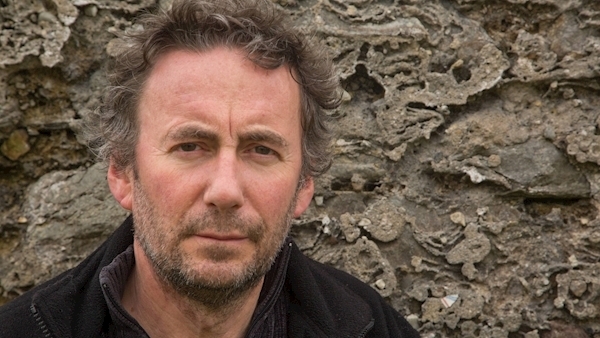
Kevin Toolis waked his father in the traditional manner on Achill Island, and the resulting book has been adapted into a stage show at Skibbereen Arts Festival, writes
KEVIN Toolis was no stranger to death and dying when his father passed away. Having worked as a TV documentary director and a magazine writer for The Guardian, he’d delved into subject matter including suicide bombing in the Middle East and Aids amongst Kenyan sex workers, as well as penning Rebel Hearts, an in-depth exploration into the lives of IRA men.
“I’ve done famines and wars and plagues,” Toolis says. “I spent about a decade developing an acute and dangerous gift; I would knock on strangers’ doors, and within five minutes I’d be over the threshold and sat on the sofa asking about the worst thing that had ever happened in your life, which was often the death of your son or daughter. I listened to a lot of human sorrow.”
He was familiar with the deaths of loved ones too, having lost a brother at a young age, followed by his mother, Mary.
But it was the death of his father, Sonny, at their ancestral home on Achill Island, and his encounter with the timeless tradition of the Irish wake which followed, that led him to realise that modern society needs to reconnect with what he terms the “terrifyingly ordinary” phenomenon of death. And he thinks the Irish wake is the place to start.
“There’s a lot about the wake that’s very therapeutic,” he says. “It’s not just about the dead person, it’s about binding up the wounds of the mortal: gathering people together as a bridge through mortality, to restore order and neutralise death.”
Waking the dead is, he points out, an extremely ancient tradition indeed; the Aztecs were practicing a form of wake 25,000 years ago, and he draws parallels between how Irish wakes and death rituals are practiced today and traditions in bardic poetry extending back to Homer’s Iliad.
Although Toolis was born in Edinburgh, his family retained strong roots in his parents’ native Achill. The author and his siblings summered on the rugged Co Mayo island as children, and Sonny, a construction worker, returned home in his latter years.
Eventually contracting pancreatic cancer, Sonny died in his bed. surrounded by mourners led in the incantation of prayers by the Mná Caointe – traditional keeners. His body was washed and tended to by female relatives, and he was laid out and waked in the family home.
It was a death the journalist says is in marked contrast to Anglo-Saxon tradition, and to the norms now adhered to by the death industry.
“In England you don’t really die; you disappear,” Toolis says. “A lot of people have never seen or touched a dead body and have no experience of that state of transition. Your beloved has slept in your bed for most of your life. They go to hospital, and then they’re a carcass slung in an unknown mortuary, who appears two weeks later for a half-hour ceremony at a crematorium.
“That can have a profound impact on grief: you’re digging an absence into the framework of the world and you’ve lost an important bit of it. Your father, mother, sister or brother is suddenly gone. It’s a tactile change. There’s a problem with grief in the Western world and I think that’s in part because we no longer revere the dead and practice the wake in the way the Irish still do.”
Toolis wrote a book, My Father’s Wake: How the Irish Teach Us to Live, Love and Die. Now, with the aid of harpist Joleen McLaughlin and her sisters, who perform as The Henry Girls, he’s created a stage show, The Wonders of the Wake, a 90-minute performance celebrating the artistic forms associated with Irish wakes, including sean nós singing, Celtic laments and bardic poetry.
“The show is to bring a tear to the eye and a shiver to your spine. There’s something life-affirming, an enjoyment in remembering that you’re alive. In the show, we’re shaping that; the power of lament, the joy of laughter and some of the comedy that also comes through in this human experience.”
It’s a wake without a corpse, though; is Toolis aware of the risk of a ‘stage Irish’ portrayal of the wake? In an increasingly urbanised Ireland, many communities have lost or are losing their death rituals.
“It’s not a sentimental depiction of death,” he says. “Places like Belfast and the border counties still have a strong wake tradition; I don’t think you have to travel far outside of Dublin to find it. I would accept that the tradition has been threatened by the western death machine and funeral homes, but part of the reason I wrote the book and am doing the show is we’re kind of on a mission to keep the wake going.
“Death is an inevitable encounter, so we have to decide what we do. Do we run away and hide, deny death? Or do we embrace this famous element of our culture and preserve it? And I think we should preserve it.”
CONNECT WITH US TODAY



Be the first to know the latest news and updates

















