From the White House to sweaty Belfast gyms, the best non-fiction reads this summer
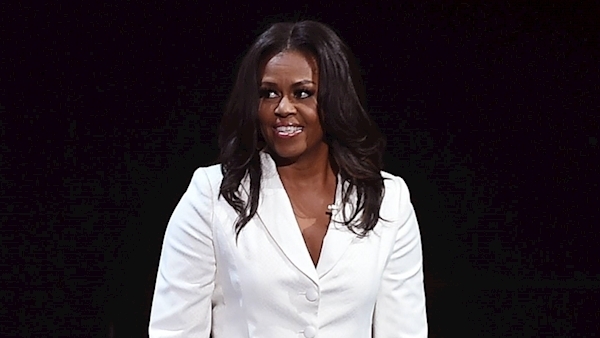
The best non-fiction books for the summer transport you from the White House to Hollywood and from pristine greens at Augusta to sweaty gyms in Belfast. dips between the covers
Becoming - Michelle Obama
Michelle Obama’s memoir hasn’t left the bestseller lists since its publication last November. A big favourite in Irish book clubs, the appeal for the American public is partly that they’ve never had a First Lady with whom they’ve been so keen to identify.
Obama’s easy charm and disarming candour (“I wake up in a house every morning that was built by slaves”) made her an endearing figure. This book, in which she provides insight into the how her marriage took second place once Barack Obama’s political career kicked into life, has only increased her stock.
Tiger - Jeff Benedict and Armen Keteyian
Few sports books published over the last decade can rival Tiger Woods’ biography — co-authored by Jeff Benedict and Armen Keteyian — for pure addictive reading pleasure.
It’s 500 pages of gripping family melodrama: The abnormal grooming of a sporting superstar; allegedly over a hundred marital infidelities within a few years of being wed, including morning trysts in a car park; a father who lies in an unmarked grave; celebrity encounters; and incredible sporting achievement.
Written before his Masters win in April, this is a deep delve into the psychology of a deeply troubled individual and a sporting phenomenon. A must-read for the light it shines on the man who made one of sport’s greatest comebacks.
Chaos: Charles Manson, the CIA and the Secret History of the Sixties - Tom O’Neill with Dan Piepenbring
One of the most eagerly awaited non-fiction books of the year was published last week — after 20 years of investigative research and over 500 interviews, Tom O’Neill’s revelations about the Charles Manson murders have been unveiled.
In a lurid chapter of 20th century America, it tells the story of the summer of 1969, Californian sunshine, Hollywood celebrities, including Sharon Tate and Roman Polanski, the CIA’s mind-control experiments, cover-ups and conspiracies, the magnetic Manson, and a bunch of teenage hippy girls who turned into murderers.

Hinch Yourself Happy: All the Best Cleaning Tips to Shine Your Sink and Soothe Your Soul - Sophie Hinchliffe
The world moves in mysterious ways. Sophie Hinchliffe, 28, a hairdresser from Essex, caused a stir in Dublin recently when she did a book signing: All 500 tickets sold out within an hour.
Her surprise hit is based on the cleaning advice she doles out to her 2.6m followers on Instagram and the belief that scrubbing your toilet — and the mastering of other domestic hygiene chores — might just be the route to spiritual tranquillity.
Elsewhere: One Woman, One Rucksack, One Lifetime of Travel- Rosita Boland
Irish writer and journalist Rosita Boland has been walking the Earth on her own for over three decades. Some things have changed during that time. She came across a sign outside a Bali café informing its customers: “We have wifi so you don’t have to talk to each other.”
Other things haven’t — she’s crossed the world’s continents with the same rucksack since she was 25. Her experiences are gathered together in this collection which will get readers itching to emulate some of her
journeys.
A Woman of No Importance: The Untold Story of WWII’s Most Dangerous Spy - Sonia Purnell
The remarkable life of the American spy Virginia Hall during the Second World War is to get the Hollywood treatment — Daisy Ridley is slated to play her on screen.
In Hall’s biography, the details of her incredible adventures are gathered together for a breathtaking read.
She co-ordinated resistance operations in Nazi-occupied France with incredible disguises and the use of exploding horse dung, among other tricks, evading the clutches of Klaus Barbie, the Gestapo’s notorious ‘Butcher of Lyon’, despite having a wooden leg.
Then It Fell Apart - Moby
Moby’s follow-up to his highly regarded memoir Porcelain traces what should have been the glory years of the worldwide fame that befell him after his album Play became the soundtrack of the turn of the millennium.
Instead — as he struggled to escape the ghosts of a father who died by suicide and a bohemian, partying mother who often neglected him — dining with David Bowie and Lou Reed, dating Hollywood stars, and partying with Bono left him feeling empty.
Tunnel Vision - Kevin Breathnach
Coming as he does with a recommendation by Sally Rooney as “one of the most interesting writers working in Ireland today,” Kevin Breathnach’s debut collection of 12 postmodern essays have excited a lot of interest.
They act as a platform for his very wide-ranging intellect and tastes, which range from photography, cultural criticism, sexual relationships with both sides, Norwegian film, travel, recreational drugs, football, and an addiction to watching pornography.
So Much Longing in So Little Space - Karl Ove Knausgaard
It’s difficult to imagine a more interesting cocktail. Karl Ove Knausgaard, who revolutionised the memoir with his epic, confessional six-volume series My Struggle, and his Norwegian compatriot, the artist Edvard Munch, who is famous for his iconic 1893 painting The Scream.
The publication of Knausgaard’s book, which is a mix of biography, history and memoir, coincides with a touring exhibition of Munch’s work, which has been curated, inevitably, by Knausgaard.
Furious Hours: Harper Lee and the Unfinished Story of Race, Religion - Casey Cep
Harper Lee is known to many readers as the author of the classic novel To Kill a Mockingbird. She once spent a year covering a grisly, gripping case in her native Alabama: In the 1970s a preacher stood trial for killing five of his family members in an insurance scam.
The preacher got off, but was killed by a relative at the funeral of one of his victims who, incredibly, was acquitted of murder — and defended by the same lawyer who got the preacher off the hook. Casey Cep revisits the case — and Lee’s reportage of it.

The Boy Who Followed His Father into Auschwitz - Jeremy Dronfield
Austrian upholsterer Gustav Kleinmann managed to keep a diary for five years while enduring the Nazis’ death camps in Buchenwald — where he was incarcerated in 1939 along with his 16-year-old son, Fritz — and ultimately Auschwitz, where he again was joined by his son.
Jeremy Dronfield has used the diary to recount a story that has taken the literary world by storm. Dronfield is a master storyteller. He uses detail to telling effect in unfolding how father and son survived the horrors of the Holocaust to tell their tale.
Underland: A Deep Time Journey - Robert Macfarlane
Macfarlane is arguably the world’s most gifted nature writer at work today.
There is a lot to recommend his plunge into the catacombs of our world, which mixes memoir, suffocating tales of potholing, an examination of nuclear waste bunkers, extensive mythological digressions, disappearing worlds, the disastrous effects of climate change and a gallery of eccentrics he meets along the way.
In Sunshine or in Shadow: How Boxing Brought Hope in the Troubles - Donald McRae
There are few finer sportswriters than Donald McRae. The South African author has written 11 non-fiction books, including the classic 1990s boxing book Dark Trade.
For his latest effort, he again turns to boxing and how the sport afforded a haven during the dog days of the Troubles in Northern Ireland to pugilists from both sides of the divide.
McRae hooks his story on Gerry Storey’s legendary Holy Family gym in Belfast from which sprung, for example, Barry McGuigan, Davy Larmour, and Olympic bronze medallist Hugh Russell who went on to become an accomplished photographer.














